
Rwanda’s journey toward a modernized healthcare system represents one of the most significant public health transformations in East Africa, moving from a landscape of manual logs to a sophisticated digital ecosystem. For many years, the nation successfully navigated complex health challenges, achieving impressive reductions in maternal mortality and steadily increasing the average life expectancy of its citizens. However, a persistent hurdle remained: the reliance on fragmented, paper-based record-keeping that created significant delays in clinical decision-making. To address these systemic inefficiencies, the government initiated an ambitious digital overhaul designed to unify disparate data sources into a single, high-performance infrastructure. This fundamental shift marks the end of slow, retrospective reporting and the beginning of a dynamic model of real-time management. By prioritizing administrative precision, Rwanda is now setting a global standard for how technology can improve patient outcomes at scale.
Bridging Fragmented Systems: The Path to Integration
Before the implementation of modern digital solutions, Rwanda’s healthcare sector operated within a series of “data silos” that made it nearly impossible to share vital patient information across different medical facilities. These isolated systems often resulted in duplicated efforts, inconsistent medical histories, and a lack of coordination during critical health emergencies. The COVID-19 pandemic served as a catalyst for change, highlighting the dangers of data latency when trying to deploy doctors and medical supplies to high-need areas. It became clear that providing high-quality care would require a foundation of high-quality, accessible data that could be analyzed in real-time. Recognizing this necessity, the nation committed to building a centralized data hub intended to eliminate manual processing and provide officials with a comprehensive, bird’s-eye view of the entire national health system, ensuring that no community would be left behind during a crisis.
The acceleration of this transformation was made possible through a strategic partnership with the Tony Blair Institute for Global Change, which introduced a specialized governance framework. Rather than acting as distant consultants, technical experts were embedded directly within the Ministry of Health to offer both high-level strategy and practical support for the digital transition. This collaborative approach ensured that the new digital architecture was not merely a collection of theoretical concepts but a set of practical tools tailored to the specific needs of Rwandan healthcare providers and patients. By modernizing public services through this “Reimagined State” model, the government successfully bridged the gap between policy goals and technical implementation. This partnership fostered a culture of innovation within the ministry, allowing for the rapid adoption of digital tools that have since become the backbone of the country’s medical administrative infrastructure.
Operational Excellence: The National Health Intelligence Center
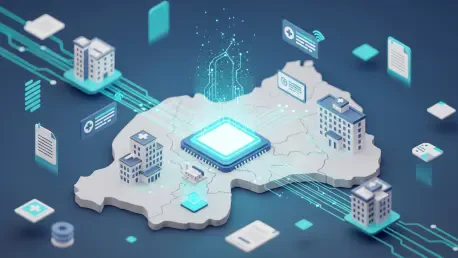
At the core of Rwanda’s technological evolution is the National Health Intelligence Center, a sophisticated centralized data warehouse that was launched in early 2025 to streamline operations. This facility serves as the primary nerve center for the country, integrating diverse information streams from hospitals, community health centers, and complex medical supply chain logs into a single platform. In the past, aggregating this level of data was a labor-intensive process that could take up to two months of manual entry and verification, often rendering the information outdated by the time it reached decision-makers. Today, the system provides an instantaneous stream of insights that allows for immediate action based on the latest available facts. By turning raw data into actionable intelligence, the center has effectively eliminated the guesswork often associated with large-scale public health management, ensuring that resources are always directed toward the most urgent priorities.
The newfound visibility into resource allocation and emerging disease trends has revolutionized how the Ministry of Health operates on a daily basis. With the ability to monitor hospital bed availability, medication stock levels, and infection rates across every province in real-time, officials can now make data-driven decisions with unprecedented speed and accuracy. This capability is particularly vital for managing chronic conditions and preventing the localized spread of infectious diseases before they escalate into national concerns. Furthermore, the integration of supply chain data ensures that essential vaccines and life-saving medicines are distributed efficiently, reducing waste and preventing stockouts in remote rural areas. The digital transformation has thus moved beyond simple record-keeping, becoming a proactive management tool that enhances the overall resilience of the health system while providing a transparent and accountable framework for tracking national health progress.
Frontline Impact: From Patient Experience to Prediction
While high-level administrative improvements are vital, the digital shift has also produced tangible benefits for patients visiting facilities like King Faisal Hospital through the IHMIS. By moving away from cumbersome paper records toward a “one patient, one record” philosophy, the hospital has successfully created a more streamlined and professional environment for medical consultations. This integration allows doctors to access a patient’s full medical history with a few clicks, reducing the risk of diagnostic errors and ensuring that treatments are tailored to individual needs. Most notably, the transition to digital management has slashed patient wait times by over 60%, significantly improving the overall efficiency of the facility. Modern conveniences, such as receiving SMS notifications for laboratory test results, have further enhanced the patient experience, providing individuals with quicker access to their health information and fostering a greater sense of dignity and trust.
Looking toward the future of this digital journey, the government established the groundwork for the National Health Intelligence Center to function as a regional research hub powered by artificial intelligence. By leveraging its unified data backbone, the country began moving toward a predictive healthcare model where analytics were used to forecast potential disease outbreaks and anticipate equipment shortages. This proactive approach allowed for the implementation of preventative measures long before a crisis could manifest, representing a significant shift from the reactive strategies of the past. The successful scaling of these digital tools through national initiatives like e-Buzima ensured that the benefits of technology reached every health center across the nation. Ultimately, the integration of data-driven insights proved that strong leadership and sustainable technical capacity could create a resilient healthcare foundation, providing actionable steps for other nations seeking to modernize.