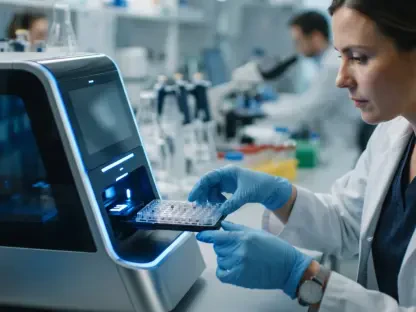

The transition from siloed research environments to fully integrated, autonomous ecosystems represents a fundamental shift in how scientific discovery is conducted at scale. In the current landscape, the complexity of biopharmaceutical research requires more than just faster instrumentation; it demands a seamless flow of information from the physical laboratory bench to the digital cloud. This new partnership aims to dismantle the barriers that have historically existed between laboratory informatics and automation robotics. By aligning advanced automation expertise with digital transformation proficiency, the industry can finally move toward a state where experimental data is treated as a primary asset rather than a secondary byproduct. This shift is essential for organizations aiming to leverage large-scale automation while maintaining the high data quality required for predictive modeling. The focus remains on creating an environment where researchers spend less time on manual tasks and more time on analysis.
Strategic Integration: Hardware and Digital Synergy
Phase 1: Implementing Modular Robotics
Sophisticated modular robotics and advanced orchestration software now provide a robust backbone for the most complex laboratory workflows currently in operation. This approach emphasizes physical flexibility, allowing laboratories to adapt to rapidly changing protocols without requiring a total overhaul of their existing infrastructure. In 2026, the demand for such modularity has reached a peak as biological research becomes increasingly specialized and data-intensive. By providing standardized interfaces and highly reliable hardware components, these systems enable the movement of samples with unprecedented precision and maximum uptime. Hardware reliability serves as the cornerstone of any connected laboratory, as even the most advanced artificial intelligence cannot function effectively without the consistent physical execution of experiments. The collaboration ensures that these robotic systems are not just performing tasks in isolation but are actively communicating status updates.
Phase 2: Bridging the Digital Information Gap
Complementing physical automation is a strategic focus on lab informatics that prioritizes the digital maturity of the modern research organization. Many laboratories frequently find themselves equipped with advanced instruments that lack a unified communication protocol, which leads to problematic data silos. Strategic integration addresses this challenge by designing ecosystems that bridge the gap between Laboratory Information Management Systems and the instruments themselves. This holistic view of the laboratory environment ensures that every action taken by a robotic arm is recorded, timestamped, and associated with the correct experimental metadata. By streamlining these digital pathways, the collaboration allows for a cohesive operational model where information flows freely across the entire enterprise. This integration reduces the manual burden of data entry and verification, which significantly lowers the risk of human error while increasing the facility throughput for scientific discovery.
Data Stewardship: Preparing for Intelligent Automation
Phase 3: Contextualizing Information for Machine Learning
For many modern organizations, the ultimate goal of laboratory automation is to fuel machine learning models that can predict experimental outcomes and optimize discovery pipelines. However, the success of these artificial intelligence initiatives depends entirely on the quality and structure of the underlying data, which must be comprehensive. The focus on data contextualization ensures that every data point generated in the laboratory is ready for analysis from the moment it is created. This involves implementing standard data formats and ensuring that metadata—such as ambient temperature, reagent lot numbers, and precise timing—is captured alongside primary results. When data is structured in this manner, it becomes possible to identify subtle correlations that would be otherwise invisible in fragmented datasets. This level of preparation is what separates a standard automated facility from a truly intelligent one capable of driving scientific breakthroughs through computation.
Phase 4: Establishing New Operational Standards
The collaboration between HighRes and Cenevo successfully addressed the fundamental disconnect between physical laboratory operations and digital data management strategies. This effort demonstrated that true laboratory transformation required a synchronized investment in both modular hardware and robust informatics architectures. To capitalize on these advancements, organizations were encouraged to conduct thorough audits of their current digital maturity before attempting to implement large-scale artificial intelligence solutions. It became clear that the most effective approach involved prioritizing data integrity and interoperability as the primary drivers of technological adoption. Future implementations focused on scaling these connected environments to accommodate multi-site collaborations and global data sharing initiatives. By moving toward a standardized and automated framework, the industry established a new benchmark for excellence. Field leaders looked toward refining systems.