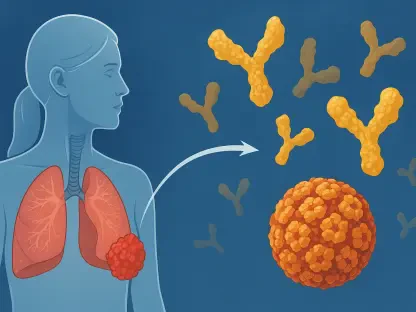

Triple-negative breast cancer remains a significant therapeutic challenge due to its aggressive nature and the absence of common hormonal receptors. Because patients lack estrogen, progesterone, and HER2 receptors, standard endocrine therapies and HER2-targeted treatments are ineffective, leaving heavy reliance on non-specific chemotherapy. This often results in systemic toxicity and poor long-term outcomes, particularly in metastatic cases. However, recent developments in 2026 have highlighted the potential of specialized nanosystems to bridge this gap. By utilizing the unique tumor microenvironment and surface protein expression of these cells, researchers are moving toward a more focused approach. Specifically, the integration of immunotherapy with conventional drug delivery offers a path toward reducing side effects while maximizing the destruction of malignant tissue through highly localized chemical reactions and precise delivery mechanisms.
Architectural Precision in Nanosystem Design
The SNS Framework: Core-Shell Integration
The engineering of the multi-component nanosystem, designated as SNS, involves a sophisticated core-shell architecture designed for stability and precision. At the heart of this system lies a nanosilver core, which is integrated with the potent chemotherapy agent doxorubicin to provide a dual-threat pharmacological profile. This core is subsequently encapsulated within a manganese dioxide shell that responds dynamically to the tumor microenvironment. To ensure high selectivity, the researchers utilized EDC coupling to conjugate anti-PD-L1 antibodies to the nanoparticle surface. Structural analysis confirmed that these spherical particles maintain a size of approximately 95 nanometers, which is ideal for the enhanced permeability effect. With a zeta potential of −22 mV, the SNS framework demonstrates stability and an increased likelihood of successful delivery into the dense extracellular matrix of solid tumors.
Responsive Release and Cellular Targeting
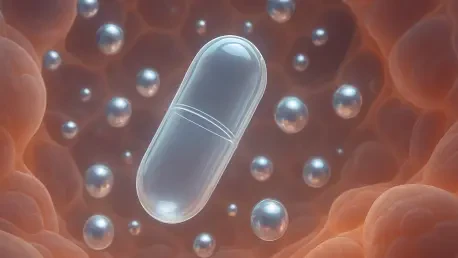
One of the primary hurdles in treating aggressive breast cancer is ensuring that the therapeutic payload is released specifically within the malignant zone. The SNS platform achieves this by utilizing its manganese dioxide shell to react with the unique acidic and hypoxic conditions found in the tumor vicinity. Upon reaching the site, the shell degrades, releasing the nanosilver and doxorubicin while simultaneously modulating local oxygen levels. This environmental responsiveness is further augmented by the PD-L1 targeting mechanism, which facilitates superior cellular internalization. In laboratory tests involving 4T1 cells, the targeted formulation showed much higher accumulation inside the cells compared to untargeted variations. This increased uptake is vital for triggering intracellular DNA damage and shifting the balance of apoptosis-related genes through the upregulation of BAX and Caspase.
Therapeutic Impact and Future Clinical Pathways
Preclinical Efficacy and Safety Benchmarks
In vivo validation using mouse models provided compelling evidence for the efficacy of this targeted nanosystem in a living biological system. Near-infrared imaging confirmed that the SNS particles preferentially accumulated in the tumor tissues of 4T1 tumor-bearing mice, demonstrating the success of the anti-PD-L1 functionalization. The experimental data revealed that the SNS treatment group achieved the most significant suppression of tumor growth when compared to single-component controls. Cytotoxicity assays recorded an IC50 value of 12.42 μg/mL, which represents a marked improvement in potency over the untargeted version. Despite the high level of anti-tumor activity, the mice maintained stable body weights throughout the trial period, and detailed pathological examinations of major organs showed no signs of systemic toxicity, indicating that the system is remarkably well-tolerated in preclinical settings.
Implementation Strategies and Scalability
The successful integration of nanosilver, doxorubicin, and manganese dioxide into a single targeted platform represented a significant milestone in oncology research. The study confirmed that by directing these agents toward PD-L1 receptors, it was possible to overcome many of the delivery barriers associated with traditional chemotherapy. Moving forward, the research community must prioritize large-scale manufacturing of these complex nanoparticles and initiate safety protocols for human clinical trials from 2026 to 2028. Future investigations should also explore how these nanosystems interact with the broader immune system over extended periods to ensure long-term biocompatibility. While the preclinical results were highly encouraging, establishing standardized dosing regimens remains a critical next step. These advancements offered a clear blueprint for the next generation of environment-responsive therapies that could alter the prognosis for many.