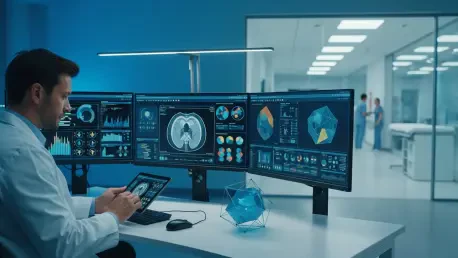

The global medical community is currently facing an unprecedented surge in neurodegenerative conditions, creating an urgent demand for diagnostic tools that move beyond traditional qualitative observations. As aging populations increase the prevalence of Alzheimer’s disease and other forms of dementia, the reliance on human interpretation of complex brain scans often leads to variability and delays in critical care. To address these challenges, Neurophet, a specialized artificial intelligence firm focused on brain disease solutions, has appointed Dr. Lawrence Tanenbaum as a scientific advisor to spearhead its expansion into the North American market. This strategic recruitment is not merely a personnel change but a calculated move to integrate sophisticated AI algorithms into the highly regulated environments of American hospitals and imaging centers. By bringing in a preeminent figure with over 30 years of experience in clinical practice and academia, the company seeks to validate its technological framework against the rigorous standards required for large-scale clinical adoption.
Dr. Tanenbaum’s background provides a unique bridge between the theoretical potential of machine learning and the practical realities of daily radiology workflows. Having served as the Chief Technology Officer at RadNet, the largest outpatient imaging diagnostic company in the United States, and as a radiology professor at the Icahn School of Medicine at Mount Sinai, his expertise spans the entire spectrum of medical imaging. This partnership aims to refine the application of “Neurophet AQUA,” a software designed to quantify brain neurodegeneration with high precision, and “Neurophet AQUA AD,” which focuses on the specific requirements of prescribing and monitoring modern dementia treatments. The involvement of such a high-profile expert ensures that these tools are not just technologically advanced but are also intuitively aligned with the needs of radiologists who must manage increasing caseloads without compromising the accuracy of their diagnostic reporting.
Bridging the Gap: AI Integration and Clinical Utility
The transition of AI from a research curiosity to a frontline medical necessity requires more than just high-performing code; it necessitates a deep understanding of how data translates into patient outcomes. The collaboration between Neurophet and Dr. Tanenbaum focuses on optimizing the clinical utility of neuroimaging software by leveraging extensive North American networks to facilitate real-world testing and deployment. In the current landscape of 2026, the focus has shifted toward high-level scientific synergy where AI acts as a co-pilot, identifying subtle structural changes in the brain that might be overlooked by the naked eye. This move reflects a broader industry trend toward standardizing radiological workflows through automation, which reduces the margin for error in diagnosing complex neurological disorders. By emphasizing clinical reliability and regulatory compliance, the partnership aims to accelerate the adoption of these platforms across overseas markets, ensuring that advanced diagnostics are accessible to a wider demographic.
Building on this foundation, the collaboration is set to redefine how practitioners approach the management of chronic brain diseases through the use of standardized volumetric data. Rather than relying on subjective descriptions of atrophy or lesions, clinicians can now utilize quantitative metrics to track disease progression over time. This objective approach is particularly vital for the administration of new-generation dementia drugs, which require precise monitoring to evaluate efficacy and ensure patient safety. Dr. Tanenbaum’s role involves ensuring that the software provides tangible value by shortening the time between initial scanning and the implementation of a treatment plan. As the medical field continues to evolve between 2026 and 2028, the integration of such specialized AI tools is expected to become the baseline for excellence in neuroimaging. The success of this initiative will likely serve as a blueprint for how technology companies and clinical experts can unite to solve the most pressing challenges in modern neurology.
To maximize the impact of these technological advancements, healthcare providers should prioritize the implementation of cloud-based AI diagnostic suites that offer seamless integration with existing Picture Archiving and Communication Systems. Facility administrators and lead radiologists need to establish clear protocols for incorporating automated brain volumetry into their standard diagnostic procedures, ensuring that staff are adequately trained to interpret AI-generated reports alongside traditional imaging. Furthermore, investment in scalable infrastructure will be essential to handle the increased data processing requirements of sophisticated tools like Neurophet AQUA. By proactively adopting these standardized analytical frameworks, medical institutions can significantly improve the accuracy of early-stage dementia detection and provide patients with more personalized, data-driven therapeutic pathways. Transitioning toward this quantitative model allowed for a more robust defense against the rising tide of neurodegenerative diseases while setting a new global standard for radiological precision.