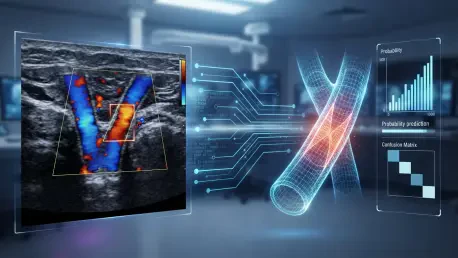

The Light Gradient Boosting Machine emerged as the most effective tool for calculating the probability of plaque rupture based on systemic biological indicators. This innovative approach addresses the critical challenge of identifying vulnerable carotid plaques before they lead to catastrophic events like ischemic strokes. For years, the medical community struggled with the reality that many patients with significant arterial narrowing remain stable, while others with minor blockages experience sudden plaque rupture. This unpredictability necessitated a shift toward more sophisticated diagnostic tools that look beyond simple physical measurements. By analyzing complex relationships between routine laboratory variables, researchers have discovered that systemic signals of inflammation and metabolic distress can serve as reliable predictors of plaque behavior. This methodology moves cardiovascular medicine closer to a personalized model, where digital algorithms supplement clinical intuition to provide a more nuanced understanding of patient risk profiles without the immediate need for expensive imaging.
Comparative Performance of Predictive Algorithms
The Success: LightGBM Model Performance
In the evaluation of various computational frameworks, the Light Gradient Boosting Machine, or LightGBM, demonstrated a superior ability to process multi-dimensional patient data with high precision. During the comprehensive testing phase, the model achieved an Area Under the Receiver Operating Characteristic Curve (AUC) of 0.864, which is a significant benchmark for diagnostic accuracy in modern medicine. This metric indicates the model’s proficiency in distinguishing between patients with stable plaques and those at high risk of rupture. Beyond the AUC, the model maintained an overall accuracy of 81.1% when applied to entirely new, unseen patient datasets from the 2026 to 2027 period. Such performance suggests that the algorithm does not merely memorize specific cases but actually learns the underlying biological patterns associated with vascular instability. The robustness of this specific model architecture allows it to handle the inherent noise and variability found in standard clinical records, making it a reliable tool for real-world applications.
The research team prioritized the generalizability of the LightGBM model by utilizing a rigorous data-splitting strategy, which ensured that the algorithm’s success was not an artifact of a specific cohort. By training the system on 70% of the available clinical data and reserving the remaining 30% for validation, the study confirmed that the predictive power remains stable across different patient subgroups. This level of consistency is vital for clinical adoption, as physicians require tools that perform reliably regardless of minor fluctuations in laboratory standards or patient demographics. Furthermore, the inclusion of Decision Curve Analysis provided a clear picture of the clinical net benefit, proving that the implementation of this model would lead to better patient management decisions compared to traditional risk assessment strategies. By refining the selection process for invasive procedures or aggressive pharmaceutical therapies, the LightGBM framework offers a balanced approach that maximizes patient safety while minimizing unnecessary interventions and associated costs.
Deciphering Factors: Biomarkers and Biological Drivers
To solve the black box problem of artificial intelligence, researchers integrated SHAP values, a mathematical technique that clarifies how much each individual biomarker contributes to the final risk score. The analysis revealed that markers of systemic inflammation were the primary drivers of the model’s predictions. Specifically, elevated levels of C-reactive protein (CRP), monocyte counts, and the lymphocyte-to-monocyte ratio emerged as critical indicators of plaque vulnerability. This transparency is crucial because it aligns the model’s findings with established pathological theories regarding the role of inflammation in destabilizing the arterial wall. When a physician sees a high-risk prediction, they can now identify the specific inflammatory signals driving that result, allowing for a more targeted and confident clinical response that addresses the root cause of the patient’s cardiovascular instability. This alignment between data science and biological reality is essential for building trust among medical professionals who rely on these tools for life-and-death decisions.
The integration of machine learning into cardiovascular care offered a sustainable path forward for managing the growing burden of carotid artery disease. Beyond simply identifying high-risk individuals, the technology enabled a more efficient allocation of limited healthcare resources by focusing intensive interventions on those with the greatest biological need. Clinicians were encouraged to adopt a hybrid approach, where the predictive power of LightGBM informed but did not replace human judgment. As these digital tools became more sophisticated, they opened the door for even more comprehensive models that could eventually incorporate genomic data or wearable device metrics for a truly 360-degree view of patient health. This evolution in diagnostic strategy transformed the prevention of ischemic stroke from a reactive process into a proactive, data-driven discipline. By embracing these advancements, the medical community successfully moved toward a future where the hidden dangers of arterial plaques were no longer a matter of chance but a predictable aspect of vascular health.