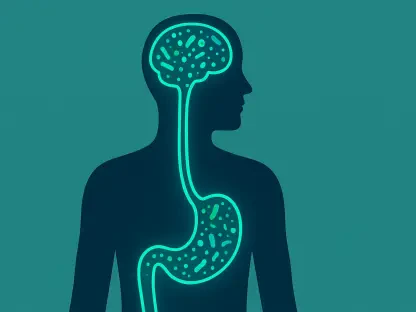

Major depressive disorder treatment currently relies on a monthslong trial-and-error process that leaves patients vulnerable while clinicians wait for signs of chemical efficacy. For decades, the standard procedure involved prescribing a medication and waiting several weeks to see if the patient experienced a reduction in symptoms. If the first drug failed, the cycle repeated with a second or third option, a grueling journey that often led to increased despair or treatment abandonment. However, the emergence of advanced neural analysis is finally breaking this cycle by utilizing the inherent electrical activity of the human brain. By leveraging electroencephalography data, researchers have successfully identified unique biological patterns that correlate with a positive response to specific antidepressant classes. This innovative approach allows for a proactive rather than reactive strategy in mental healthcare. The software analyzes complex brainwave frequencies to determine which individuals are most likely to benefit from certain interventions before the first dose is even administered.
Neural Fingerprints: Deciphering Signatures Through Machine Learning
The technological core of this advancement involves sophisticated deep learning models that process raw brainwave data into actionable medical insights. These algorithms are trained on massive datasets containing thousands of hours of recordings from both healthy individuals and those diagnosed with severe depression. By identifying subtle anomalies in the spatial distribution of alpha and theta waves, the system creates a predictive map of the brain’s likely reaction to various chemical compounds. This process far exceeds the capabilities of traditional clinical observation, as it detects microscopic changes in neural connectivity that are invisible during a standard psychiatric interview. The AI acts as a sophisticated filter, removing the noise of daily environmental factors to focus exclusively on the core biological indicators of mood regulation. As these models become more refined, they provide a higher degree of confidence for physicians, effectively eliminating the guesswork that has plagued the field of psychiatry since its inception.
Personalized Psychiatry: Clinical Integration and Scalable Care
Beyond simple pattern recognition, these systems evaluate the functional interplay between different anatomical regions, such as the prefrontal cortex and the amygdala. Recent clinical studies conducted from 2026 to 2028 have validated that these neural fingerprints are remarkably consistent across diverse patient populations. By focusing on the default mode network, which is often overactive in patients with depression, the AI can predict whether a specific antidepressant will successfully modulate this activity back to a healthy state. This level of granular detail allows for a personalized treatment plan that is tailored to the specific wiring of the individual’s brain. Furthermore, the speed of this analysis is a major breakthrough; whereas a traditional trial might take two months, the AI provides a recommendation in less than thirty minutes. This immediate feedback loop empowers patients, giving them a sense of agency and clear direction at a time when they are often feeling most helpless. It turns a chaotic process into a structured medical intervention.
Predictive Diagnostics: Bridging the Gap in Mental Health
Integrating these predictive tools into the existing healthcare infrastructure requires a shift in how diagnostic protocols are managed on a global scale. Hospitals and outpatient clinics are increasingly adopting portable, high-resolution electroencephalography headsets that sync directly with cloud-based AI analysis platforms. This seamless integration ensures that primary care physicians, who often serve as the first point of contact for mental health concerns, have access to specialist-level diagnostic capabilities. The economic implications are equally significant, as the reduction in ineffective treatments lowers the total cost of long-term disability and repeat hospitalizations. By ensuring that patients receive the correct medication the first time, healthcare systems can reallocate limited resources toward more complex cases that require intensive psychotherapy or experimental interventions. This efficiency helps stabilize a medical system that has long been overwhelmed by the rising prevalence of mood disorders. The democratization of this data-driven approach fosters a more resilient public health framework.
Proactive Recovery: Actionable Steps for Future Treatment
The successful implementation of brainwave-based predictive modeling established a new standard for psychiatric care, moving the field toward a more objective and biological foundation. Medical communities moved away from the traditional subjective assessment models, favoring instead the rigorous data provided by neural analysis. Clinicians utilized these insights to develop comprehensive recovery plans that combined the most effective medications with targeted behavioral therapies from the very start of the patient journey. Insurance providers adjusted their coverage policies to reflect the proven cost-effectiveness of early screening, making the technology accessible to a wider demographic. Developers continued to refine the algorithms, incorporating feedback from real-world applications to increase the sensitivity of the software across varying age groups and ethnicities. This proactive stance significantly reduced the time individuals spent in active crisis, providing a clear and scientifically backed pathway to mental wellness. The transition to precision psychiatry proved that the integration of artificial intelligence and neuroscience was the key to solving the trial-and-error dilemma.