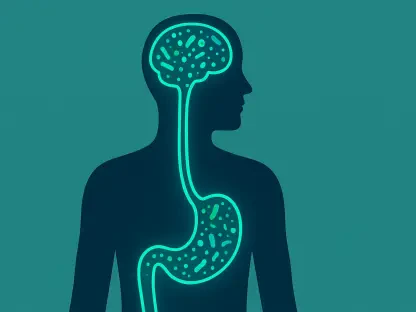

A massive dataset encompassing the medical histories of 19,000 patients is currently being analyzed to distinguish which early gastric changes will eventually lead to cancer. This groundbreaking initiative, known as the Gastroshare project, leverages the sophisticated analytical power of artificial intelligence to identify subtle physiological shifts long before they manifest as malignant tumors. Led by prominent researchers from the Sutter Health Research Institute and Stanford University, the study represents a significant leap forward in precision medicine. By examining granular details within electronic health records, the team aims to solve the medical paradox of stomach cancer, which remains a leading cause of mortality despite being largely preventable through early intervention. The investigation goes beyond traditional risk factors like H. pylori infections, focusing instead on complex patterns in pathology reports and endoscopy results. This proactive approach seeks to move clinical practice toward a new model of early detection.
Integrating Artificial Intelligence: Electronic Health Records
The core of the Gastroshare project lies in its ability to process vast amounts of unstructured data that would be impossible for human clinicians to synthesize manually. By utilizing advanced machine learning algorithms, the researchers are identifying specific indicators—the metaphorical needles in the haystack—that differentiate benign stomach conditions from those destined to become aggressive carcinomas. This involves deep dives into patient history, tracking the progression of gastric changes over extended periods. The collaboration has recently secured a prestigious research award from the National Institutes of Health, underscoring the scientific community’s confidence in this data-driven strategy. The researchers are not merely looking for existing cancer but are mapping the biological landscape of the pre-diagnosis phase. This granular level of analysis allows for the creation of predictive models that can alert physicians to high-risk patients years in advance, long before symptoms ever appear.
To ensure the accuracy of these predictive models, the research team is cross-referencing their findings with the California Cancer Registry. This validation process allows them to verify whether the AI-identified markers accurately correlate with actual cancer diagnoses recorded over several years. By bridging the gap between theoretical data and real-world clinical outcomes, the project establishes a robust evidence base for new diagnostic standards. The work focuses heavily on diverse patient populations, ensuring that the AI models are applicable to various demographic groups who may experience different genetic risk factors. This methodology transforms the electronic health record from a static storage tool into a dynamic instrument for discovery. Consequently, the project is setting a new benchmark for how health systems can utilize existing repositories of information to address understudied diseases that have long lacked the comprehensive screening protocols necessary for prevention.
Revolutionary Virtual Trials: Simulating Survival Outcomes
One of the most innovative aspects of this research is the implementation of virtual clinical trials, a method that circumvents the traditional obstacles of time and expense. In a conventional setting, determining the efficacy of new screening guidelines could take up to twenty years and require hundreds of millions of dollars in funding. Instead, the Gastroshare team is using existing historical data to simulate these trials, effectively looking back through time to see how different intervention strategies might have changed patient trajectories. By modeling the impact of regular endoscopy screenings on a high-risk cohort from 2026 to 2030, researchers can predict survival rates and cancer incidence without the logistical nightmare of a multi-decade prospective study. This approach provides immediate insights into which populations benefit most from frequent monitoring, allowing for the rapid deployment of revised medical guidelines that are grounded in statistical certainty and historical patient data.
Beyond the clinical benefits, the shift toward virtual trials and AI-driven diagnostics has profound economic implications for the global healthcare system. By identifying those who truly require intensive screening, medical facilities can allocate resources more efficiently, reducing unnecessary procedures for low-risk individuals while prioritizing those in imminent danger. This optimization is crucial for balancing the rising costs of specialized care with the need for broad public health accessibility. Furthermore, the Gastroshare model provides a scalable framework that can be adapted for other forms of cancer, such as esophageal malignancies, where early detection is equally critical. The project demonstrates that the future of medicine is not necessarily dependent on the discovery of new drugs alone, but on the smarter utilization of the information we already possess. As these AI tools become more integrated into hospital systems, they will likely become standard components of routine care for many.
Shifting the Paradigm: Preventive Gastric Medicine
The Gastroshare initiative successfully demonstrated that the intersection of technology and historical patient data could redefine our understanding of oncological progression. Researchers proved that the early detection of gastric changes was not merely a theoretical possibility but a practical reality when powered by machine learning. This shift toward a pre-diagnosis focus offered a concrete path for clinicians to intervene during the biological window where treatment is most effective. Moving forward, health organizations should prioritize the integration of AI-assisted screening into primary care workflows to ensure that high-risk individuals are identified before symptoms emerge. Investing in the infrastructure necessary to maintain and analyze massive health registries remained a top priority for the medical community as they sought to replicate this success across other disciplines. By embracing these data-driven insights, the medical field moved closer to a preventive model that effectively minimized the impact of chronic diseases.