
Recent investigations into clinical isolates have revealed that over half of Pseudomonas aeruginosa strains and three-quarters of Staphylococcus aureus strains exhibit multidrug resistance in hospital settings. This startling reality underscores a burgeoning crisis in modern healthcare, where traditional monotherapies are increasingly failing to manage complex, polymicrobial infections. Patients suffering from cystic fibrosis, chronic non-healing wounds, and complications stemming from medical implants are particularly vulnerable, as these two pathogens frequently colonize the same biological space. When they coexist, they do not simply share a habitat; they engage in a multifaceted chemical and biological dialogue that significantly elevates their collective virulence. This synergy between bacteria creates a formidable clinical challenge that requires a fundamental shift in how antimicrobial strategies are designed and deployed. A landmark study led by researcher Amit Sharma in late 2025 has highlighted how strategic drug pairings can dismantle these defenses, offering a sophisticated alternative to the search for entirely new classes of antibiotics. By analyzing the interaction between these species, the medical community is moving toward a more ecological understanding of infection management that prioritizes the disruption of bacterial cooperation.
Profiling Resistance: The Reality of Clinical Isolates
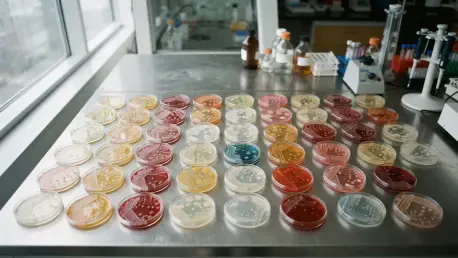
The investigation into these co-infections began with an exhaustive characterization of ninety-five distinct clinical isolates, providing a clear snapshot of the current resistance landscape in high-stakes medical environments. Among the fifty-two strains of Pseudomonas aeruginosa analyzed, 55.8% were classified as multidrug-resistant, while an even higher proportion of the forty-three Staphylococcus aureus strains—roughly 76.7%—exhibited resistance to three or more antibiotic classes. These findings illustrate the narrowing window of efficacy for standard treatments, as many of these strains were unaffected by common frontline medications. However, the data also identified a small group of “last-resort” drugs that maintained high performance; for instance, colistin remained effective against all P. aeruginosa isolates, while linezolid, nitrofurantoin, and vancomycin continued to inhibit the growth of the S. aureus populations. This distinction is critical because it identifies the primary “anchors” for future combination therapies that can still exert significant pressure on resistant bacterial communities.
Molecular analysis further clarified the specific genetic mechanisms that enable these pathogens to survive aggressive medical interventions. The researchers identified several high-threat genetic markers, including the blaNDM-1 gene in P. aeruginosa, which confers broad resistance to carbapenems, and the mecA and blaZ genes in S. aureus, associated with methicillin resistance and beta-lactamase production. Beyond simple resistance, these bacteria produce a variety of virulence factors that directly damage host tissues and facilitate nutrient acquisition in hostile environments. P. aeruginosa isolates were found to produce pyoverdine and pyocyanin, while S. aureus strains utilized staphyloxanthin and slime production as protective mechanisms. These traits contribute to the formation of specialized “model” strains used in the study to represent both sensitive and highly resistant bacterial populations. By mapping these genotypic and phenotypic profiles, the team established a scientific foundation for understanding why these pathogens are so difficult to eradicate once they establish a foothold in a clinical setting.
Competitive Dynamics: Interactions in Liquid Environments
When bacteria exist in a planktonic state—meaning they are free-floating in a liquid medium—their relationship is characterized primarily by intense competition for limited resources. In the co-culture experiments conducted during the study, P. aeruginosa often emerged as the dominant species, frequently outcompeting S. aureus for nutrients or suppressing its growth through the secretion of inhibitory molecules. This competitive dynamic was reflected in the Minimum Inhibitory Concentration (MIC) testing, where the sensitivity of the mixed culture closely mirrored that of P. aeruginosa when grown in isolation. This observation suggests that in early-stage infections or environments where bacteria have not yet adhered to a surface, the presence of the Gram-negative pathogen may mask the underlying presence of the Gram-positive one, potentially leading to incomplete treatment if the clinician targets only the most visible or dominant strain.
To counter this competitive alliance, the research team evaluated twelve distinct drug combinations, identifying several pairings that exhibited a synergistic effect. Synergy occurs when the combined action of two drugs is significantly more powerful than the sum of their individual impacts, effectively closing the gaps in each drug’s solo performance. For sensitive bacterial pairings, nearly 42% of the combinations tested showed synergy, while the rate was 33% for the more resistant strains. Combinations involving colistin proved particularly effective; when paired with linezolid, trimethoprim, or vancomycin, the drugs achieved a much lower Fractional Inhibitory Concentration Index, indicating a high level of collaborative efficacy. This success in the planktonic phase demonstrates that by hitting multiple biological targets simultaneously, these combinations can prevent the bacteria from mounting a coordinated defense, effectively clearing the infection before it can progress to more resilient stages of growth.
Cooperative Survival: The Resilience of Bacterial Biofilms
The nature of the interaction between P. aeruginosa and S. aureus undergoes a radical transformation when the bacteria transition from a liquid environment to a biofilm. In this state, they adhere to a surface and encase themselves in a sticky, protective matrix, shifting from a competitive relationship to a cooperative one. This transition is a nightmare for clinicians because the biofilm acts as a physical and chemical fortress, dramatically increasing the resistance of both pathogens. The study observed that the Minimum Biofilm Inhibitory Concentrations for several drugs, including tetracycline and vancomycin, increased by more than sixteenfold once the bacteria were established in a shared biofilm. This “tolerance surge” makes standard antibiotic dosages almost entirely ineffective, as the protective matrix prevents the medications from reaching the cells hidden within the core of the colony.
Within these cooperative structures, P. aeruginosa produces alginate, a polysaccharide that functions as a physical shield not only for itself but also for the S. aureus cells embedded in the matrix. This shared infrastructure ensures the survival of the entire community even when exposed to harsh external conditions or aggressive antibiotic treatments. While achieving synergy in established biofilms is significantly more difficult than in liquid cultures—with only about 8% of combinations showing synergy against resistant biofilms—the research identified a few key exceptions. Combinations of colistin with linezolid or vancomycin remained effective at preventing the initial formation of these biofilms. This suggests that the timing of the intervention is just as important as the choice of drugs; by intervening with these strategic pairings before the biofilm is fully established, medical teams can disrupt the cooperative lifestyle that these pathogens rely on for long-term survival in chronic infections.
Barrier Disruption: Colistin as a Specialized Permeabilizer
One of the most significant insights gained from this research is the role of colistin as a “shield-breaker” or permeabilizer. While colistin is traditionally known for its ability to disrupt the outer membrane of Gram-negative bacteria like P. aeruginosa, the study revealed that this mechanism also facilitates the entry of other antibiotics into S. aureus cells. By destabilizing the protective barriers and causing the leakage of essential divalent ions, colistin creates pathways through which secondary drugs can pass. This is vital because many effective antibiotics are normally excluded from the bacterial cell due to the low permeability of the outer membrane or the efficiency of efflux pumps. Once colistin “opens the door,” medications like linezolid or vancomycin can reach their internal targets more easily, leading to a much more rapid and thorough eradication of the infection.
The practical benefit of this permeabilization strategy is a substantial reduction in the required dosage of each individual drug. The researchers found that in many of the most successful synergistic pairings, the concentration of colistin and its companion antibiotic could be reduced by 50% or more while still achieving the desired therapeutic effect. This is a critical development for patient safety, as colistin is notorious for its potential to cause nephrotoxicity, or kidney damage, at high doses. By utilizing lower, synergistically effective concentrations, healthcare providers can mitigate the risk of severe side effects while maintaining high levels of antimicrobial activity. This shift toward “smart pairings” allows for the repurposing of potent but potentially toxic medications in a way that prioritizes patient well-being without sacrificing the aggressive action needed to combat resistant co-infections in hospital settings.
Clinical Implementation: Practical Strategies for Patient Care
The flexibility of these identified drug combinations offers a wide range of practical advantages for healthcare professionals operating in diverse clinical settings. Many of the antibiotics involved in the study, such as vancomycin, linezolid, and colistin itself, are already available in various formulations, including intravenous drips, oral pills, and inhalants. This versatility is essential for treating different types of co-infections; for example, inhaled versions of these combinations are ideal for addressing lung infections in cystic fibrosis patients, while topical or ophthalmic formulations could be used for chronic wounds or eye infections. By tailoring the delivery method to the specific site of the infection, clinicians can ensure that the highest concentration of the drug reaches the pathogens while further minimizing systemic exposure and the risk of off-target toxicity.
Building on these findings, the medical industry moved to integrate these “smart pairings” into standard protocols for managing chronic, non-healing infections during the 2026 calendar year. Although the study was primarily an in vitro investigation, it provided a robust proof-of-concept that demonstrated how understanding bacterial ecology can lead to better clinical outcomes. This approach moved the focus away from the increasingly difficult task of discovering brand-new drug classes and instead utilized existing, well-understood medications in innovative ways. By recognizing the cooperative dynamics of pathogens like P. aeruginosa and S. aureus, researchers established that the most effective way to fight antimicrobial resistance was to dismantle the shared defenses of the microbial community. This strategy of targeted disruption helped reduce the reliance on extreme dosages and provided a sustainable path forward for treating infections that were previously considered unmanageable, ensuring that healthcare providers remained one step ahead of evolving bacterial threats.