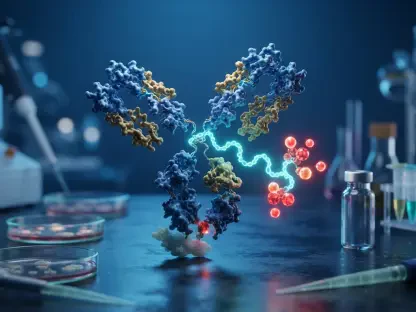

The clinical reality of lineage plasticity allows prostate cancer cells to survive treatment by shedding their identity and adopting forms that do not require androgen. This phenomenon presents a persistent challenge in oncology, as traditional therapies predominantly target the androgen receptor (AR) pathway. Recent findings published in Molecular Cancer have illuminated a hidden driver behind this adaptability, known as cancer stemness. By adopting characteristics typically reserved for undifferentiated stem cells, prostate cancer cells gain a terrifying level of biological flexibility. This transition allows them to survive in harsh environments, such as those created by hormone deprivation therapy. Utilizing a massive computational framework that integrates nearly ninety thousand transcriptomic profiles, researchers have begun to map this evolution with surgical precision. The study establishes that stemness is not merely a side effect of malignancy but a primary engine of progression that dictates how a tumor will respond to standard clinical interventions.
The Divergence: Androgen Signaling and Stemness
A pivotal discovery in this investigative journey is the shifting relationship between stemness and the androgen receptor signaling pathway. In the initial stages of tumor development, stemness scores and canonical AR activity actually move in tandem, both increasing as the tumor begins to take hold. However, as the malignancy progresses toward higher Gleason grades—the standard measure of tumor aggressiveness—a significant and dangerous divergence occurs. While AR activity begins to wane, the stemness scores continue a sharp upward trajectory, reaching their absolute peak in metastatic castration-resistant prostate cancer. This inverse relationship suggests that the tumor is fundamentally rewriting its survival manual. By moving away from its dependence on androgens, the cancer effectively renders many of the most potent hormonal therapies obsolete. This shift represents a major hurdle for clinicians who find that the very treatments designed to stop the cancer may actually be selecting for these hardier, more primitive cells.
This transition is a hallmark of lineage plasticity, a sophisticated survival tactic where cancer cells essentially shed their original identity. Instead of remaining as recognizable prostate epithelial cells, they adopt more primitive, stem-like forms that no longer require hormonal triggers to proliferate. This biological escape route explains why many patients who initially respond well to treatment eventually experience a recurrence that is far more difficult to manage. By replicating these patterns in mouse models lacking critical tumor suppressors, such as Pten and Rb1, researchers have confirmed that this is a deeply rooted biological program rather than a series of random mutations. The ability to track this shift through a specialized 12-gene signature, called PCa-Stem, provides a new lens through which the oncology community can view disease progression. Understanding this divergence is the first step in developing strategies that do not just target the current state of the tumor, but also anticipate its future moves.
The Molecular Engine: Driving Resistance Through Synergy
The research goes beyond identifying the existence of stemness by uncovering the specific molecular engine that powers this highly resistant state. At the core of this process is a coordinated network of regulatory factors that work in synergy to maintain the tumor’s proliferative capacity. One of the most critical components of this network is the elevated activity of the MYC oncogene, which is a well-known driver of cell division. When this hyperactivity is combined with the loss of the tumor suppressor RB1, the natural brakes on the cell cycle are effectively removed. This creates a biological environment where cells can divide without the normal constraints that would otherwise lead to senescence or programmed cell death. This combination of genetic factors provides the foundation upon which the high-stemness state is built, ensuring that the tumor remains resilient even when faced with the physiological stress of modern chemotherapy or targeted hormonal deprivation. The interplay between these specific genes creates a formidable barrier to treatment success.
Complementing this genetic instability is a modified form of androgen receptor signaling that functions even when androgen levels are extremely low. This castration-reprogrammed AR activity works alongside the PCa-Stem signature to reinforce the stem-like state of the malignant cells. Rather than the AR pathway being completely silenced, it is essentially hijacked to support different biological processes that favor survival over differentiation. This molecular cooperation ensures that high stemness is not a random occurrence but a highly reinforced program that allows the tumor to thrive under intense therapeutic pressure. By identifying this specific “perfect storm” of factors, the study provides a clear roadmap for future drug development. The focus is shifting toward disrupting these cooperative networks rather than targeting individual proteins in isolation. If the synergy between MYC and the PCa-Stem signature can be broken, it may be possible to halt the growth of even the most aggressive forms of the disease by removing the biological support system they rely on.
Spatial Expansion: Mapping the Cellular Identity Shift
Using advanced spatial and single-cell transcriptomic analyses, investigators have been able to pinpoint exactly where this stemness resides within the tumor architecture. They discovered that the PCa-Stem program is not uniformly distributed but is instead concentrated in specific lineage-plastic epithelial cells. These are the specific cells that are currently in the process of transforming their identity to evade destruction. The study demonstrates that as the disease advances, these stem-like cells do not just change internally; they physically expand their territory within the tumor microenvironment. This finding is critical because it clarifies a long-standing question in the field of oncology regarding why bulk-tumor stemness scores rise so significantly. It is not just that every cell is becoming slightly more stem-like, but rather that a specific colony of highly resistant, primitive cells is physically outgrowing and replacing other, more vulnerable cell types. This cellular takeover explains the uniform resistance seen in advanced cases.
The expansion of these cell populations highlights the dynamic nature of the tumor microenvironment and how it supports the growth of the most adaptable cells. As these lineage-plastic cells proliferate, they create a dominant population that dictates the clinical outcome for the patient. This physical dominance of stem-like populations suggests that the progression of prostate cancer is as much about cellular competition as it is about genetic mutation. By mapping these cells in their spatial context, researchers have gained a better understanding of how the tumor maintains its structural integrity while evolving to meet new challenges. This mapping also reveals how these cells interact with surrounding non-malignant tissue to further their survival. Such insights are invaluable for developing therapies that can penetrate these specialized colonies or disrupt the signals they use to coordinate their growth. Targeting the physical expansion of these populations could provide a way to contain the cancer before it reaches a state of total systemic resistance.
Clinical Utility: Targeted Paths for Personalized Care
The practical application of these findings lies in the 12-gene PCa-Stem signature, which has shown significant promise as a prognostic tool for modern clinicians. When validated across multiple independent patient cohorts, high stemness scores consistently and independently predicted poor survival outcomes and a much higher likelihood of failing standard androgen-targeted therapies. This provides a tangible way for medical professionals to identify high-risk patients much earlier in their treatment journey than was previously possible. Instead of waiting for a patient to show signs of biochemical recurrence or metastatic growth, doctors might use this molecular fingerprint to tailor treatments more aggressively from the start. This proactive approach could involve combining standard treatments with experimental therapies designed to inhibit the stemness program. By identifying the molecular “escape route” before the tumor has a chance to use it, the medical community can move closer to a truly personalized model of care that accounts for the unique biological trajectory of each individual tumor.
Strategic efforts in the lab successfully demonstrated that “de-stemming” therapies could effectively dismantle the molecular machinery of resistance. By pharmacologically inhibiting MYC or depleting key genes within the PCa-Stem signature, researchers suppressed the aggressive phenotypes that typically defined treatment-resistant tumors. These interventions provided a crucial proof-of-concept for shifting the focus from killing cancer cells to forcing them back into a more differentiated, manageable state. Clinicians and researchers then prioritized the development of dual-action therapies that targeted both the AR pathway and the underlying stemness network simultaneously. This approach aimed to close the biological loopholes that allowed the cancer to persist and evolve under pressure. Future clinical trials were designed to integrate these molecular insights into routine diagnostics, ensuring that every patient’s treatment plan accounted for the potential for lineage plasticity. By addressing the root causes of adaptability, the oncology field established a new framework for preventing lethal progression.