


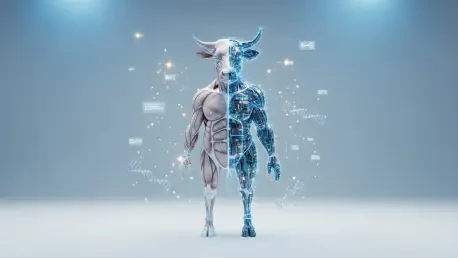

The legendary image of the American bison as a symbol of the untamed wilderness has long been complicated by a history of hybridization that many ranchers and conservationists are only now beginning to fully quantify through advanced genomic sequencing. While the term Beefalo was once touted as a revolutionary breakthrough in livestock management, combining the hardiness of the wild buffalo with the docile nature and meat quality of domestic cattle, recent findings suggest the genetic balance is heavily skewed toward the latter. Researchers examining herds across North America have found that the actual bison contribution to many of these animals is significantly lower than previous estimates suggested, often falling below the threshold required to maintain the unique physiological benefits of the wild ancestor. This revelation forces a reconsidering of what constitutes a heritage breed and highlights the unintended consequences of early twentieth-century experiments that sought to engineer a more resilient bovine for the harsh plains. As the industry moves toward more transparent labeling and genetic verification, the reliance on phenotypic traits alone is becoming increasingly obsolete for both researchers and commercial producers seeking to preserve ancestral lineages.
Genomic Revelations in Hybrid Populations
The Disparity Between Ancestry and Appearance
Biological characteristics often mislead the casual observer because the visual markers of a bison, such as the distinctive hump or dark woolly coat, can persist even when the vast majority of the animal’s genetic makeup is derived from domestic cattle. Scientists have observed that selective pressures in ranching environments frequently favor cattle-like traits for growth and temperament, leading to a rapid dilution of the bison genome over several generations of backcrossing. In many contemporary Beefalo populations, the genomic footprint of the American bison has dwindled to less than five percent, yet these animals are still marketed and managed as significant hybrids. This discrepancy raises serious questions about the authenticity of such breeds and whether the ecological niche they were intended to fill remains viable. Extensive testing across both private and public sectors revealed that the mitochondrial DNA is frequently entirely bovine, suggesting that early breeding programs relied heavily on domestic cows as the foundation for these lineages. This genetic lopsidedness means that the specialized metabolic and immune system advantages associated with pure bison are often absent in modern Beefalo.
Technical Precision in DNA Mapping
To resolve these questions of ancestry, geneticists are utilizing high-density Single Nucleotide Polymorphism arrays that allow for a granular look at the millions of base pairs within the bovine genome. This level of technical precision makes it possible to identify specific segments of the chromosome that originated from the American bison versus those from the various breeds of European cattle used in historical crossbreeding. By mapping these sequences, researchers can pinpoint exactly where the hybridization occurred and how those genes have been passed down through specific lineages since the initial experiments. The clarity provided by this technology has stripped away the ambiguity that once surrounded the Beefalo label, providing a rigorous scientific framework for defining the animal’s true heritage. It also allows for the identification of rare bison alleles that may still reside in hybrid populations, offering a potential lifeline for the preservation of genetic diversity that might otherwise be lost. The ongoing study of these genomic markers is providing the data necessary to develop more sophisticated breeding programs that prioritize the removal of domestic cattle genes from conservation herds.
Implications for Conservation and Commercial Ranching
Redefining Purity Standards for Modern Herds
Establishing new benchmarks for genetic purity has become a primary objective for environmental organizations and government agencies tasked with protecting the American bison. The realization that cattle genes are far more pervasive than once thought has sparked a debate over whether a certain percentage of introgression should be tolerated or if the goal should be the absolute elimination of cattle DNA. Many conservationists argue that maintaining the wild character of the bison requires a strict adherence to genetic standards, while others suggest that some hybrid animals may still play a valuable role in maintaining grassland ecosystems. This tension is driving the development of new management protocols where genomic testing is conducted at every stage of a herd’s life cycle to track the persistence of cattle alleles. From 2026 to 2029, the focus will likely shift toward isolating the few remaining pure populations to serve as the genetic foundation for expanding wild herds into areas where they have been absent for over a century, ensuring that the legacy of the American bison is preserved through scientific accuracy rather than tradition.
Economic Adjustments in the Meat Industry
The commercial side of the Beefalo industry also faced a period of significant adjustment as consumer demand for transparency and authentic heritage products continued to rise during this transition. Buyers who paid a premium for bison or high-quality hybrid meat became increasingly savvy about the nutritional differences between wild and domestic animals, leading to calls for more accurate labeling. Stakeholders across the agricultural and conservation sectors took decisive steps to integrate genomic auditing into their standard operational procedures after the findings were released. Ranchers began implementing routine DNA screening for all calves entering the breeding pool to ensure that the genetic profile of the herd aligned with long-term commercial and ecological goals. This proactive approach allowed for a more nuanced understanding of herd health, facilitating the removal of problematic cattle-derived alleles while preserving beneficial traits. By shifting the focus from visual heritage to verified genomic data, the industry stabilized market values and provided a clear path forward for sustainable bison conservation.







