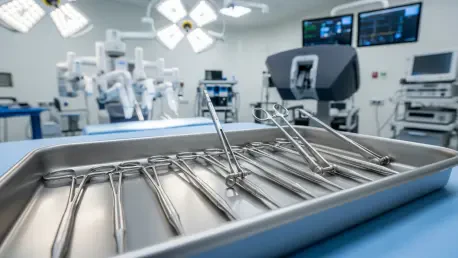

Modern healthcare facilities are increasingly moving away from reactive cleaning protocols toward integrated, autonomous systems that ensure surgical instruments remain sterile during the most complex medical procedures. This fundamental shift represents a broader transformation within the global medical landscape, where the focus is now squarely on the prevention of hospital-acquired infections through proactive engineering. By embedding sterilization capabilities directly into the hardware of surgical tools and bedside equipment, the industry is effectively removing the variables of human error and inconsistent manual cleaning cycles. This evolution is not merely a response to recent health crises but a structural adjustment to the realities of modern medicine, which demands high-speed turnovers and flawless hygiene standards. As medical practitioners seek more reliable ways to safeguard patient health, the adoption of self-sterilizing technologies has transitioned from an experimental luxury to a foundational requirement for any facility aiming to achieve top-tier clinical outcomes.
Robust Economic Trajectory: Analyzing Future Market Valuations
The economic landscape for these advanced medical solutions suggests a period of sustained and rapid growth as institutions globally reallocate their budgets toward infection prevention hardware. Current financial assessments indicate that the market, which was valued at nearly a billion dollars in 2025, transitioned into 2026 with an estimated valuation of approximately $1.11 billion. This represents a robust compound annual growth rate of 13.7%, a figure that underscores the high level of confidence investors and healthcare providers have in the efficacy of self-disinfecting technologies. Looking further into the future, analysts project that the sector will reach a staggering valuation of $1.88 billion by 2030, with the growth rate slightly accelerating to 14.0% during the final years of the decade. This trajectory is supported by the increasing availability of capital for medical infrastructure projects and a global push to modernize clinics in developing nations, creating a consistent and expanding revenue stream for the industry.
This substantial expansion is not merely a reflection of increased volume but indicates a qualitative shift in the types of products being purchased by high-end medical facilities. While early market growth was largely driven by simple antimicrobial coatings and chemical additives, the current phase of development focuses on complex, multi-layered sterilization systems integrated into the device architecture. These next-generation products are designed to handle the heavy workload of modern surgical theaters without requiring the frequent downtimes associated with traditional autoclaving or harsh chemical baths. By reducing the margin for human error during the cleaning process, these devices allow hospitals to maintain a higher throughput of patients while simultaneously lowering the risk of cross-contamination. Consequently, the high valuation projected for 2030 reflects a market that has moved beyond niche applications to become the standard for critical care environments where traditional sterilization methods are no longer sufficient to meet modern safety benchmarks.
Technical Breakthroughs: Mechanisms of Constant Decontamination
The engineering behind self-sterilizing medical devices relies on a sophisticated combination of material science and active electronic components to proactively eliminate microbial threats. Unlike traditional equipment that remains passive between cleaning cycles, these advanced tools utilize antimicrobial coatings, such as specialized silver ions or copper alloys, that naturally disrupt the cellular membranes of bacteria and viruses upon contact. In addition to these passive surfaces, many new devices are incorporating miniaturized UV-C light emitters that provide continuous, targeted irradiation to keep internal components free from biofilms. This dual-action approach ensures that the equipment remains in a constant state of decontamination, even during prolonged use in a clinical setting. The integration of these technologies into the actual manufacturing process of the device represents a significant departure from older methods, which often treated sterilization as an external, secondary step rather than a primary function of the medical instrument itself.
Maintaining a constant state of sterility is particularly crucial in high-stakes environments such as intensive care units and operating rooms, where the presence of even a single pathogen can lead to catastrophic outcomes. By utilizing internal mechanisms that function autonomously, these devices significantly reduce the administrative and labor-intensive burden on hospital staff, who previously spent hours on manual disinfection workflows. This automation minimizes the inconsistencies that inevitably arise when cleaning protocols are performed by different individuals across various shifts, providing a reliable level of safety that is measurable and repeatable. Furthermore, the development of biocompatible surfaces ensures that these self-disinfecting properties do not interfere with the physical performance of the tool or the safety of the patient during invasive procedures. As the technology continues to mature, we are seeing a broader range of applications, from simple handheld instruments to complex diagnostic machinery, all benefiting from the same fundamental principles of autonomous and continuous microbial suppression.
Infection Control Challenges: Driving the Push for Innovation
The persistent threat of healthcare-associated infections remains a primary catalyst for the rapid adoption of self-sterilizing technologies across the global medical sector. Data from regions such as Australia have long demonstrated that a significant percentage of hospital complications are directly linked to infections that occur during the recovery process, proving that even the most rigorous manual cleaning protocols are often insufficient in the face of resistant superbugs. Traditional methods of disinfection, while effective for a time, often leave windows of vulnerability where surfaces can become re-contaminated shortly after being sanitized. Self-sterilizing devices bridge this gap by providing a technological safety net that works around the clock to combat microbes before they can establish a colony. This continuous action is essential for preventing the type of cross-contamination that occurs when staff or equipment move between patients, effectively breaking the chain of infection in busy clinical environments that lack the luxury of downtime.
Parallel to the infection control crisis is the global surge in surgical volumes, which has placed an unprecedented strain on sterilization departments and equipment availability. As populations age and chronic illnesses become more prevalent, the frequency of complex procedures, including robotic-assisted surgeries, is rising sharply, requiring tools that can handle rapid turnover without sacrificing safety. The widespread adoption of platforms like the da Vinci surgical system has illustrated the necessity for high-tech instruments that are both precise and easy to maintain in a sterile state. These advanced surgical systems require a level of hygiene that manual scrubbing can struggle to provide consistently, making self-disinfecting features an attractive option for hospitals looking to maximize the utilization of their expensive robotic assets. By integrating sterilization into the devices themselves, healthcare providers can ensure that their most critical tools are always ready for the next operation, thereby increasing operational efficiency and reducing the backlog of essential surgical procedures.
Global Market Dynamics: Financial Incentives and Regional Dominance
Economic considerations are playing an increasingly pivotal role in the procurement strategies of modern hospitals, particularly in regions where healthcare expenditures are reaching record levels. While the initial capital investment for self-sterilizing medical devices is typically higher than that for standard instruments, the long-term financial benefits are becoming impossible for administrators to ignore. By significantly reducing the incidence of hospital-acquired infections, these devices help to eliminate the massive costs associated with extended patient stays, additional pharmaceutical treatments, and potential legal liabilities stemming from preventable complications. In the United States, where the cost of treating a single surgical site infection can reach tens of thousands of dollars, the return on investment for autonomous sterilization hardware is realized relatively quickly. This financial incentive is driving a shift in hospital purchasing power, as facility managers look past the sticker price and focus on the total cost of ownership and the substantial savings generated by improved patient safety metrics.
From a geographical perspective, North America currently holds the largest share of the self-sterilizing medical device market due to its advanced infrastructure and early willingness to adopt cutting-edge medical technologies. However, the most significant growth is projected to occur in the Asia-Pacific region, which is expected to expand at the fastest pace through 2030. Countries like India and China are currently investing billions of dollars into their domestic healthcare systems, building thousands of new hospitals and modernizing existing facilities to meet the needs of an expanding middle class. This massive scale of construction provides a unique opportunity to integrate advanced infection prevention solutions directly into the foundational design of new medical centers. Furthermore, local manufacturers in these regions are increasingly entering the market, driving down production costs and making self-sterilizing tools more accessible to a global audience. This shift in production and demand is likely to rebalance the global market, positioning the Asia-Pacific region as a central hub for future innovation.
Strategic Implementation: Navigating the Future of Device Integration
Healthcare administrators successfully integrated these advanced systems by focusing on the standardization of procurement processes and long-term clinical validation. They established clear protocols that prioritized devices with integrated sterilization features during the budgeting phase, ensuring that all departments followed a unified safety standard. By conducting comprehensive internal audits, hospitals identified the high-risk areas where autonomous technology provided the greatest benefit, such as in neonatal care and cardiac surgery units. This targeted approach allowed facilities to manage their capital expenditure effectively while achieving immediate improvements in patient safety scores. Furthermore, the collaboration between clinical staff and engineering teams proved essential for troubleshooting the early deployment of these tools, leading to better operational practices. These organizations recognized that moving away from manual cleaning required a cultural shift among hospital staff, who had to be retrained to trust the built-in capabilities of their new instruments.
Strategic partnerships with material science innovators ensured that the next generation of medical tools met rigorous regulatory benchmarks for both efficacy and patient biocompatibility. Regulatory bodies played a vital role by providing a clear framework for the validation of self-disinfecting surfaces, which encouraged manufacturers to invest in long-term safety research. Hospitals that adopted these technologies early on also implemented data-tracking systems to monitor the lifespan and effectiveness of antimicrobial coatings, providing valuable feedback to the industry. These forward-looking institutions prioritized the creation of a closed-loop hygiene system where every piece of equipment contributed to a sterile environment. By focusing on the total lifecycle of the device, from acquisition to eventual disposal, medical facilities ensured that their investment remained viable and safe for years of continuous use. This proactive stance allowed the industry to move beyond temporary fixes and establish a permanent, tech-driven defense against the evolving landscape of microbial threats in the clinical setting.