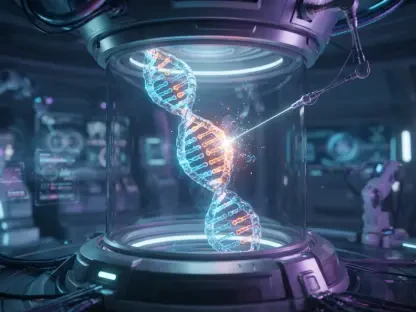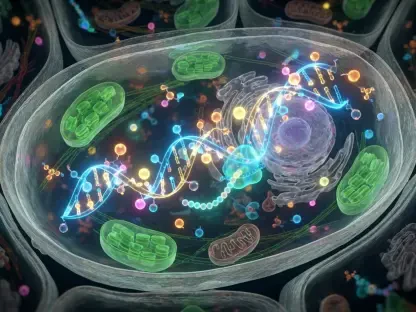

Genetic blueprints have long been visualized as sleek, predictable spirals, yet the hidden reality of our DNA involves complex architectural knots that could hold the secret to dismantling the most aggressive forms of human cancer. While the Watson-Crick double helix remains the foundation of genetic understanding, the internal environment of a living cell is far more chaotic. Within regions of the genome rich in the nitrogenous base guanine, the DNA can fold back on itself to create four-stranded structures known as G-quadruplexes, or G4s. These are not biological accidents; rather, they serve as sophisticated molecular switches that regulate how and when genes are expressed. By stacking guanine bases into stable planes, these knots create physical barriers that dictate the accessibility of the genetic code to the machinery responsible for protein production.
The strategic placement of these G-quadruplex structures is particularly telling, as they are not scattered randomly throughout the genome. Instead, they cluster within the promoter regions and enhancers of genes that control cellular growth, survival, and proliferation. In a healthy cell, these knots form and dissolve as needed, maintaining a delicate balance. However, in malignant cells, the regulation of these structures often fails, allowing oncogenes to remain stuck in the “on” position. Scientists now recognize that if a therapeutic agent can specifically target and stabilize these G4 knots, it might be possible to physically lock down the expression of cancer-driving genes, offering a method of control that bypasses the limitations of traditional protein-targeting therapies.
Beyond the Double Helix: The Genomic Knots Controlling Cancer
The transition from viewing DNA as a static library to understanding it as a dynamic structural landscape has revolutionized modern oncology. For decades, researchers treated non-canonical DNA structures as genomic noise or experimental artifacts. Today, high-resolution mapping has identified hundreds of thousands of potential G4-forming sequences, revealing that these “molecular knots” are essential components of the cell’s regulatory toolkit. When these structures form, they can block the progress of RNA polymerase, effectively silencing the associated gene. This physical mechanism of inhibition provides a layer of control that exists entirely independently of the genetic code itself, suggesting that the shape of DNA is just as important as its sequence.
Harnessing these structures requires a deep understanding of their thermodynamic stability. Most G4 knots have a melting temperature near thirty degrees Celsius, meaning they are inherently transient and prone to unfolding. In the context of cancer, this instability is a liability; it allows oncogenes to be transcribed at high rates without interruption. By developing drugs that can “lock” these G4 structures into a stable configuration, researchers hope to create a permanent roadblock for the transcription machinery. This approach targets the very foundation of cancer’s growth signals, aiming to turn off the master switches that allow tumors to survive and thrive in a hostile cellular environment.
The Holy Grail of Oncology: Why c-MYC Has Evaded Science for Decades
For over thirty years, the protein known as c-MYC has occupied a singular position in oncology as a master regulator that drives the progression of approximately 70 percent of all human tumors. This versatile transcription factor coordinates thousands of genes involved in cell division and metabolic reprogramming, essentially acting as the primary engine for cancer growth. Despite its undeniable importance, c-MYC has earned a reputation as the “holy grail” of drug discovery because it is fundamentally undruggable by traditional means. Most successful drugs work like a key in a lock, finding a specific, rigid pocket on a protein to inhibit its function. However, the c-MYC protein is intrinsically disordered, possessing a shapeless, floppy structure that offers no consistent binding site.
The failure of traditional pharmacology to silence c-MYC has led to a major paradigm shift in how researchers approach the problem. Instead of attempting to neutralize the protein after it has already been manufactured, the focus has moved upstream to the DNA architecture itself. The promoter region of the c-MYC gene contains a highly sensitive G-quadruplex sequence that acts as a gatekeeper for its transcription. By shifting the therapeutic focus toward this genomic knot, science can potentially bypass the shapeless nature of the protein entirely. If the DNA gate can be kept closed by a stabilizing molecule, the c-MYC protein is never produced, effectively silencing the cancer’s master regulator at the blueprint stage before it can cause cellular damage.
Overcoming the Paradox of Failed G4 Ligands and Modern Drug Standards
The quest to find molecules capable of binding to G-quadruplexes has revealed a startling conflict between biochemical efficacy and the standardized filters of modern medicinal chemistry. Over the years, researchers have identified thousands of potential G4 ligands, yet the transition from the laboratory bench to the patient bedside has been remarkably slow. This stagnation is often attributed to rigid drug-like criteria that favor small, soluble, and easily absorbed molecules. Unfortunately, the very features that make a compound a potent G4 stabilizer—a large, flat, aromatic surface area—frequently result in poor solubility and a tendency to stick to unintended surfaces. These characteristics often lead many promising candidates to be discarded during early-stage screening.
This chemical trade-off has created a paradox where the most biologically active molecules are often the least druglike by conventional standards. When a molecule is modified to improve its solubility in water or its ability to circulate in the bloodstream, it often loses the precise structural alignment required to stack effectively within a G-quadruplex knot. Consequently, the industry has spent years testing compounds that are easy to formulate but lack the grip necessary to keep the c-MYC promoter locked down. Bridging the gap between exceptional biological activity and practical physical properties requires a departure from standard screening protocols, favoring innovative delivery systems over the fundamental alteration of the active molecule’s core chemistry.
The Resurrection of Bisantrene: Applying Modern Formulation to Proven Biology
One of the most compelling examples of this strategic shift involves the resurrection of bisantrene, a compound that has existed in the clinical archives for decades. Originally developed by Lederle Laboratories in the late 20th century, bisantrene underwent extensive testing and even received regulatory approval in Europe. It demonstrated profound efficacy in treating acute myeloid leukemia, yet it was eventually sidelined due to a significant delivery hurdle. The drug was essentially insoluble at the pH levels found in human blood, which caused it to crystallize almost immediately upon injection. This led to severe vascular irritation and required patients to undergo complex administration, a burden that many clinicians were unwilling to accept as newer drugs entered the market.
However, modern genomic insights have provided bisantrene with a new identity as a potent G-quadruplex stabilizer. Rather than letting this proven molecule remain in obscurity, the development of the formulation known as RC220 has finally addressed the crystallization issues that hindered its predecessors. By utilizing sophisticated chemical engineering, researchers have created a stable version of bisantrene that remains in solution long enough to be delivered safely and effectively. This approach of working backward from a drug with established human safety and efficacy data represents a more efficient model for drug development. Instead of guessing how a new molecule might behave in the human body, scientists are using contemporary formulation techniques to unlock the potential of a compound that was already known to kill cancer cells.
A Multifaceted Clinical Strategy: From Leukemia to Cardio-Protection
The clinical deployment of RC220 is not limited to a single disease but is part of a multifaceted strategy spanning from 2026 to 2028 and beyond. The primary focus remains on acute myeloid leukemia, where a Phase 3 program is currently evaluating the drug’s ability to treat patients with relapsed or refractory disease. Because leukemia cells are readily accessible in the blood, this program serves as a real-time proof-of-concept for G4 stabilization. Researchers can observe the rapid collapse of c-MYC levels in patient samples, providing immediate confirmation that the drug is functioning as intended. This clarity in the mechanism of action allows for more precise dosing and faster clinical decisions compared to standard solid tumor trials.
Beyond the realm of blood cancers, RC220 is showing promise in tackling resistance in non-small cell lung cancer. Many patients with specific mutations eventually stop responding to standard treatments because their tumors find alternative pathways to survive, often involving the upregulation of c-MYC. By combining RC220 with existing tyrosine kinase inhibitors, clinicians hope to block these escape routes. Furthermore, a revolutionary application in cardio-oncology suggests that RC220 may protect the heart from the toxic effects of other chemotherapies. While drugs like doxorubicin are effective against tumors, they frequently cause permanent heart damage; however, RC220 appears to shield cardiac cells from this destruction by modulating the same pathways it uses to kill cancer.
The journey toward mastering G-quadruplex stabilization represented a fundamental shift in how the medical community perceived the undruggable nature of master oncogenes. Researchers identified that looking past elusive protein structures to the architecture of the DNA itself opened a door that had been locked for decades. The strategy prioritized functional biological activity over rigid adherence to traditional chemical filters, which allowed for the successful revival of potent compounds like bisantrene. These advancements provided a clear roadmap for the future, demonstrating that many of the most effective tools for fighting disease might already exist within the pharmacological archives. The data suggested that the next generation of cancer therapy would rely on “working backward” from established human efficacy and applying modern genomic insights to solve historical delivery problems. This evolution in drug discovery highlighted the importance of viewing genomic complexity as an opportunity for precision rather than an obstacle to progress.