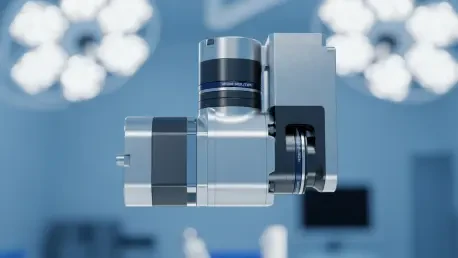

The precision required for modern robotic-assisted surgery has reached a threshold where traditional component-matching methods often fail to meet the rigorous demands of next-generation clinical environments. Engineers now face the daunting task of cramming more power and intelligence into smaller, more ergonomic housings than ever before. In 2026, the shift from sourcing discrete parts to adopting integrated motion subsystems has become a necessity for staying ahead in the medical device market. This evolution is particularly evident in fields like neurosurgery and ophthalmology, where sub-millimeter accuracy is non-negotiable. Instead of spending months calibrating motors from one supplier with gearheads from another, engineering teams are prioritizing unified solutions that offer a plug-and-play experience. This transition streamlines the development process and allows for a more holistic approach to device architecture. By focusing on the system as a whole, manufacturers can push the boundaries of automated healthcare.
Subsystem Definitions and Applications
The Core Elements: Unified Motion
Integrated motion subsystems are fundamentally changing how engineers view mechanical design by combining the motor, gearhead, and high-resolution encoder into a single, factory-validated unit. This structural cohesion eliminates the misalignment and resonance issues that typically plague assemblies built from mismatched components. In 2026, many of these units also incorporate embedded motion controllers, effectively creating a smart actuator that communicates directly with the central processing unit of the medical device. This level of integration ensures that the torque, speed, and positioning feedback are perfectly tuned to the specific load requirements of the application. Furthermore, these subsystems undergo rigorous testing as a complete assembly, providing a performance guarantee that individual parts cannot match. This approach reduces the mechanical footprint significantly, which is a critical factor for robotic end-effectors that must operate within the confined spaces of a patient’s anatomy.
Application Landscapes: Surgery and Labs
The physical form of integrated motion systems varies depending on the device’s intended use, ranging from ultra-compact handheld tools to massive laboratory automation platforms. In handheld surgical instruments, components must be packed into ergonomic, sealed housings where space is at a premium and weight distribution is vital for surgeon comfort. Integrated designs allow for a better center of gravity, reducing hand fatigue during long and complex procedures. In 2026, these systems are also increasingly utilized in large-scale surgical robots, where they function as high-precision joint assemblies that enable smooth and fluid movement. The modularity of these subsystems allows roboticists to design arms with more degrees of freedom without the traditional bulk associated with separate gearboxes and encoders. This flexibility is essential for creating the next generation of minimally invasive surgical platforms that require extreme dexterity within the human body.
Strategic Benefits and Operational Efficiency
Mitigating Risk: Maximizing Talent
A significant driver for the adoption of integrated systems is the deepening shortage of specialized motion control engineers who possess the rare expertise required to fine-tune complex electro-mechanical chains. By partnering with suppliers who specialize in integrated subsystems, medical device manufacturers can effectively bridge this talent gap and reallocate their internal engineering resources toward their core clinical innovations. This strategic move allows an original equipment manufacturer to focus on proprietary software, patient safety, and clinical outcomes rather than the minutiae of motor commutation or gear tooth profiles. In the competitive landscape of 2026, the speed at which a new device moves from concept to clinical trials determines its market viability. Relying on an expert partner for motion subsystems reduces the design cycle by several months, as the burden of validation and performance characterization is shifted to the supplier. This collaborative model fosters innovation by ensuring every component is optimized by experts.
Supply Chain: Operational Stability
Operational efficiency is further enhanced through the radical simplification of the supply chain and the associated regulatory documentation required for medical device clearance. Managing a single part number for a complete motion subsystem is exponentially more efficient than tracking dozens of individual components, each with its own lead times, quality certificates, and vendor risks. This consolidation minimizes the potential for production delays caused by a single missing part and provides a more stable foundation for long-term manufacturing. From a regulatory standpoint, having a single source for the motion system simplifies the submission process for agencies like the FDA or EMA, as the subsystem provider can supply comprehensive validation data for the entire unit. This unified documentation reduces the administrative burden on the manufacturer and ensures a more consistent quality record across the device’s lifecycle. In a world where trade disruptions are common, a streamlined vendor base provides a critical competitive advantage for medical OEMs.
Technical Optimization and Device Reliability
Energy Efficiency: Thermal Management
Technical performance reaches new heights when motion components are engineered together, particularly regarding energy efficiency and thermal management in battery-operated instruments. In 2026, the demand for portable, wireless surgical tools has increased, making power consumption a primary design constraint for engineering teams. Integrated subsystems allow for the elimination of unnecessary mechanical interfaces and couplings, which in turn reduces internal friction and minimizes energy loss. This efficiency directly translates to longer battery life and reduced heat generation, both of which are vital for tools that must remain comfortable and safe for a surgeon to hold during long procedures. Furthermore, integrated designs allow for the implementation of advanced thermal dissipation paths that are impossible to achieve with a modular approach. By utilizing the housing of the entire subsystem as a heat sink, engineers can maintain high power density without exceeding the strict temperature limits required for patient contact, resulting in a lighter tool.
System Robustness: Reducing Failure
Reliability is perhaps the most significant beneficiary of the move toward integrated motion, as reducing the total number of parts and physical connections inherently lowers the probability of failure. In high-stakes medical environments, even a minor mechanical glitch can have serious consequences, necessitating a level of robustness that standard industrial components often lack. Integrated subsystems remove the common failure points found in couplings, external wiring, and manual mounting brackets, creating a more rugged and dependable assembly. When every component is designed to work within a specific environment, such as the high-vibration setting of a dental drill or the sterile conditions of an operating room, the overall longevity of the device is significantly improved. If a performance deviation does occur, having a single accountable unit simplifies the troubleshooting and root-cause analysis process for the maintenance team. Instead of investigating multiple separate parts, they can evaluate the entire motion chain as one entity.
Global Support and Product Longevity
International Markets: Global Presence
The global nature of the medical device industry in 2026 requires a support structure that can bridge the gap between design centers in North America and manufacturing hubs across Asia or Europe. Suppliers with a worldwide engineering footprint provide a crucial advantage by offering localized support that aligns with regional time zones and cultural business practices. This global presence ensures that design reviews and technical troubleshooting can happen in real-time, preventing the costly delays that often occur when waiting for responses from across the globe. Furthermore, local engineers who are familiar with specific regional regulatory environments can provide invaluable guidance during the early stages of product development. This ensures that the motion subsystems not only meet international performance standards but are also compliant with the nuances of local healthcare laws. Having a partner who can support a product from its initial prototype to its mass production is essential for maintaining a seamless development pipeline.
Future Readiness: Sustaining Life Cycles
The transition toward integrated systems fundamentally transformed how engineers approached medical robotics, proving that unified design was the most effective path forward for complex clinical applications. In 2026, this strategic shift successfully addressed the dual challenges of miniaturization and reliability, allowing for the rapid deployment of life-saving technologies across the globe. To fully capitalize on these advancements, manufacturers must continue to cultivate deep partnerships with motion specialists who can provide end-to-end expertise. Future development should prioritize the further integration of advanced sensors and predictive analytics directly within these motion modules to shift from reactive maintenance to proactive clinical optimization. By embracing this holistic engineering philosophy, the industry ensured that next-generation tools remained both innovative and accessible for diverse patient populations. Moving forward, the focus must remain on refining these unified platforms to drive the next decade of medical breakthroughs in surgical precision and laboratory automation.