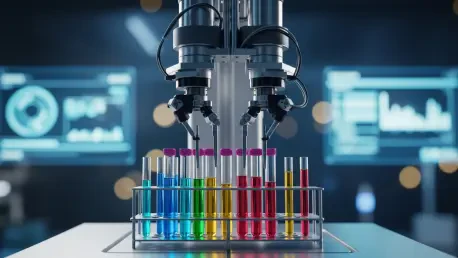

The traditional image of a bustling laboratory filled with researchers in white coats is undergoing a profound transformation as the Institute of Science Tokyo unveils its Robotics Innovation Center at the Yushima campus. This pioneering facility operates as a completely unmanned environment where advanced machines execute complex biomedical procedures that were previously dependent on the delicate touch of human hands. By deploying a fleet of sophisticated systems, including the versatile Maholo LabDroid, the institution is setting a new precedent for how scientific inquiry is conducted in an era defined by rapid technological convergence. The integration of high-level robotics with sophisticated artificial intelligence signifies more than just a gain in efficiency; it represents a fundamental shift in the methodology of discovery, where experiments are planned, executed, and validated with a level of autonomy that was once confined to the realm of speculative fiction.
Bridging the Gap Between Automation and Human Precision
Enhancing Throughput and Reducing Experimental Variance
The primary technical objective driving the Robotics Innovation Center is the systemic transition from manual “wet-lab” procedures toward a decentralized, automated framework that operates without direct human intervention. At the heart of this evolution is the Maholo LabDroid, a humanoid system equipped with dual arms that provide the dexterity needed to handle standard laboratory equipment rather than requiring expensive, specialized hardware. This adaptability allows the robots to perform essential but highly repetitive tasks, such as the precise transfer of fixed reagent volumes and the long-term management of sensitive cell cultures. Because these machines do not suffer from physical fatigue or the subtle tremors inherent in human movement, they achieve a level of consistency that is difficult to replicate in traditional settings, ensuring that every pipetting step is performed with absolute uniformity across thousands of iterations.
Beyond the mechanical advantages of precision, the introduction of these automated systems addresses the pervasive issue of experimental variance caused by human error, which has long been a bottleneck in biomedical research. The facility is designed to run 24 hours a day without any on-site supervision, significantly accelerating the throughput of cell cultivation and reagent testing compared to labs constrained by human working hours. This continuous operational model is particularly vital for longitudinal studies, such as those involving induced pluripotent stem (iPS) cells, which require constant monitoring and precise environmental adjustments to maintain their viability. By removing the human element from the physical execution of these tasks, researchers can ensure that their data is generated under controlled conditions that are rigorously documented and perfectly repeatable, effectively neutralizing the variables that often lead to conflicting results.
The Evolution of Standardized Laboratory Environments
The implementation of the Maholo LabDroid also marks a departure from traditional industrial automation, which typically relies on rigid, purpose-built machinery that lacks the flexibility to adapt to changing experimental needs. Instead, these humanoid systems are designed to exist within existing laboratory infrastructures, utilizing the same tools and instruments that human scientists have used for decades. This approach allows for a more seamless integration of robotics into current research workflows, as institutions do not need to overhaul their entire physical plant to accommodate the new technology. The ability of a single robot to move between different stations—handling centrifuges, incubators, and analytical balances—creates a dynamic environment where the machine functions as a direct surrogate for the human researcher, albeit one that operates with digital precision and tireless endurance.
Furthermore, this move toward standardized automation serves as a powerful solution to the “reproducibility crisis” that has hindered the progress of the biomedical sector for years. When experimental protocols are encoded into robotic software, every nuance of the procedure is recorded as a line of code, creating a version-controlled history of the experiment that can be shared and replicated exactly by other labs around the world. This level of transparency ensures that if a breakthrough is achieved in Tokyo, a similarly equipped facility in another region can verify the findings by running the exact same digital script. This shift from descriptive protocols to executable code transforms the nature of scientific communication, making the sharing of methodologies as precise as the sharing of data itself, and fostering a global environment of trust and verifiable progress.
Strategic Scaling and the Integration of Artificial Intelligence
Driving Global Competitiveness Through Industrial-Scale Science
The Institute of Science Tokyo has articulated a bold long-term vision that involves scaling its current fleet of 10 robotic units to approximately 2,000 units by the year 2040. This roadmap signals a strategic pivot toward what experts call “industrial-scale science,” a model where the sheer volume of high-quality data generated through automation can provide a decisive competitive advantage on the global stage. Leaders of the project have positioned this initiative as a critical response to the shrinking specialized workforce, aiming to maintain the nation’s status as a leader in scientific innovation. By creating a massive infrastructure of automated labs, the university intends to move beyond small-scale studies and engage in high-throughput discovery that can process thousands of samples simultaneously, drastically shortening the time required to bring new medical treatments from the laboratory to the clinical trial phase.
This technological expansion is deeply intertwined with the fusion of robotics and advanced artificial intelligence, creating a “closed-loop” system where the software is not just an observer but an active participant in the scientific process. In this framework, AI models analyze the data generated by the robots in real-time, identifying patterns or anomalies that might be invisible to the human eye. Based on these insights, the AI can autonomously generate new hypotheses and reprogram the robots to conduct follow-up experiments without waiting for human approval. This iterative cycle of discovery allows the laboratory to evolve its own research direction, optimizing experimental parameters at a speed that far outpaces traditional human-led investigation. This synergy between physical automation and cognitive computing represents the next frontier of research, where the laboratory becomes a self-evolving engine of knowledge.
Expanding the Technological Ecosystem Beyond Urban Hubs
While the Robotics Innovation Center serves as a high-profile flagship for this movement, it is part of a broader trend of technological democratization across the Japanese research landscape. Other institutions, such as Hokkaido University through its FLUID project, are exploring open-source and 3D-printed laboratory robots to make automation more accessible to smaller labs and regional universities. This decentralized approach ensures that the benefits of robotic precision are not limited to elite, well-funded centers but can be integrated into diverse research environments. The goal is to create an interconnected ecosystem where different types of robotic systems can communicate through standardized protocols, allowing for a collaborative network of automated labs that can share resources and data seamlessly, regardless of their geographical location or the specific hardware they utilize.
The long-term economic implications of this shift are equally significant, as the initial high costs of engineering and maintaining these robotic fleets are expected to be offset by the dramatic reduction in failed experiments and wasted reagents. By ensuring that every procedure is performed correctly the first time, institutions can maximize the utility of their funding and accelerate the pace of commercialization for new biotechnologies. This shift toward a capital-intensive but high-efficiency model mirrors the transformation seen in other industries, where automation has led to higher quality standards and lower long-term costs. For the scientific community, this means that the focus can shift from the labor-intensive physical tasks of the laboratory to the high-level intellectual work of designing complex studies and interpreting the vast amounts of data that these unmanned systems are capable of producing.
Navigating the Practical and Regulatory Landscapes
Managing Workflows and Ensuring Scientific Oversight
The transition to a fully unmanned laboratory environment necessitates a fundamental reimagining of how research workflows are managed and how oversight is maintained. Practitioners must now treat experimental protocols with the same level of scrutiny as digital software pipelines, implementing rigorous version control systems to track every modification to the robotic instructions. This digital-first approach means that any change in a pipetting sequence or a temperature setting is logged in an auditable format, providing a comprehensive “paper trail” that is entirely electronic. Managing these complex data streams requires a robust laboratory information management system (LIMS) that can integrate physical sample tracking with the environmental logs generated by the robots, ensuring that the “unmanned” nature of the facility does not lead to a loss of control or transparency.
This new paradigm also changes the role of the laboratory staff, who must transition from manual operators to system supervisors and data scientists. The skills required to thrive in this environment are a blend of biological expertise and technical proficiency in robotics and software management. Ensuring that the robots are calibrated and that the AI models are operating within ethical and scientific boundaries becomes the primary responsibility of the human team. This shift requires a significant investment in training and education to prepare the next generation of researchers for a world where their primary interaction with the “wet lab” will be through a digital interface. By emphasizing the importance of human oversight in the design and verification phases, institutions can ensure that the move toward automation enhances rather than replaces the critical thinking that drives scientific progress.
Addressing Regulatory Hurdles and Validation Standards
As robotic systems take on more significant roles in the preparation of materials for clinical and preclinical applications, they must navigate an increasingly complex regulatory landscape. Health oversight agencies are beginning to develop new frameworks for certifying automated processes, ensuring that the lack of a human presence during the execution phase does not compromise the safety or efficacy of the resulting data. This involves establishing rigorous validation standards where robotic performance is benchmarked against established human techniques to prove functional equivalence. For projects involving iPS cells or other sensitive biological materials destined for human use, the level of scrutiny is particularly high, requiring the implementation of advanced sensors and real-time monitoring to detect any mechanical failures or environmental deviations that could affect the integrity of the samples.
The successful integration of these systems into the broader medical ecosystem will ultimately depend on the ability of research organizations to demonstrate that automated discovery is not only faster but also safer and more reliable than traditional methods. This requires a collaborative effort between academic institutions, private industry, and regulatory bodies to create standardized guidelines for the deployment of unmanned labs. As these facilities become more common, the focus will likely shift toward the creation of international certifications for “robotic-ready” protocols, allowing for a global marketplace of scientific services. By proactively addressing these regulatory challenges, the scientific community can ensure that the transition to automation is built on a foundation of trust and accountability, paving the way for a future where machine-led discovery is the gold standard for medical innovation.
Actionable Directions for the Automated Era
The successful launch of the Robotics Innovation Center at the Institute of Science Tokyo established a clear precedent for the viability of unmanned biomedical research. To capitalize on this momentum, research organizations should prioritize the development of standardized digital protocols that can be easily translated across different robotic platforms. Investing in robust laboratory information management systems and specialized training for staff will be essential to maintain oversight as physical tasks are delegated to machines. Furthermore, practitioners must actively engage with regulatory bodies to define the certification requirements for automated processes, ensuring that the data produced meets the highest standards for clinical application. The shift toward industrial-scale science was not merely about replacing human labor but about enhancing the reliability and speed of discovery through the tireless precision of robotics. Moving forward, the focus remained on refining the interaction between human intelligence and machine execution to address the most pressing challenges in global health.