


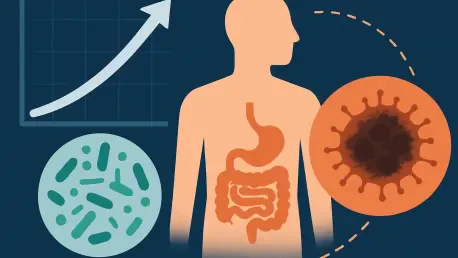

The microscopic inhabitants of the human digestive tract have evolved from biological bystanders into the primary architects of clinical outcomes for those facing the deadliest forms of skin cancer. The gut-immune axis is no longer a theoretical concept but a clinical frontier, with recent breakthroughs suggesting our internal bacteria hold the key to surviving melanoma. As recurrence rates remain a persistent challenge for oncologists, the discovery of microbial fingerprints offers a transformative shift toward personalized oncology and predictive diagnostics. This evolution in care stems from research at NYU Langone Health, illustrating a data-driven shift where the microbiome serves as a stable biomarker for cancer prognosis.
The Surge of Microbiome Data in Precision Oncology
Quantifying the Predictive Power of Microbial Fingerprints
Recent statistical breakthroughs have demonstrated a staggering 83% to 94% accuracy rate in forecasting melanoma recurrence through stool DNA sequencing. This precision offers a stark contrast to traditional methods, which often fail to account for the biological nuances of the individual patient. For years, the clinical gap remained a source of frustration, as 25% to 40% of patients experienced cancer relapse despite receiving modern immunotherapy. The integration of microbiome data fills this diagnostic void, providing a level of foresight that was previously unattainable in standard oncology practices.
Furthermore, the stability of the microbiome as a biomarker enhances its utility in a clinical setting. Research indicates that microbial signatures remain remarkably consistent throughout year-long treatment cycles, which significantly reduces the need for repeated, invasive testing. This constancy allows clinicians to rely on a single initial sample to map out a long-term treatment trajectory. By establishing this baseline, the medical community has moved away from reactive monitoring and toward a proactive model of care that anticipates the behavior of the malignancy before it manifests physically.
Real-World Applications and Global Implementation
The global scope of this trend is evidenced by the use of data from the CheckMate 915 clinical trial, which involved 674 patients across five different regions. This massive undertaking helped create a universal microbial database that accounts for the inherent diversity of human populations. Geographic matching technology now allows clinicians to bypass regional bacterial differences, making microbiome profiling a viable tool for patients regardless of their location. This technology ensures that a patient in North America and a patient in Europe can both benefit from the same predictive models, provided their microbial architectures share fundamental similarities.
Within these clinical research environments, specific bacterial taxa are being used as active indicators for treatment tailoring. Species such as Eubacterium and Ruminococcus have emerged as critical markers for success. When these bacteria are present in specific ratios, they signal a high likelihood of positive response to immune checkpoint inhibitors. Conversely, their absence may prompt oncologists to consider more aggressive or alternative interventions. This level of specificity is turning the gut into a roadmap, guiding the selection of therapies with surgical precision.
Expert Insights on the Gut-Immune Axis
Synthesis of perspectives from lead researchers suggests that the microbiome functions as a training ground for the body’s natural defenses. Experts like Dr. Jiyoung Ahn and Dr. Richard Hayes have highlighted how specific bacteria educate T cells and natural killer cells to recognize and fight malignancy more effectively. This education process is vital for the success of immunotherapy, as the immune system must be primed to distinguish between healthy tissue and cancerous cells. Without this microbial guidance, even the most advanced drugs may fail to trigger the necessary biological response.
Industry viewpoints also reflect a broader shift from a one-size-fits-all immunotherapy approach to a host-microbe integrated strategy. This perspective considers the patient’s unique biological ecosystem as a partner in the healing process rather than just a passive vessel for medication. Moreover, expert analysis has shed light on the metabolic role of bacteria in regulating sugar availability. By effectively starving cancer cells of the glucose they need to proliferate, or by fueling the immune response through metabolic byproducts, the gut microbiome acts as a silent arbiter of survival.
The Future Landscape of Microbiome-Based Cancer Care
The integration of microbiome profiling into standard pre-treatment protocols is expected to revolutionize how doctors adjust the intensity of immunotherapy. By analyzing a patient’s initial stool sample, oncology teams could soon decide whether a standard dose is sufficient or if a more potent combination of drugs is required. This shift promises to maximize efficacy while minimizing unnecessary toxicity for patients who already possess a favorable microbial profile. Furthermore, the potential for microbiome modulation therapies, such as customized probiotics or fecal transplants, offers a way to convert high-risk profiles into low-risk ones.
Scaling this technology remains a significant task, requiring the expansion of massive global databases and the resolution of bioinformatic hurdles. Mapping trillions of microbes for routine clinical use demands robust computing power and standardized reporting across different healthcare systems. However, the methodology used in melanoma is already showing promise for other malignancies. Lung, kidney, and colorectal cancers are the next targets for this matching technology, suggesting that the gut-immune axis will soon become the standard diagnostic lens for a wide array of solid tumors.
Bridging the Gap Between Gut Health and Oncology
The shift in oncological paradigms established the gut microbiome as a definitive roadmap for precision medicine. Researchers proved that the internal ecosystem of a patient was not merely a side effect of health but a primary driver of cancer survival. This transition from general treatment to individualized microbial analysis marked a milestone in care, offering patients a sense of peace that came from near-total predictive accuracy. The ability to forecast recurrence with such high confidence allowed for a level of clinical certainty that was once thought impossible in the field of skin cancer.
Adopting microbial diagnostics became a necessity for moving toward a future where treatment was as unique as the patient’s own biological makeup. The medical community recognized that ignoring the microbiome was no longer an option if the goal was to eliminate the persistent threat of relapse. By prioritizing the gut-immune axis, the healthcare industry successfully bridged the gap between basic biology and advanced oncology. This holistic approach ensured that every facet of the human system was leveraged in the fight against malignancy, setting a new standard for how life-saving therapies were developed and administered.







