
The global healthcare sector is currently witnessing a paradigm shift where the ability to deliver surgical-grade components with microscopic accuracy has become the ultimate differentiator for original equipment manufacturers. THY Precision is positioning itself at the very center of this evolution by transitioning from a standard component supplier into a comprehensive manufacturing hub for the international medical community. By aggressively expanding its operational footprint in Taiwan, the firm is addressing the escalating demand for high-precision plastic injection molding across diagnostic tools, surgical instruments, and long-term care equipment. This strategic pivot reflects a broader industry trend where technical precision and supply chain reliability are no longer just advantages but are the fundamental drivers of commercial success in a competitive market. As manufacturers seek to de-risk their production cycles, the role of a centralized partner becomes critical for maintaining consistency. By integrating design, production, and assembly under a single roof, they offer a streamlined solution that simplifies the complex logistics of medical device production. This vertically integrated approach is specifically designed to reduce lead times and ensure that the technical integrity of a device is maintained from the initial concept through to final delivery.
Quality Assurance: Maintaining Rigorous Compliance with Global Regulatory Frameworks
At the foundational level of THY Precision’s operations lies a resolute commitment to international quality benchmarks, specifically the ISO 13485 and ISO 13485 certifications. These frameworks are not merely badges of honor but represent a comprehensive blueprint for the company’s quality management system, necessitating rigorous risk management and absolute process traceability. For modern medical device companies, this level of oversight is considered non-negotiable because it ensures that every single manufactured part satisfies the stringent safety requirements required for clinical applications. By embedding these standards into the daily workflow, the organization creates a robust environment where quality is measured at every stage of the lifecycle. This methodical approach allows for the identification of potential failures before they occur, thereby safeguarding both the manufacturer’s reputation and patient well-being during critical healthcare interventions. Total process transparency is maintained through meticulous documentation, ensuring that every batch of components can be traced back to its raw material origins.
This regulatory foundation allows the organization to produce a diverse array of medical devices, categorized under Class I, II, and III designations. Whether the task involves manufacturing simple disposable items or high-risk implantable components, the company utilizes validated processes to ensure that all products remain safe for clinical patient use. By maintaining these high standards, they provide a layer of risk mitigation that is essential for manufacturers operating in the heavily regulated healthcare sector. The ability to navigate these complex regulatory waters is what separates top-tier manufacturers from generalists, as the cost of non-compliance can be catastrophic in the medical field. Furthermore, the firm’s commitment to internal auditing and continuous improvement ensures that its quality systems evolve alongside changing international laws. This proactive stance on compliance helps global partners stay ahead of regulatory shifts, allowing them to focus on innovation rather than administrative hurdles. The result is a seamless transition from the laboratory to the market, backed by a quality system that is designed to withstand the highest levels of scrutiny from health authorities.
Operational Excellence: Integrating the CDMO Model within Controlled Environments
The company has successfully transitioned into a full-service Contract Development and Manufacturing Organization, commonly referred to as a CDMO. This specific business model covers the entire product lifecycle, beginning with in-house mold development, which is widely recognized as the most critical factor in determining the quality of the final plastic part. By keeping mold design and production within the same facility, the firm ensures that the original engineering specifications are never compromised during the transition to mass production. This internal synergy eliminates the communication gaps that often occur when outsourcing different stages of the manufacturing process to multiple vendors. Furthermore, the CDMO model allows for rapid prototyping and iterative testing, which significantly accelerates the speed at which new medical technologies can reach the marketplace. By offering a unified point of contact, the organization reduces the administrative burden on its clients, providing a more cohesive experience that prioritizes technical excellence and efficient resource management.
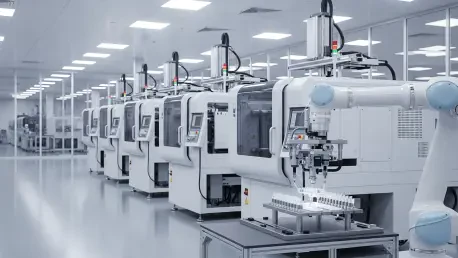
To further guarantee the purity of every product, the company operates specialized cleanroom environments, including ISO Class 7 and ISO Class 8 facilities. These controlled atmospheres are vital for producing contamination-free medical disposables, laboratory consumables, and optical components that require the highest levels of sterility. By housing both injection molding and assembly processes within these cleanrooms, the company protects sensitive parts from microscopic particulates that could otherwise affect the performance or safety of the finished device. This environmental control is particularly important for optical components and microfluidic devices, where even a single speck of dust could lead to inaccurate diagnostic results or mechanical failure. The integration of cleanroom technology with precision molding ensures that the biological and chemical integrity of the medical devices remains intact throughout the production cycle. This dedication to sterility and purity reflects a deep understanding of the requirements of modern medicine, where the prevention of contamination is just as important as the mechanical functionality of the device itself.
Technical Innovation: Advancing Production Through Precision and Automation
The company leverages a sophisticated fleet of over 80 all-electric injection molding machines to achieve unparalleled technical precision. These machines are increasingly preferred in medical manufacturing because they are inherently cleaner and offer more precise control over the molding process than traditional hydraulic systems. This advanced technology allows the firm to achieve tolerances as tight as ±0.001 mm, which is absolutely necessary for the complex geometries found in modern miniaturized medical instruments. As surgical procedures become less invasive, the demand for smaller and more intricate components has surged, placing a premium on the ability to maintain accuracy at the micro-scale. All-electric machines also provide better repeatability, ensuring that the first part of a production run is identical to the ten-thousandth part. This level of consistency is paramount for medical devices, where any deviation in size or shape could have serious implications for device performance. By investing in high-end machinery, the organization remains at the forefront of the technological curve in the medical plastics industry.
Automation plays a pivotal role in maintaining consistent quality across high-volume production runs by integrating Automated Optical Inspection and real-time monitoring. By moving toward Industry 4.0 standards, the company has transformed its factory floor into a smart environment where data-driven decisions are made instantaneously. This shift not only maximizes efficiency and allows for 24/7 production but also significantly reduces the potential for human error, ensuring that every component produced meets exact specifications. The use of robotic arms for part handling and packaging within cleanrooms further minimizes the risk of human contact, preserving the sterile nature of the components. Real-time data collection also enables predictive maintenance, reducing downtime and ensuring that production schedules are met with pinpoint accuracy. This automated approach is especially beneficial for global OEMs that require large quantities of parts without any variation in quality. As the industry continues to move toward more complex and smaller devices, the reliance on high-speed automation will only increase, making these technological investments a cornerstone of the firm’s long-term manufacturing strategy.
Global Logistics: Capitalizing on Regional Infrastructure and Intellectual Protection
Taiwan serves as a strategic base for the organization, offering a robust ecosystem for precision manufacturing and high-tech engineering. The region’s well-established infrastructure and efficient global logistics make it an incredibly attractive alternative for companies looking to diversify their supply chains. Access to a highly skilled workforce and a network of specialized material suppliers ensures that the company can tackle the most challenging engineering problems with confidence. Furthermore, the geographical location provides a gateway to both Eastern and Western markets, facilitating smooth international trade and rapid shipping. The industrial clusters in the region foster a culture of innovation and collaboration, allowing the firm to stay updated on the latest trends in materials science and manufacturing technology. This regional advantage is further amplified by the local government’s support for the high-tech sector, providing a stable and growth-oriented environment for companies involved in medical manufacturing. Consequently, global partners benefit from a reliable supply chain that is resistant to the disruptions seen in other parts of the world.
The strong legal protections for intellectual property in the region provide global OEMs with the confidence that their proprietary designs and trade secrets will remain secure. In the medical device industry, where research and development costs are exceptionally high, protecting intellectual property is a top priority for any organization. By choosing a partner in a jurisdiction that respects and enforces IP laws, manufacturers can collaborate more openly on complex projects without the fear of unauthorized design replication. This trust-based relationship allows for deeper integration between the OEM and the manufacturer, leading to better product outcomes and faster innovation cycles. The company’s internal security protocols also complement these legal protections, ensuring that sensitive data is handled with the utmost care throughout the production process. This dual layer of protection—legal and operational—makes the firm a preferred partner for companies developing cutting-edge medical technologies. In an era where data security and design integrity are paramount, the importance of manufacturing in a secure and transparent environment cannot be overstated for long-term commercial success.
Strategic Directives: Implementing Global Solutions for Medical Logistics
The implementation of vertically integrated manufacturing solutions proved to be a decisive factor in stabilizing the global medical supply chain during recent periods of volatility. By consolidating various stages of production, the company eliminated the fragmentation that previously led to significant delays and quality discrepancies in medical device assembly. The adoption of all-electric molding technology and automated inspection systems successfully reduced the defect rate to nearly zero, which significantly lowered the total cost of ownership for medical OEMs. These advancements demonstrated that the transition to a CDMO model was not just a trend but a necessary evolution for firms requiring high levels of technical accuracy and regulatory assurance. The historical focus on localizing production within specialized hubs like Taiwan provided a blueprint for how regional expertise can be leveraged to support global healthcare infrastructure. By prioritizing cleanroom integrity and material science, the organization established a new standard for the production of sterile medical consumables that are now used in hospitals across every continent in the world.
To maintain a competitive edge, medical device companies should now focus on establishing deeper partnerships with CDMOs that offer end-to-end transparency. Moving forward, the integration of real-time supply chain data and digital twins of manufacturing processes will be essential for identifying bottlenecks before they impact production. Companies must also prioritize materials that are compatible with advanced sterilization methods, as the demand for sustainable yet high-performance plastics continues to grow. Investing in modular mold designs can also provide the flexibility needed to adapt to rapidly changing clinical requirements without the need for entirely new tooling. Furthermore, the industry should embrace a shift toward decentralized assembly hubs that are supported by centralized high-precision component manufacturing to ensure both speed and quality. By focusing on these actionable steps, manufacturers can build more resilient production models that are capable of responding to the next generation of healthcare challenges. The focus must remain on the intersection of technical precision and regulatory agility to ensure that patient safety and innovation continue to progress in tandem across the medical landscape.