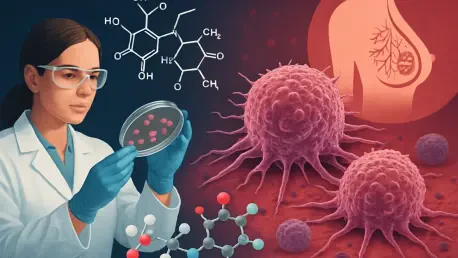

A recent computational study curated data from DrugBank to map FDA-approved treatments against specific molecular targets like tubulin isoforms and regulatory proteins. This analytical endeavor arrives as the global healthcare community in 2026 continues to struggle with the adaptive nature of breast cancer, a disease that remains the most frequently diagnosed malignancy among women. While traditional taxanes such as paclitaxel and docetaxel have long served as the foundational pillars of chemotherapy, their clinical efficacy is increasingly compromised by the development of sophisticated chemoresistance. This resistance is driven by a complex interplay of tumor heterogeneity, altered drug transport mechanisms, and the ability of cancer cells to survive in hostile pharmacological environments. The research addresses these hurdles by focusing on the four primary immunohistochemical subtypes—Luminal A, Luminal B, HER2-positive, and the aggressive triple-negative variant—each of which responds differently to conventional interventions. By integrating high-resolution molecular mapping with advanced structural biology, the study establishes a new baseline for identifying therapeutic analogs that can maintain potent microtubule disruption while bypassing the biological defense mechanisms that render traditional chemotherapy ineffective in many advanced cases.
Predictive Frameworks: The Role of BAMBU and Machine Learning
To streamline the identification of effective compounds, the research team utilized the BAMBU framework to construct robust Quantitative Structure-Activity Relationship (QSAR) models. These models are designed to predict how new chemical structures might inhibit cancer cell proliferation before any physical laboratory resources are expended. The investigators trained these models using extensive bioassay data from eight distinct breast cancer cell lines, including MCF7, MDA-MB-435, and the highly resistant MDA-N. By incorporating diverse cellular environments, the researchers ensured that the resulting predictions would be applicable across a wide spectrum of cancer phenotypes. A critical component of this modeling phase involved addressing class imbalance through random undersampling, a technique that prevents the machine learning algorithm from becoming biased toward inactive compounds. This balanced approach allowed for a more accurate representation of what makes a molecule “active” against specific tumor types, providing a highly reliable filter for screening vast chemical libraries in the subsequent phases of the discovery process.
The validation of these computational models was achieved through the application of the “Extremely Randomized Trees” algorithm, which yielded impressive statistical performance metrics. Across the various cell lines, the models demonstrated accuracy levels ranging from 78% to 83%, with area under the curve (ROC AUC) scores reaching as high as 88%. To confirm that these results were rooted in genuine chemical relationships rather than statistical anomalies or overfitting, the team conducted rigorous Y-randomization tests. In these tests, the biological labels of the training data were shuffled while the chemical descriptors remained constant; the subsequent collapse in model performance to near-random levels paradoxically confirmed that the original, non-shuffled models were accurately identifying the pharmacophoric features necessary for biological activity. This level of statistical integrity provides a high degree of confidence in the model’s ability to identify lead candidates that are likely to perform well in physical biological assays, effectively reducing the temporal and economic risks associated with modern pharmaceutical development cycles.
Structural Screening: Identifying High-Priority Candidates
With a validated predictive framework in place, the researchers conducted a massive virtual screening of the ZINC on-stock database to identify molecules with the highest therapeutic potential. Using 2048-bit Morgan Fingerprints, they sought out compounds that shared the essential structural scaffold of known taxanes but possessed unique modifications to enhance their efficacy. This process narrowed down millions of possibilities to a prioritized list of 319 candidates. These molecules were selected based on a consensus scoring system, which required a mean predicted probability of growth inhibition higher than 0.50 across all eight targeted cell lines. This rigorous selection process identified lead analogs such as ZINC96006020 and ZINC169302875, which emerged as promising derivatives of the traditional taxane framework. These candidates represent a new generation of potential treatments that offer the familiarity of proven microtubule-targeting agents while introducing structural variations designed to overcome the limitations of their predecessors in resistant tumor microenvironments.
To understand the physical mechanics behind these predictions, the team performed molecular docking simulations using AutoDock Vina. This process allowed them to visualize how the lead analogs bind to various tubulin isoforms, such as TUBB and TUBA1A, which are the primary targets for disrupting cell division in cancer cells. The docking results revealed that the structural modifications in the analogs did not compromise their binding affinity; in several instances, the analogs demonstrated superior binding energies compared to paclitaxel and docetaxel. For example, certain lead compounds maintained critical hydrogen bonds with residues like Gln256, which are essential for stabilizing the drug within the microtubule binding pocket. This suggests that the analogs are not only capable of mimicking the action of traditional chemotherapy but may also offer a more stable and enduring interaction with the target proteins. This high-affinity binding is a prerequisite for overcoming the reduced drug sensitivity that often characterizes late-stage or metastatic breast cancer cases.
Overcoming Resistance: Targeting the TUBB3 Isotype
One of the most significant breakthroughs of the study involves the identification of analogs that can effectively bind to the TUBB3 tubulin isotype. In many resistant breast cancers, cells overexpress this specific version of tubulin, which undergoes structural shifts that prevent standard taxanes from binding effectively. This “isotype switching” acts as a molecular shield, allowing the tumor to continue growing despite high doses of chemotherapy. However, computational simulations revealed that the lead analog 6-oxodocetaxel possesses a unique flexibility that allows it to shift its binding orientation to compensate for these structural changes. Instead of relying on the traditional interaction points that are often mutated or blocked in resistant cells, this analog forms new bonds with residues such as Arg156. This adaptability ensures that the drug remains lethal to the cancer cell even when the target protein has evolved to resist conventional treatment, offering a potential lifeline for patients whose tumors have become unresponsive to standard-of-care regimens.
Beyond its primary interaction with tubulin, the research explored the potential for these analogs to engage non-canonical targets such as DNA topoisomerase II alpha (TOP2A). This protein is essential for DNA replication, and its inhibition provides a second front in the battle against tumor progression. Molecular docking indicated that certain taxane derivatives maintain high affinity for TOP2A through unique molecular interactions that differ from those utilized by paclitaxel. By engaging multiple biological targets simultaneously, these analogs may significantly reduce the likelihood of the tumor developing cross-resistance. If a cancer cell evolves to protect its tubulin, the drug’s secondary effect on DNA replication can still drive the cell toward apoptosis. This multi-target mechanism of action represents a more sophisticated strategy in oncology, moving away from “one-drug, one-target” models toward more resilient therapeutic agents that can attack the malignancy from several different angles concurrently.
Safety Profiles: Evaluating Toxicity and Absorption
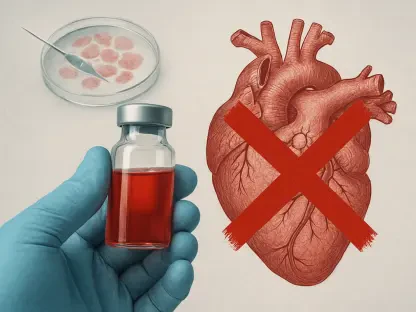
A drug’s effectiveness is irrelevant if it cannot reach the tumor safely or if it causes intolerable systemic toxicity. To address this, the researchers utilized ADMETlab 3.0 to perform a comprehensive evaluation of the absorption, distribution, metabolism, excretion, and toxicity of the lead analogs. The top candidates, including 6-oxodocetaxel and its epimer 4-epi-6-oxodocetaxel, were subjected to strict filtering criteria based on Lipinski’s Rule of Five and modern safety standards. These analogs demonstrated favorable profiles, showing a low risk for carcinogenicity, mutagenicity, and cardiotoxicity. Furthermore, the analysis suggested that these molecules possess high intestinal absorption and low blood-brain barrier permeability. This combination of traits is particularly desirable in 2026, as it suggests the potential for oral administration—a significantly less invasive delivery method than traditional intravenous chemotherapy—while minimizing the risk of neurological side effects that frequently plague cancer patients undergoing taxane-based treatments.
The most promising pharmacokinetic characteristic identified in the study is the relationship between the lead analogs and the P-glycoprotein (P-gp) efflux pump. This cellular pump is a notorious driver of chemoresistance; it identifies chemotherapy drugs as foreign invaders and actively ejects them from the cancer cell before they can reach their targets. While traditional taxanes are recognized as substrates for P-gp and are easily pumped out, the new analogs were predicted to evade this recognition entirely. Even more significant was the finding that some of these analogs might act as inhibitors of the pump itself. This dual-action capability would keep the therapeutic agent concentrated inside the cancer cell for longer periods while simultaneously preventing the cell from removing other co-administered drugs. This breakthrough could potentially restore the efficacy of combined treatment regimens in patients who have previously developed a high degree of multidrug resistance, making the analogs a central component of future therapeutic strategies.
Strategic Directions: The Path toward Clinical Integration
The metabolic stability of the identified analogs provides another layer of clinical advantage, particularly regarding drug-drug interactions. Standard taxanes are heavily dependent on the hepatic enzymes CYP2C8 and CYP3A4 for metabolism, which can lead to dangerous interactions when patients are taking other medications. The computational models suggested that the lead analogs have a decreased reliance on these specific pathways, indicating a more stable metabolic profile and a lower probability of adverse interactions. This stability is crucial for the diverse patient populations often treated for breast cancer, where comorbidities and polypharmacy are common. By ensuring that the treatment remains effective and safe even in complex clinical scenarios, these analogs represent a significant refinement of the taxane class. This focus on metabolic pathways highlights the study’s commitment to creating a viable pharmaceutical product that is as practical to administer as it is biologically potent.
The researchers formulated a clear roadmap for the synthesis of taxane analogs capable of addressing modern clinical challenges in 2026. They determined that the computational high-confidence candidates, specifically 6-oxodocetaxel and its derivatives, possessed the unique ability to remain within the intracellular environment while simultaneously inhibiting the mechanisms that typically lead to treatment failure. The study ultimately provided a foundational set of molecular candidates that were poised to enter the next phase of preclinical development. These findings established that the integration of machine learning and biophysical simulations successfully bypassed years of trial-and-error in the laboratory. Moving forward, the focus shifted toward physical synthesis and in vitro assays to confirm that these molecules could successfully inhibit the growth of resistant breast cancer cells in a living environment. This transition from digital discovery to physical validation represented the critical next step in delivering a more durable and effective treatment option for patients facing aggressive and resistant malignancies.