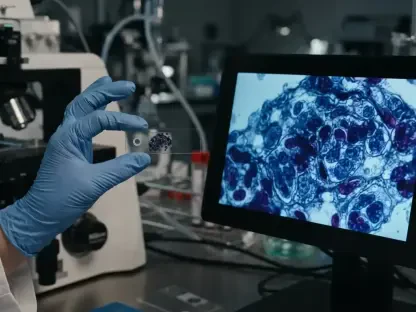

The long-standing clinical assumption that colorectal cancer primarily strikes the elderly is collapsing as a silent and aggressive crisis sweeps through a generation of adults once deemed essentially invincible. This demographic shift is not merely a statistical anomaly; it represents a fundamental change in the epidemiological landscape of the United States. For years, the medical community operated under the premise that those in their 30s and 40s were safe from gastrointestinal malignancies, but recent findings have shattered this sense of security.
Why Is a Disease Once Associated With Old Age Suddenly Claiming the Lives of Adults in Their 30s and 40s?
The traditional medical narrative that colorectal cancer is a “senior citizen’s disease” is being dismantled by a stark new reality: adults aged 35 to 44 are experiencing a sharp rise in mortality. This demographic, often referred to as older Millennials, is finding itself at the center of a clinical emergency that defies historical expectations. A recent study utilizing machine learning projections suggests that if current trends persist, the death rate for rectal cancer among this demographic will continue to climb throughout the window between 2026 and 2035. This trajectory indicates that the disease is not just appearing more frequently, but is becoming increasingly lethal for a generation that was previously considered low-risk.
The urgency of this situation is underscored by the way these malignancies behave in younger bodies. Researchers have noted that when cancer appears in adults under 45, it often exhibits more aggressive biological markers compared to the cases seen in geriatric patients. This biological volatility, combined with a lack of routine screening for this age group, creates a perfect storm for rising mortality rates. As the healthcare system grapples with these shifts, the focus is turning toward why the protective barrier of youth seems to be failing against a disease that was once an outlier for this age bracket.
The Changing Face of a Silent Killer in the Millennial Generation
For decades, screening protocols and public health messaging focused almost exclusively on patients over the age of 50, leaving younger adults in a diagnostic blind spot. However, the geographic and demographic landscape of the disease is shifting, with Hispanic communities and residents of Western states seeing some of the most significant increases in mortality. This geographic concentration suggests that environmental factors, diet, and perhaps localized healthcare disparities are playing a significant role in how the disease manifests. Understanding this trend is vital because it challenges the “wait and see” approach often taken by younger patients and their doctors.
As lifestyle factors and environmental triggers evolve, the medical community must bridge the gap between outdated perceptions and the current epidemiological data. The rise in cases among Hispanic populations, in particular, highlights a critical need for culturally tailored health outreach and improved access to preventative care. If the face of the disease is changing, the response must change with it. Failure to acknowledge these demographic shifts risks leaving the most vulnerable Millennials without the information or resources necessary to catch the disease before it becomes terminal.
Analyzing the DatWhy Rectal Cancer Is Outpacing Colon Cancer Mortality
Data synthesized from the CDC WONDER database between the early 2000s and 2026 reveals a startling divergence in how different types of colorectal cancers affect young adults. While colon cancer deaths are increasing, rectal cancer mortality is rising at a rate two to three times faster across nearly every demographic group. This discrepancy suggests that rectal malignancies may be biologically distinct or, more likely, are being identified at significantly later, more lethal stages. The anatomical location of these tumors often means that symptoms are misinterpreted by both the patient and the physician, leading to a dangerous delay in intervention.
Machine learning models like ARIMA highlight that without immediate intervention, the burden of rectal cancer will become a defining health crisis for older Millennials over the next decade. The data shows that the rise in mortality is not a temporary spike but a sustained upward trend that has been gaining momentum for years. This persistent growth indicates that the underlying causes—whether they be microplastics, sedentary lifestyles, or changes in the gut microbiome—are deeply embedded in the modern Millennial experience. Consequently, the statistical gap between colon and rectal cancer deaths serves as a vital indicator that specific diagnostic focus must be redirected toward the lower gastrointestinal tract.
Expert Insights into the Seven-Month Diagnostic Gap and High-Risk Demographics
Dr. Mythili Menon Pathiyil and her research team have identified a critical “diagnostic lag” that is costing lives. While older patients typically receive treatment within a month of symptom onset, younger adults face an average delay of seven months before a correct diagnosis is made. This delay is often fueled by a cognitive bias where symptoms like rectal bleeding are dismissed as benign issues like hemorrhoids or irritable bowel syndrome. Because clinicians do not expect to see cancer in a 38-year-old, they are less likely to order the invasive tests required to confirm a malignancy, opting instead for topical treatments or dietary changes.
Research confirms that this hesitation allows the cancer to progress from a treatable localized stage to an advanced, terminal condition before the medical community takes notice. By the time a Millennial patient receives a colonoscopy, the tumor has often metastasized, significantly lowering the chances of successful treatment. This diagnostic gap is particularly devastating because it transforms a potentially survivable disease into a death sentence. Furthermore, the psychological impact of being dismissed by medical professionals can lead patients to stop seeking help, further extending the window during which the cancer can grow unchecked.
Proactive Strategies for Detection and Navigating “Red Flag” Symptoms
To combat this surge, both patients and primary care providers must adopt a culture of heightened suspicion regarding gastrointestinal changes. Rather than opting for conservative management, experts recommend the early utilization of flexible sigmoidoscopy to investigate persistent rectal bleeding or changes in bowel habits in patients under 45. This tool allows doctors to visualize the rectum and lower colon with less preparation and lower cost than a full colonoscopy, making it a viable first-line defense for younger symptomatic individuals.
Millennials are encouraged to track symptoms meticulously and advocate for diagnostic testing rather than accepting “rare for your age” as a reason to delay a colonoscopy. Persistent abdominal pain, unexplained weight loss, and iron-deficiency anemia should no longer be treated as minor ailments in this age group. These proactive steps are essential for closing the seven-month diagnostic window and improving survival rates. By empowering patients to demand answers and encouraging doctors to look past age-based statistics, the medical community can begin to intercept the disease at a stage where a cure is still possible.
The researchers concluded that the traditional framework for identifying colorectal risk failed to account for the rapid environmental and biological shifts impacting the Millennial generation. They determined that the seven-month diagnostic lag represented the single most significant barrier to survival, as the transition from localized to metastatic disease frequently occurred within that exact timeframe. By analyzing the divergent mortality rates between rectal and colon cancers, the team established that localized screening and earlier intervention were the only viable paths toward reducing the projected death toll. These findings served as a final warning that the clinical definitions of “at-risk” populations required an immediate and permanent expansion to include younger adults.