
Ivan Kairatov stands at the forefront of pharmaceutical innovation, bringing years of dedicated research and development experience to the complex world of neuro-oncology. As a biopharma expert with a deep focus on how emerging technologies can dismantle long-standing medical hurdles, he has watched the evolution of cancer care transition from a “one-size-fits-all” approach to a highly sophisticated, data-driven discipline. With glioblastoma remaining one of the most aggressive and unpredictable challenges in modern medicine, Kairatov’s perspective is vital for understanding how a new $8 million multi-institution initiative, funded by the U.S. Department of Defense, seeks to finally break the survival plateau that has frustrated clinicians for decades.
This conversation explores the shifting landscape of brain tumor research, specifically highlighting the collaborative efforts between major centers like UCLA, Duke, and MD Anderson. We delve into the integration of advanced neuro-imaging with liquid biopsies, the pursuit of reliable biomarkers to identify “exceptional responders,” and the logistical symphony required to sync data across five distinct research hubs. By moving away from static treatment models toward dynamic, real-time monitoring, the goal is to transform the standard of care into a personalized journey that offers patients and their families not just hope, but tangible, data-backed answers.
Survival rates for glioblastoma have seen only marginal improvements over the last several decades, moving from about a 12-month average to roughly 18 months. What specific biological barriers make this cancer so resistant to standard care, and how do these hurdles dictate the design of modern clinical trials?
The biological reality of glioblastoma is incredibly sobering because the tumor is essentially a master of evasion and adaptation. When we look at those numbers—moving from a 12 to 14-month survival window to a 14 to 18-month range—it represents an agonizingly slow climb for both researchers and the families watching the clock. These tumors are resistant because they aren’t uniform; they are highly heterogeneous and possess an uncanny ability to hide from the immune system while building physical barriers against traditional chemotherapy. This resistance dictates a move away from trial designs that look for a single “silver bullet” for every patient. Instead, we are designing trials that focus on why the tumor evades certain drugs, specifically looking at how the immune environment changes during the 18 months a patient might be fighting for their life.
Physicians often struggle to interpret imaging scans or see how therapies are functioning inside a brain tumor between surgeries. How do you integrate blood tests and advanced brain imaging to monitor real-time changes, and what metrics determine if a treatment plan requires immediate adjustment?
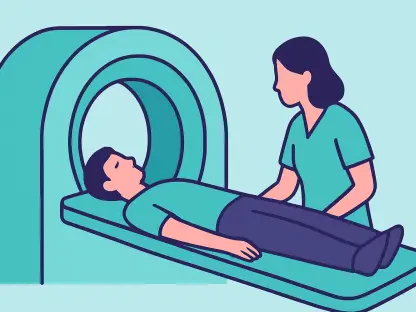
For too long, we have operated in a state of partial blindness, relying on grainy imaging scans that occur months apart and often fail to distinguish between a growing tumor and a treatment-related inflammatory response. The initiative led by UCLA is fundamentally changing this by layering advanced brain imaging with frequent blood tests to catch molecular signals that the eye simply cannot see on a standard MRI. We are looking for specific shifts in the tumor’s surrounding environment and the behavior of the immune system to build a truly dynamic, real-time picture of the disease. If the blood work shows a sudden spike in certain markers or a failure of the immune cells to activate, it gives physicians the permission to pivot the treatment plan immediately rather than waiting for the next scheduled surgery. It turns the treatment process into a constant conversation with the tumor’s biology, where every data point can trigger a tactical adjustment.
Certain subsets of patients respond exceptionally well to treatment while others see no benefit at all. What biological patterns or biomarkers are currently being prioritized to match patients with specific therapies, and how does this shift toward personalized care change the day-to-day management of the disease?
One of the most frustrating aspects of neuro-oncology is seeing a patient survive years beyond expectations while another with a similar diagnosis declines rapidly, and we are finally prioritizing the discovery of biomarkers that explain this discrepancy. By studying these “exceptional responders,” researchers hope to identify genetic and molecular signatures that act as a roadmap for who will benefit from specific immunotherapies or targeted drugs. In daily management, this shifts the burden away from trial-and-error medicine, which is often exhausting for a patient already struggling with the sensory and cognitive toll of a brain tumor. Instead of subjecting everyone to an invasive procedure that might not work, we can use these biological patterns to match a patient to a clinical trial where they have the highest statistical chance of success. This level of precision not only preserves the patient’s physical strength but also provides a sense of clarity and direction that was previously missing in the chaos of a glioblastoma diagnosis.
Research centers are currently investigating diverse areas like the gut microbiome and tumor DNA in cerebrospinal fluid to find answers. How does sharing data across these specialized domains accelerate the discovery process, and what are the logistical challenges of coordinating such a broad, multi-institution initiative?
The complexity of this disease is far too great for any single institution to solve in isolation, which is why the McCain/Bayh Glioblastoma Consortium is such a pivotal development. You have Duke University exploring immunotherapy combinations while MD Anderson investigates how the gut microbiome influences drug response, and Memorial Sloan Kettering is diving into the DNA found in cerebrospinal fluid. Bringing these “puzzle pieces” together allows us to see how a change in the gut might actually correlate with the genetic evolution of a tumor on the other side of the country. The logistical challenge is immense, as it requires standardizing data collection across five different major cancer centers to ensure that a blood sample in Los Angeles tells the same story as a DNA sequence in New York. However, when these silos are broken down, we stop looking at glioblastoma through a narrow lens and start seeing the holistic, systemic nature of the cancer, which is the only way to achieve a breakthrough.
Transitioning from a static treatment model to a dynamic, data-driven approach aims to provide faster answers for families facing a difficult diagnosis. What step-by-step improvements should patients expect regarding their quality of life, and how does their participation in research help refine future protocols?
The most immediate improvement for patients is the reduction in uncertainty, as a data-driven approach replaces the “wait and see” anxiety with actionable insights. Patients should expect more frequent but less invasive monitoring, such as blood draws that replace some of the high-stress, high-cost imaging sessions that dominate their schedules. By participating in this research, every patient becomes a vital contributor to a global database, ensuring that their specific journey helps refine the protocols for the person diagnosed tomorrow. This creates a powerful legacy where a patient’s experience directly informs how we adjust the “dosing” or “timing” of therapies, ultimately sparing future families from the same marginal survival gains we’ve seen for the last thirty years. It’s about making every piece of information meaningful so that the quality of life isn’t just about surviving, but about living with the knowledge that your care is being optimized in real-time.
What is your forecast for glioblastoma treatment?
My forecast for glioblastoma is a definitive move away from the static, “wait-for-recurrence” model and toward a paradigm of continuous, adaptive intervention. Within the next decade, the $8 million in current grants will likely seed a new standard where we treat brain tumors like a chronic, manageable condition through precision immunotherapy and microbiome modulation. We will see the survival average move well past that 18-month mark because we will finally have the tools to predict resistance before it even happens. The future is one where the “black box” of the brain is fully illuminated by liquid biopsies and genetic mapping, allowing us to stay two steps ahead of the tumor’s next move. For the patients and families waiting for progress, I believe the era of modest improvements is coming to an end, replaced by a surge of data-backed victories.