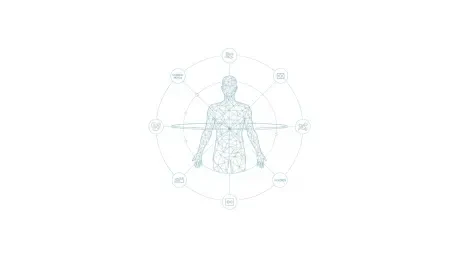

Clinicians have long faced the daunting challenge of synthesizing disparate fragments of patient information into a single, coherent diagnostic picture that accounts for both biology and lifestyle. As of now, the emergence of multimodal foundation models is finally bridging these gaps with unprecedented precision, moving beyond the limitations of single-source data. These models represent a departure from the rigid, task-specific algorithms of the previous decade, favoring instead a broad architecture capable of interpreting everything from a single nucleotide polymorphism to a complex radiological image. As medicine moves toward a more personalized paradigm, the ability to synthesize diverse data streams—ranging from genetic sequences to longitudinal electronic health records—is no longer a luxury but a fundamental necessity for accurate diagnosis. By mimicking the holistic and intuitive decision-making process of an experienced human clinician, these advanced AI systems offer a new lens through which the medical community can view disease progression.
Overcoming the Limitations of Traditional AI
Historically, medical AI has operated in silos, focusing on one type of data at a time, such as a single radiology scan or a specific genetic sequence. While these “single-modality” models are effective for narrow tasks, they fail to see the big picture of a patient’s health, often overlooking critical contextual clues found in other data types. Since biological processes are naturally multifaceted and interconnected, relying on a single data point can lead to an incomplete understanding of how a disease is progressing within a unique individual. For instance, an oncology scan might show a tumor’s size, but without integrating the patient’s proteomic data or clinical history, the underlying cause of its growth remains obscured. This fragmentation has been a primary barrier to achieving true precision medicine, as it forces clinicians to manually bridge the gap between disparate data sources. Moving toward unified models allows for a more comprehensive analysis of human physiology.
Evolution Toward Unified Data Models: Breaking the Silo Mentality
To achieve true precision medicine, researchers are developing frameworks that integrate various data streams into a single, cohesive architecture. This approach combines genomic sequences, transcriptomic activity, and longitudinal electronic health records to create what experts describe as a “complex tapestry” of information. By unifying these disparate sources, the AI can identify subtle correlations that would be impossible to detect if the data were analyzed in isolation, such as the relationship between a specific medication and a delayed physiological response. This methodology moves beyond the simple aggregation of data; it creates a synthesis where the interaction between different modalities provides new insights into patient outcomes. As these systems become more sophisticated, they allow for a deeper exploration of the phenotypic factors that influence health. Consequently, medical professionals can move from reactive treatments to proactive strategies tailored to a biological signature.
Cross-Modality Analysis: Creating a Multi-Dimensional Health Tapestry
The transition to these unified systems also requires a significant shift in how data is curated and stored across the broader healthcare landscape. Modern medical facilities are now prioritizing interoperability, ensuring that data from disparate sources can be fed into a single model without losing its semantic meaning or structural integrity. This allows the foundation model to act as a central hub for diagnostic intelligence, where it can cross-reference a patient’s imaging results with their historical lab reports in real-time. By providing a 360-degree view of the patient, these models help clinicians avoid the pitfalls of fragmented care and redundant testing. Furthermore, the ability to process longitudinal data means that the AI can track the evolution of a disease over years, providing a dynamic rather than static perspective on health. This capacity for temporal and multimodal synthesis represents the next frontier in clinical decision support, empowering doctors with a holistic understanding.
Designing Advanced Deep Learning Frameworks
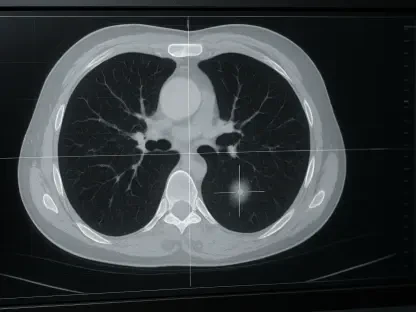
The technical blueprint for these foundation models relies on deep learning systems pretrained on massive, diverse datasets using specialized architectural components. At the core of this framework are independent encoders that translate different types of raw data—such as the pixels in an MRI or the sequences in a DNA strand—into a shared mathematical language. This allows the model to map everything into a common “latent space” where it can find links between a specific genetic expression and a visual pattern in a medical report. By projecting multi-source data into this unified vector space, the system can calculate similarities and relationships across modalities that were previously incomparable. For example, the latent representation of a pulmonary scan can be mathematically aligned with the textual description of symptoms in a physician’s note. This transformation process is critical because it enables the AI to process information holistically rather than treating each input as an unrelated variable.
Innovations in Architectural Integration: Encoders and Latent Spaces
Further technical refinements include the use of self-attention mechanisms and contrastive learning, which allow the model to weigh the importance of different data points. These tools enable the AI to focus on the most relevant features of a dataset while ignoring the noise that often plagues medical information. For instance, self-attention can highlight a specific mutation in a genetic sequence that correlates most strongly with a patient’s resistance to a particular chemotherapy drug. Additionally, contrastive learning helps align visual findings from imaging with the clinical terminology found in physician notes, creating a deeper semantic understanding of the data. By learning the intricate relationships between medical images and descriptive text, the AI develops a deeper understanding of the context behind a diagnosis. This makes the model a much more effective partner in a clinical setting, as it can explain its findings using terms that clinicians understand, making the AI-driven insights actionable.
Ethical Governance and Implementation: Strengthening the Data Ecosystem
Beyond the technical architecture, these models had to address critical socio-technical challenges like data bias and the “black box” nature of deep learning. If training data lacked diversity, the AI produced inaccurate results for underrepresented populations, which made transparency and open benchmarking essential for building clinical trust. Researchers prioritized explainable AI and practical applications like radiomics to ensure that clinicians could verify the reasoning behind each automated diagnosis. By focusing on these ethical guardrails, the medical community established a framework where AI functioned as a supportive tool rather than a replacement for human judgment. Moving forward, the adoption of localized fine-tuning allowed hospitals to adapt global foundation models to their specific patient demographics. These efforts successfully moved precision medicine from the research lab to the patient’s bedside, providing a scalable solution that proved the turning point in making personalized healthcare a global reality.