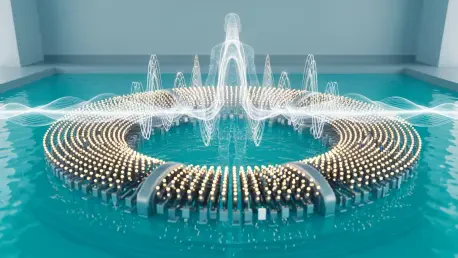

The transition from creative software to high-stakes medical hardware represents one of the most significant shifts in the technology sector as a former leader in generative art applies its expertise to internal anatomy. This new research-driven initiative aims to decentralize high-end medical imaging by introducing a scanner that combines advanced fluid dynamics with ultra-sensitive acoustic sensors. By stepping away from the traditional pixel-based generation of fictional landscapes, the company is now focusing on the high-fidelity reconstruction of the human body to identify health issues before they become symptomatic. This hardware-centric approach challenges the status quo of the diagnostic industry, which has long relied on massive, stationary machines that are often inaccessible to the average person. The emergence of this technology suggests that the boundaries between consumer wellness and professional clinical diagnostics are becoming increasingly blurred as sophisticated AI systems move into the physical world. This shift could redefine how individuals interact with their own health data on a daily basis while reducing the overall burden on the global healthcare infrastructure.
Sonic Mechanics: Leveraging Ultrasound for Internal Mapping
The technological foundation of this underwater scanner deviates from the ionization methods or heavy magnetism typically associated with hospital radiology departments. Instead of utilizing the massive superconducting magnets found in conventional MRI systems, this device employs a high-density array of approximately 500,000 microscopic sensors to capture biological data. These sensors are mounted on a circular ring through which the patient passes as they are lowered into a shallow pool of water, allowing the system to record internal details at a rate exceeding several terabytes per second. This immense data throughput is processed by proprietary algorithms that reconstruct the body’s internal geometry with high precision. By focusing on ultrasonic wave detection rather than magnetic resonance, the system avoids the need for a shielded room and the stringent safety protocols required for patients with metal implants. This shift in mechanical philosophy allows for a more flexible deployment of diagnostic technology in varied environments.
Water serves as the critical transmission medium for this system because sound waves travel much more efficiently through liquids than through the air. In a traditional clinical setting, a technician would apply a small amount of conductive gel to a specific area of the body, but Midjourney’s full-immersion approach eliminates the need for manual application while ensuring total coverage. As the acoustic waves penetrate the skin, the sensor ring captures the echoes reflected back from various internal structures, including muscles, nerves, and vascular systems. The result is a comprehensive 3D map that can be generated in less than sixty seconds, offering a holistic view of the patient’s internal state. Because the process is non-invasive and lacks ionizing radiation, it can be repeated frequently without the long-term health risks associated with X-rays or CT scans. This efficiency makes the scanner an ideal candidate for high-volume screening operations where speed and patient comfort are prioritized above the deep-tissue resolution of traditional machinery.
Global Scalability: Transforming Healthcare into a Routine Utility
The underlying vision for this technology involves a radical transition from the current reactive healthcare model to a more proactive and preventative approach. Instead of diagnosing conditions after a patient begins to feel pain or notices symptoms, the company aims to make internal monitoring a routine part of a healthy lifestyle. This vision suggests that medical check-ups should be as accessible and un-intimidating as a visit to a local fitness center or a wellness spa. By reducing the cost and complexity of obtaining a full-body internal map, the technology encourages individuals to maintain a continuous record of their physiological changes over time. Such longitudinal data can be invaluable for identifying subtle trends that might indicate the early stages of chronic conditions, which are often reversible when caught early. This strategic shift places the power of health monitoring directly into the hands of the individual, potentially reducing the reliance on a medical system that is frequently overwhelmed by late-stage health crises.
The implementation of this hardware is set to begin with a flagship wellness facility in San Francisco, which is planned for a public opening in 2027. This center will serve as a testing ground for integrating high-tech scanners into an environment that emphasizes relaxation and mental well-being, effectively removing the sterile and stressful atmosphere of a hospital. Following the success of this initial site, the company has established a long-term deployment strategy that aims to place fifty thousand units across the globe by 2031. This massive expansion is intended to provide one billion people with the opportunity to receive monthly health screenings, creating a global network of biological data. Such a scale would allow for the identification of public health trends at an unprecedented level, offering insights into how different environments and lifestyles impact human anatomy. The focus remains on making these scans so affordable that they can be utilized by populations that currently lack access to even the most basic diagnostic imaging.
Scientific Challenges: Navigating the Obstacles of Tissue Density
Despite the impressive speed and accessibility of the scanner, significant scientific hurdles remain, particularly concerning the physical properties of ultrasonic waves. Ultrasound relies on the transmission of sound through a medium, and it encounters substantial resistance when it hits high-density structures like bone or pockets of air within the body. This phenomenon, known as acoustic impedance mismatch, means that the scanner may struggle to produce clear images of the brain, which is encased in the skull, or the lungs, which are filled with air. These limitations are well-known in traditional sonography, but they present a unique challenge for a system designed to provide a comprehensive, all-in-one body map. Critics within the radiological community have pointed out that while the scanner may excel at mapping soft tissues, muscles, and vascular systems, it cannot yet replace the depth and detail of an MRI for skeletal or pulmonary diagnostics. Overcoming these physical barriers requires further refinement of sensor sensitivity and the development of new ways to interpret sound reflections.
A second area of concern involves the heavy reliance on artificial intelligence to interpret the massive amounts of data generated during the sixty-second scanning process. Because sensors cannot always penetrate every part of the body perfectly, the system’s AI may use predictive modeling to fill in missing information, which introduces the risk of “hallucination.” In the context of creative art, an AI hallucination is a harmless quirk, but in a medical setting, an inaccurately generated image could lead to a false diagnosis or the oversight of a critical health issue. This risk necessitates a rigorous regulatory approval process to ensure that the machine’s outputs are strictly grounded in empirical data rather than algorithmic guesswork. Ensuring the accuracy of these reconstructions is paramount, as the utility of the device depends entirely on the trust that both patients and doctors place in its findings. Ongoing testing is focused on refining the balance between algorithmic enhancement and raw sensor data to provide a reliable clinical tool that minimizes the possibility of error.
Implementation Standards: Ensuring Clinical Validity and Safety
The introduction of this technology into the broader market is expected to create a significant shift in the economic landscape of medical diagnostics by lowering the price of internal imaging. Traditional MRI machines can cost millions of dollars to purchase and maintain, leading to high fees for patients and long waiting lists at specialized clinics. By contrast, the underwater scanner utilizes more affordable sensor technology and a simplified mechanical structure, making it a more viable option for smaller clinics and community centers. This democratization of health data could force a recalibration of the diagnostic industry, as established providers may need to lower their costs or improve their service offerings to compete with the new accessibility. Moreover, the availability of low-cost screenings could lead to a massive influx of data for medical research, allowing scientists to study the human body in ways that were previously impossible due to financial constraints. The potential for large-scale data collection represents a significant opportunity for the advancement of personalized medicine and public health policy.
The initial announcement and subsequent technical demonstrations provided a clear framework for how ultrasound could potentially supplement the existing medical diagnostic landscape. Stakeholders recognized that while the hardware offered unprecedented speed, the integration of such devices into daily life necessitated a balance between luxury and clinical utility. Medical professionals were advised to view these scans as a preliminary screening layer rather than a definitive diagnostic tool until further validation was completed. Moving forward, the industry should focus on establishing standardized data protocols that allow these AI-generated 3D maps to be seamlessly shared with primary care physicians. Encouraging transparency in how the predictive models fill sensor gaps remained a priority to ensure patient safety and trust. By treating these high-tech screenings as a supplemental component of a broader wellness strategy, health systems managed to bridge the gap between high-end radiology and accessible preventative care for the general population.