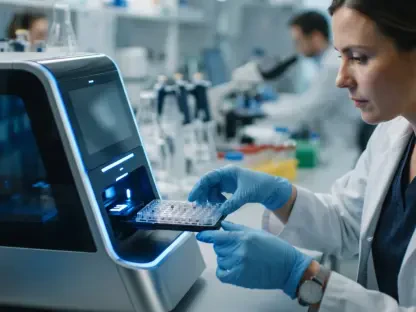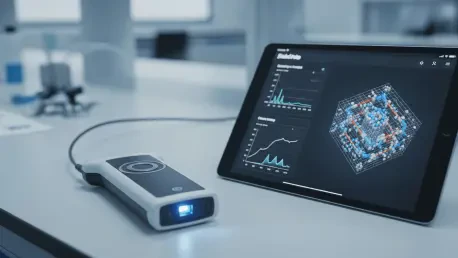

A revolutionary diagnostic tool utilizing the intricate principles of quantum physics and nanotechnology is currently transforming how chronic conditions like diabetes are managed through the simple act of breathing. Developed by Professor Lan Fu and her specialized team at the Australian National University, this pioneering device marks a move away from traditional, invasive medical testing methods toward a new era of seamless, non-invasive health monitoring. By identifying specific gases in the human breath, this innovation serves as an early warning system for metabolic conditions like ketoacidosis, effectively shrinking complex laboratory science into a device that fits in the palm of a patient’s hand. This shift is not merely about convenience; it represents a fundamental change in clinical diagnostics where immediate detection replaces delayed results. Such progress ensures that patients manage their health proactively, reducing hospitalizations and long-term complications for millions.
Technical Foundation: Sensor Engineering and AI
The technical foundation of this diagnostic device lies in its specialized nanowire sensor, which was engineered with a unique Schottky junction to achieve extreme sensitivity while maintaining remarkably low power consumption. These semiconductor structures are incredibly small, yet they possess a high surface-area-to-volume ratio that allows them to interact with gas molecules at an atomic level to pinpoint specific ketones with high precision. Unlike traditional sensors that might struggle with the subtle chemical signatures of metabolic markers, these nanowires respond rapidly to changes in the environment, converting chemical interactions into clear electrical signals. This breakthrough addresses a long-standing challenge in portable electronics, where balancing sensitivity with energy efficiency has often hindered the deployment of wearable medical devices. By leveraging metal-oxide semiconductors, the team created a platform that is robust for daily use and sensitive enough to catch early signs of a crisis.
Managing the complexity of human breath requires more than just high-end sensors because the air exhaled by a person contains a dense “cocktail” of substances, including moisture and ambient gases that can distort readings. To overcome this hurdle, the research team integrated advanced machine learning algorithms directly into the device to filter out environmental noise and humidity, ensuring the sensor remains accurate in real-world settings. This artificial intelligence component acts as a digital brain, distinguishing between the critical biomarkers of illness and the irrelevant background data that often plagues earlier generations of gas sensors. This integration of hardware and software allows the tool to function reliably in diverse climates, moving beyond the controlled atmosphere of a laboratory into the hands of people living their everyday lives. Moreover, the AI continuously learns from the data it processes, potentially increasing its diagnostic accuracy over time.
Clinical Success: Healthcare and Agricultural Health
The most immediate application for this technology is found in the management of diabetes, particularly for patients who face the constant risk of developing diabetic ketoacidosis. Traditionally, monitoring ketone levels has required painful blood-prick tests or inconvenient urine samples, both of which can lead to low patient compliance and missed warning signs. The new device allows for instantaneous and entirely painless detection through a simple exhalation, providing a level of ease that encourages regular monitoring. Currently undergoing rigorous clinical trials at Canberra Health Services, the tool is being evaluated for its ability to provide doctors and patients with real-time data that can prevent medical emergencies before they escalate. By offering a non-invasive alternative, healthcare providers hope to see a significant improvement in how patients engage with their treatment plans, as the barrier to obtaining critical metabolic information is virtually eliminated.
Beyond the realm of human healthcare, the underlying nanotechnology is being rapidly adapted for the agricultural sector through strategic partnerships with innovative companies such as Agscent. Farmers are now utilizing similar breath-analysis tools to monitor the metabolic health and nutritional efficiency of dairy cattle, providing a window into the biological processes of their livestock. By tracking how effectively cows are processing calories and identifying signs of ketosis in the herd, producers can optimize milk production and ensure the well-being of their animals without resorting to invasive blood draws. This cross-industry versatility demonstrates how a single breakthrough in electronics can address seemingly unrelated challenges in both modern medicine and large-scale food production. The ability to monitor animal health in real-time allows for more precise feeding strategies and earlier intervention in cases of illness, which ultimately leads to more sustainable dairy operations.
This initiative fundamentally reshaped how graduate students were trained, as it emphasized industry-partnered research that focused on solving tangible, real-world problems. By working on translational research projects throughout the development of the tool, students gained invaluable experience with commercial deadlines, regulatory frameworks, and complex business operations. These efforts prepared a new generation of scientists to take on leadership roles within the tech industry, ensuring that the bridge between academia and commercial sectors remained strong. The successful journey of this nanotechnology proved that while fundamental research served as the vital starting point, the active collaboration with industrial partners was what ultimately turned scientific discoveries into life-saving tools. Looking forward, the focus was shifted toward expanding these sensor capabilities to detect other respiratory markers, such as those associated with lung cancer or various infectious diseases.