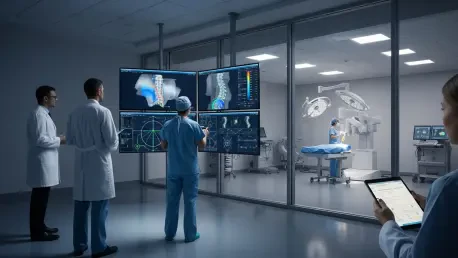

Spine surgeons at UC San Diego Health just turned a complex, high-stakes operation into a choreographed, data-driven performance that put the West Coast on notice. The institution’s first spine surgery using a fully integrated robotic, AI-enabled platform was more than a successful case; it was a signal that precision, personalization, and efficiency can coexist in one coordinated system.
For patients, the stakes are tangible: fewer complications, steadier outcomes, and potentially faster recoveries. For clinicians, it reframes how difficult spinal fusions are planned and executed—less guesswork, more guided consistency—without sidelining surgical judgment.
From Concept to OR: How Integrated AI-Robotics Evolved in Spine Surgery
Robotics entered spine care as a set of helpful tools; integration turned those tools into a living plan. By unifying AI modeling, high-resolution imaging, navigation, and robotic execution, surgery shifts from a series of discrete steps to a single workflow tuned to each patient.
Moreover, the platform compiles preoperative intent with intraoperative reality. When the plan changes, the robot, the images, and the navigation change with it, anchoring decisions to data instead of memory or manual recalibration.
Milestones and Technical Firsts at UC San Diego Health
UC San Diego Health’s program, led by Joseph Osorio, MD, PhD, operated as a proof point: integration is not a gadget, it is a system. Leadership emphasized that predictability and accuracy are not luxuries in complex spine surgery—they are requirements.
The debut showed how clinical rigor scales when technology, surgical expertise, and quality frameworks move in lockstep. It also offered a platform for ongoing measurement: accuracy of implants, alignment fidelity, and workflow gains can be tracked, compared, and improved.
First West Coast Spine Surgery Using an Integrated AI-Enabled Robotic Platform
UC San Diego Health completed the West Coast’s first spine operation with a next-generation platform that linked planning to execution in real time. The case marked a regional first and set a bar for integrated precision.
Unified, Data-Driven Workflow Linking Planning to Intraoperative Execution
The team connected preoperative goals with intraoperative navigation so every move reflected the plan. When the anatomy or exposure evolved, the workflow adapted rather than reset.
AI-Supported Alignment Plans Tailored to Individual Anatomy
AI models suggested alignment targets based on each patient’s morphology and function. Surgeons used these insights to refine goals and reduce variability across cases.
Patient-Specific Implants and Robotic Screw Delivery for Precise Placement
Customized implants matched to anatomy were paired with robotic guidance to hit planned trajectories. The approach aimed to secure durable fixation while minimizing compromise.
High-Resolution 3D Imaging and Navigation Synchronized for Accuracy
High-fidelity imaging synchronized with navigation created a stable map of the spine. That map aligned the robot’s pathway with the surgeon’s intent at critical moments.
Efficiency Gains That May Reduce Operative Time and Recovery
Streamlined steps trimmed handoffs and redundant checks. Fewer detours can translate into shorter procedures and smoother early recoveries.
Program Credibility: Joint Commission Accreditation and National Rankings
Quality did not ride on technology alone. The spine program’s Joint Commission accreditation and strong national rankings reinforced governance, safety, and outcomes tracking.
What Sets UC San Diego Apart on the West Coast
The difference lies in orchestration. Rather than acquiring isolated tools, the program built a coordinated ecosystem across neurosurgery, orthopedics, imaging, and perioperative care, with shared protocols and feedback loops.
In contrast to one-off demonstrations, cases are embedded in analytics and peer review. That culture invites iteration—tightening plans, validating gains, and scaling only when readiness is proven.
Where the Program Stands Today
The platform now supports complex fusions with a standardized, data-informed playbook. Teams capture metrics on accuracy, workflow, and recovery to guide next steps.
Clinicians continue expanding indications and refining patient selection. The near-term focus remains practical: reduce variability, sustain safety, and document real outcome improvements.
Reflection and Broader Impacts
Strengths include precise implant placement, alignment fidelity, and smoother workflows. Challenges involve training, change management, and maintaining vigilance against overreliance on automation.
Broader shifts are already visible: patient-specific planning is becoming the default, and integrated guidance is emerging as the spine OR’s new baseline.
Reflection
The program balanced innovation with governance, pairing robotics and AI with strict quality oversight. That blend limited risk while accelerating adoption.
Still, vigilance mattered. Teams had to align human factors, imaging protocols, and data hygiene to keep the system reliable under real-world pressures.
Broader Impact
Academic centers now treat surgical standardization as a safety strategy, not bureaucracy. As platforms interoperate, collaboration across sites can elevate regional benchmarks.
For patients, the promise is care that feels tailored and predictable. For systems, it is the ability to deliver that promise at scale.
Conclusion: Is UC San Diego Leading—and What Comes Next?
UC San Diego Health’s integrated, AI-robotic spine program set a credible West Coast lead by translating planning precision into operative accuracy, backed by accreditation and strong rankings. The result was a pathway that made complex surgery more consistent, measurable, and personal.
The next steps favored disciplined growth: expand case types carefully, publish outcomes, and harden training pipelines so gains persisted beyond early wins. If sustained, the approach offered a template others could adapt—turning a headline first into a durable standard.