
The moment a surgeon loses access to real-time imaging during a complex procedure marks the point where cybersecurity ceases to be a technical inconvenience and becomes a matter of life or death. In the current landscape of 2026, the digital infrastructure of a hospital is as critical as the oxygen supply or the sterility of the operating theater. When ransomware strikes, the immediate cessation of electronic health record access forces medical professionals to revert to manual paper systems, a transition that introduces a high margin for error in medication dosages and patient identification. These incidents are no longer isolated IT glitches but are recognized as profound disruptions to the clinical workflow that can lead to the rerouting of ambulances and the suspension of emergency services. As hospitals become increasingly reliant on high-speed data for robotic surgeries and AI-driven diagnostics, the integrity of the network has become the foundation upon which all modern medical interventions are built.
The Financial and Clinical Toll: Beyond the Ransom
The economic impact of a healthcare data breach has reached unprecedented levels, with the average cost per incident now exceeding seven million dollars. This figure represents far more than just the immediate recovery expenses or the potential payment of a ransom; it encompasses the long-term costs of legal fees, regulatory fines, and the exhaustive process of notifying millions of affected individuals. Recovering from a breach in a clinical environment is exceptionally complex because systems cannot simply be wiped and restored in isolation. Every piece of hardware, from the administrative servers to the bedside monitors, must be meticulously vetted to ensure no dormant malware remains. This extended downtime creates a massive financial vacuum, but the more concerning cost is the erosion of public trust, as patients become wary of sharing the sensitive information necessary for accurate diagnoses and effective treatment plans.
Beyond the ledger, the clinical consequences of these systemic failures are increasingly visible in patient outcome data. Recent research into the aftermath of significant cyberattacks indicates a measurable spike in mortality rates and a higher frequency of complications in the weeks following an incident. When a hospital’s network is paralyzed, the time required to perform routine tasks like retrieving lab results or cross-referencing drug allergies doubles or triples, creating a dangerous backlog in the emergency department. These delays are not merely inconvenient; they are often the difference between a successful intervention and a permanent disability. Consequently, hospital boards have begun to reclassify cybersecurity as a primary component of patient safety protocols, shifting the responsibility from the back-office IT department to the clinical leadership teams who oversee the quality of care and risk management.
Data as Currency: Why Medical Records Lead the Black Market
Cybercriminals consistently target the healthcare sector because medical records represent one of the most lucrative assets available on the dark web. Unlike credit card numbers, which can be canceled and replaced within minutes, a patient’s medical history is a permanent and immutable record. A single electronic health file contains a comprehensive bundle of sensitive information, including Social Security numbers, home addresses, insurance provider details, and sensitive clinical diagnoses. This information provides a long-term resource for sophisticated identity theft and fraudulent insurance claims that can persist for years without detection. The permanence of this data ensures that it maintains a high market value, making healthcare organizations a perennial favorite for organized crime syndicates looking for the highest return on their technical investments.
The operational requirement for constant “uptime” in the healthcare industry further compounds this vulnerability, creating a unique pressure point for extortion. Because hospitals provide life-sustaining services that cannot be paused without immediate risk to human life, attackers operate under the assumption that these institutions are more likely to pay a ransom to regain control of their networks. This economic reality has fueled a surge in “double extortion” tactics, where attackers not only encrypt local files to halt operations but also exfiltrate sensitive patient data with the threat of public disclosure. The threat of a massive privacy leak, combined with the paralysis of critical care systems, creates an almost unbearable level of pressure on hospital administrators. This environment has turned the healthcare sector into a high-stakes battlefield where the protection of digital assets is now synonymous with the protection of the patients themselves.
The Human Factor: High Pressure and Technical Vulnerabilities
While sophisticated malware often makes the headlines, the human element remains the most frequent point of entry for cyberattacks in the healthcare sector. Medical professionals work in high-pressure environments where speed and efficiency are prioritized above all else, often making them more susceptible to social engineering and phishing attempts. A nurse or physician, focused on delivering urgent care to a patient, might inadvertently click on a malicious link in an email that appears to be a legitimate administrative request. This single lapse in judgment can provide an attacker with the credentials needed to bypass expensive security perimeters and gain unauthorized access to the entire electronic health record system. The industry consequently faces higher rates of credential theft than almost any other sector, highlighting the need for security solutions that account for the reality of clinical workflows.
The proliferation of mobile devices and remote access points in modern medicine has further expanded the potential for human-led security breaches. Clinicians often use tablets or smartphones to review patient data while moving between rooms, and the use of telehealth platforms has extended the hospital network into the private homes of both staff and patients. Each of these endpoints represents a potential gateway for an intruder if not properly secured with robust authentication methods. To combat this, organizations are increasingly focusing on “zero trust” architectures, where no user or device is trusted by default, regardless of their location or role. By implementing continuous verification processes that are integrated into the daily routines of medical staff, healthcare providers can mitigate the risks associated with human error without significantly impeding the delivery of care.
Interconnected Risks: Supply Chains and Medical Devices
The modern healthcare ecosystem is a sprawling network of interconnected vendors, insurance clearinghouses, and third-party service providers, which creates a significant “blast radius” for any single security failure. A compromise at a major prescription processing center or a medical billing firm can paralyze operations for thousands of providers nationwide, demonstrating that no hospital is an island in the digital age. This interconnectedness means that a facility with world-class internal defenses can still be brought to its knees by a vulnerability in a partner’s network. As a result, vendor risk management has become a top strategic priority, requiring hospitals to conduct rigorous security audits of every company that touches their data or connects to their internal systems to ensure clinical continuity across the board.
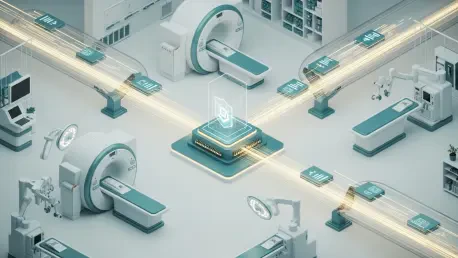
The rapid expansion of the Internet of Medical Things has introduced a new layer of risk, as thousands of connected devices like infusion pumps, heart monitors, and MRI machines now reside on the hospital network. Many of these devices were designed with clinical functionality as the priority, often at the expense of robust security features, and many run on legacy operating systems that are difficult to patch or update. These “smart” devices provide a foothold for attackers to enter the network and move laterally toward more sensitive administrative or clinical databases. Because these machines are directly involved in patient care, a security breach that alters the settings of an infusion pump or disables a ventilator is a direct physical threat. Securing these devices requires a specialized approach that balances the need for constant connectivity with the imperative to protect the life-sustaining functions they perform.
Modern Safeguards: Regulatory Compliance and Technical Defense
The regulatory landscape has evolved to keep pace with these threats, with frameworks like the Health Insurance Portability and Accountability Act and the HITECH Act establishing strict mandates for data protection. Federal authorities have recently updated these regulations to reflect the sophistication of modern cybercrime, moving toward more prescriptive requirements for multi-factor authentication and data encryption. Hospitals are now legally obligated to maintain a high standard of digital hygiene, with significant penalties for those that fail to report breaches or neglect basic security protocols. These regulations are no longer just about protecting privacy; they are increasingly focused on ensuring the resilience of the national healthcare infrastructure against systemic attacks that could threaten public health on a broad scale.
To move beyond mere compliance, healthcare organizations are adopting technical defenses designed to survive even the most destructive attacks. One of the most critical strategies involves the maintenance of immutable, offline backups that cannot be altered or deleted by ransomware, ensuring that data can be restored without the need to negotiate with criminals. Additionally, network segmentation has become a standard practice, allowing hospitals to isolate vulnerable medical devices and guest Wi-Fi networks from the core clinical systems used for patient care. By creating these digital “firebreaks,” IT teams can contain a localized infection and prevent it from spreading through the entire facility. This layered approach to defense ensures that even if one barrier is breached, the most critical life-safety functions remain protected and operational.
Digital Resilience: A New Culture for Patient Care
The prevention of unauthorized access also requires a rigorous focus on internal governance and the management of insider threats, whether they are intentional or accidental. Hospitals have implemented strict role-based access controls to ensure that employees only have access to the specific patient files and systems required for their job functions. This “least privilege” model is supported by continuous monitoring tools that can detect unusual patterns of behavior, such as a staff member accessing an unusually large number of records or logging in from an unrecognized location. Furthermore, the immediate deactivation of accounts for former employees and the frequent auditing of access logs have become essential steps in closing the gaps that attackers often exploit to gain a foothold in the environment.
Integrating cybersecurity into the broader culture of patient safety was the most effective strategy adopted by forward-thinking healthcare leaders. By conducting realistic simulation exercises that demonstrated the clinical impact of a network outage, organizations successfully shifted the perception of digital defense from a burden to a necessity. The industry moved toward a model where cybersecurity was treated with the same gravity as infection control, leading to the establishment of specialized cyber-triage protocols and cross-functional safety committees. These initiatives ensured that if a breach occurred, the clinical staff was prepared to maintain the highest standards of care in an offline environment. Ultimately, the transition to a resilient digital infrastructure protected the primary mission of medicine, ensuring that technology remained a tool for healing rather than a vulnerability for exploitation.