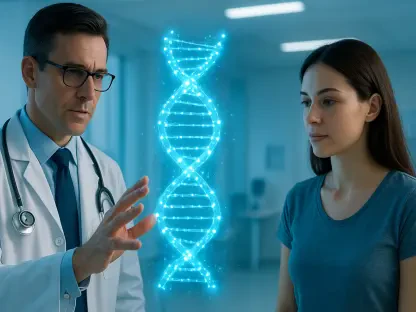

Every year on April 25, the global scientific community pauses to recognize DNA Day, a date that marks the monumental publication of the double-helix structure in 1953 and the triumphant completion of the Human Genome Project in 2003. For the researchers at The Institute of Cancer Research (ICR), this commemoration serves as a vital reminder that the fundamental blueprint of life provides the most effective roadmap for navigating the complexities of oncology. Rather than viewing DNA simply as a static set of instructions, modern science treats the genome as a dynamic field of study where every mutation offers a clue toward potential cures. By deciphering these genetic sequences, scientists are now able to predict how tumors will behave and why certain individuals are more susceptible to the disease than others. This proactive approach has shifted the focus from merely reacting to symptoms to understanding the very origin of cellular dysfunction, making the genetic fight a central pillar of modern healthcare.
Historical Milestones: Establishing the Genetic Link
The legacy of the ICR is built upon a foundation of transformative discoveries that have fundamentally redefined our understanding of how cancer develops within the human body. Decades ago, pioneering scientists at the institute were the first to provide definitive evidence that DNA damage serves as the primary driver of malignancy, a revelation that steered the global medical community away from vague theories and toward a more precise genetic focus. This groundbreaking work eventually led to the identification of the BRCA2 gene, a discovery that remains one of the most significant milestones in preventative oncology to this day. By uncovering the specific mutations that increase the risk of breast, ovarian, and prostate cancers, the ICR empowered millions of individuals to make informed decisions about their health. This shift toward risk-based screening has saved countless lives by allowing for earlier interventions and prophylactic measures that were previously unimaginable before the genetic era.
Building on this historical foundation, contemporary research at the institute has expanded into the realm of large-scale genomic mapping to refine the application of precision medicine in clinical settings. By analyzing the genetic profiles of over 11,000 patients, researchers have successfully identified 134 unique mutational signatures that act as biological fingerprints for the specific processes causing cellular damage. One of the most significant outcomes of this massive data analysis is the identification of homologous recombination deficiency, which highlights a critical vulnerability in a tumor’s ability to repair its own DNA. Understanding this specific weakness allows oncologists to deploy targeted therapies, such as PARP inhibitors and specialized chemotherapies, which are designed to exploit these genetic flaws. This level of personalization ensures that patients receive the most effective treatments based on their unique tumor biology, moving the industry closer to a future where general treatments are replaced by highly tailored medical protocols.
Modern Challenges: Early Detection and Algorithmic Solutions
While genetic mapping has improved treatment for existing cases, the ICR is also dedicated to solving contemporary medical mysteries, such as the alarming rise of early-onset bowel cancer among younger populations. Through the innovative Boomers Project, scientists are examining preserved tumor samples from the mid-20th century to compare them with the genetic profiles of modern patients. This unique longitudinal study aims to identify how seventy years of environmental changes, dietary shifts, and lifestyle factors have altered the genomic landscape of the disease. By utilizing advanced sequencing technologies developed right at the institute, researchers are pinpointing the exact triggers that lead to cancer development in individuals under the age of fifty. These insights are crucial for developing new screening guidelines and prevention strategies that can catch the disease long before it becomes life-threatening. The ability to link historical data with modern genetic analysis represents a significant leap forward in understanding the evolving nature of cancer in a rapidly changing world.
Innovation in treatment now frequently intersects with the world of artificial intelligence, as researchers use high-speed computing to study the structural mechanics of how cancer cells evade destruction. While healthy cells utilize specific enzymes to repair routine DNA damage, malignant cells often hijack these same pathways to survive the rigorous effects of chemotherapy and radiation. ICR scientists are currently using sophisticated AI models to visualize the recruitment and activation of these repair enzymes, seeking ways to effectively “break” the cancer cell’s internal maintenance kit. If the repair mechanisms within a tumor can be neutralized, the cancer becomes unable to replicate or spread, making traditional treatments far more potent. This structural groundwork is essential for the development of a new generation of drugs that do not just attack the cancer but actively dismantle its defense systems. By combining biological research with algorithmic precision, the institute is creating a multi-faceted approach that targets cancer at its most fundamental structural level.
Strategic Initiatives: The Path Toward Preventative Care
As the field of oncology moves deeper into 2026, the integration of genomic data into routine clinical practice is becoming the standard for healthcare systems worldwide. The ICR continues to lead this charge by synthesizing vast amounts of historical data with the latest technological advancements to create a more comprehensive view of patient health. This ongoing effort involves not only the development of new pharmaceutical interventions but also the creation of digital tools that can predict a patient’s response to therapy before the first dose is even administered. By looking at the intersection of genetics and lifestyle, researchers are identifying specific cohorts that may benefit from early intervention long before a tumor is detectable through conventional imaging. This proactive model of care represents a paradigm shift in the medical field, prioritizing long-term health management over reactive crisis intervention. The goal is to create a healthcare environment where genetic insights are utilized at every touchpoint of the patient journey to ensure the highest possible standards of care.
The collective efforts of the institute demonstrated that the future of oncology rested firmly within the complexities of the human genome and its various repair mechanisms. By focusing on actionable insights derived from mutational signatures and structural biology, researchers provided a framework for clinicians to move toward a more effective, preventative model of medicine. This progress highlighted the importance of continuous investment in genomic sequencing and the integration of artificial intelligence into drug discovery pipelines. Stakeholders recognized that the next steps involved expanding these genetic mapping projects to include more diverse populations, ensuring that the benefits of precision medicine reached all segments of society. Furthermore, the development of new diagnostic protocols based on the Boomers Project offered a concrete strategy for addressing the rise of early-onset diseases. As the scientific community moved forward, the reliance on genetic roadmaps became the definitive strategy for reducing the global burden of cancer through early detection and highly specialized, targeted therapeutic interventions.