
Ivan Kairatov stands as a prominent figure in the biopharmaceutical sector, bringing decades of insight into how technological innovation and rigorous research and development intersect to redefine modern medicine. With a career rooted in bridging the gap between molecular discovery and clinical application, he has navigated the complexities of taking high-potential therapies through the arduous path to the patient’s bedside. Today, we delve into the implications of the recent nearly $70 million, seven-year renewal grant awarded to NYU Langone Health’s Clinical and Translational Science Institute. This conversation explores how such a substantial injection of federal funding serves as a catalyst for institutional growth, the critical role of data-driven infrastructure in modern trials, and the strategic importance of fostering the next generation of scientific leaders within a bustling urban ecosystem. We examine the shift toward community-engaged research and the necessity of building a workforce that is as fluent in data science as it is in clinical care.
A seven-year, $70 million commitment provides a significant scale for medical innovation. How does this level of funding specifically accelerate the timeline from laboratory discovery to patient care, and what operational bottlenecks in clinical trials can now be systematically removed?
This level of funding represents the highest tier of support available through the NIH’s Clinical and Translational Science Awards, and its seven-year duration is a game-changer for long-term stability. Traditionally, one of the most frustrating bottlenecks in clinical research is the “start-up” phase, where administrative hurdles and recruitment delays can stall a promising study for months or even years. With these resources, we can systematically overhaul our clinical trial networks to focus specifically on accelerating both the initiation and the completion of these trials. By investing in a dedicated institutional engine, we move away from the fragmented, trial-by-trial setup and instead create a streamlined pipeline that treats discovery as a continuous flow rather than a series of disconnected events. This financial backbone allows us to build a more resilient infrastructure that can handle the complexities of modern regulatory environments while ensuring that the speed of innovation is matched by the speed of execution.
Building high-level data infrastructure and biostatistics support is often prohibitively expensive for individual departments. What are the practical steps for managing these shared resources across a massive institution, and how do you ensure that diverse medical specialties receive equitable access to these specialized tools?
The sheer cost of building a high-level data infrastructure is often the biggest barrier for smaller departments or niche specialties, which is why a centralized approach is so essential. Since its inception in 2009, the Clinical and Translational Science Institute has already managed nearly 5,000 requests for support, proving that a shared resource model is not just viable but highly demanded. By consolidating biostatistics support and large-scale patient data tools, we provide every researcher—regardless of their department’s individual budget—with the same high-caliber analytical power. We manage this through a structured intake process that prioritizes projects based on scientific merit and clinical impact, ensuring that a researcher in radiology has the same opportunity as one in epidemiology. This central “hub” model effectively democratizes technology, allowing us to broaden access to health informatics tools across the entire institution so that no breakthrough is left behind simply because a department couldn’t afford the data scientists to analyze it.
Early-career investigators drive more than half of the requests for research support in modern institutes. What specific mentorship programs help these scientists navigate complex regulatory hurdles, and what anecdotes or data points best demonstrate their success in securing independent grants and publishing peer-reviewed work?
Our focus on early-career investigators is a cornerstone of our mission, as they currently represent more than 50% of the requests we process for research support. We view the institute as a vital pipeline for the next generation of scientists, offering structured career development programs that take the mystery out of navigating complex federal regulations and grant applications. The success of this approach is reflected in the hard datour projects have generated more than 1,500 grants and over 1,500 peer-reviewed publications to date. These numbers aren’t just statistics; they represent thousands of young scientists who have successfully transitioned from being trainees to becoming independent researchers with their own funded labs. By providing them with the mentorship and technical resources they need early on, we are effectively securing the future of translational science and ensuring that the intellectual capital of the institution continues to grow.
Utilizing a dense urban environment as a “living laboratory” involves complex community dynamics. How do you build trust with diverse populations to ensure research isn’t just transactional, and what strategies successfully move medical discoveries into local family health centers and public hospitals to ensure health equity?
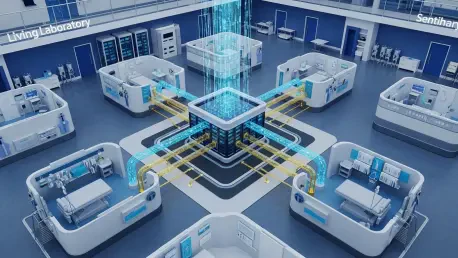
To truly turn New York City into a “living laboratory,” we must move beyond the walls of the hospital and into the fabric of the community itself. We achieve this by leveraging our expansive network, which includes the Family Health Centers and NYC Health + Hospitals, to ensure that our research is deeply embedded in the neighborhoods we serve. One of our top five priorities is deepening community-engaged research, which means we don’t just treat patients as subjects; we involve them as partners in the scientific process to ensure our work is relevant to their lives. By utilizing all 11 schools and colleges of the university, we bring a multidisciplinary approach to health equity, ensuring that a discovery made in a high-tech lab can be practically applied in a local family health center. This strategy ensures that innovation reaches patients equitably and at scale, transforming the way we deliver care to diverse and often underserved urban populations.
Expanding health informatics and workforce training requires a blend of clinical and technical expertise. What are the biggest hurdles in developing a research workforce fluent in data science, and how do regional collaborations between schools and hospitals improve the speed and quality of multi-site clinical trials?
The biggest hurdle we face is the historical divide between the clinical world and the technical world, which is why our renewal focuses heavily on training the full spectrum of the research workforce. We need clinicians who understand the nuances of health informatics and data scientists who comprehend the realities of patient care at the bedside. By forging both regional and national collaborations, we break down the silos that typically slow down multi-site clinical trials, allowing for a more synchronized approach to data collection and analysis. When we integrate the expertise across NYU’s 11 schools and colleges, we create a more versatile workforce that can handle the “big data” challenges of modern medicine. These collaborations essentially create a unified front, improving the quality of our data and the speed at which we can conclude large-scale studies, ultimately benefiting the patient through faster access to new treatments.
What is your forecast for translational science?
My forecast is that translational science will move toward an era of unprecedented integration, where the “living laboratory” model becomes the global standard for medical research. We will see a shift where the boundaries between data science, community outreach, and clinical practice completely blur, leading to a system where real-world patient data informs laboratory experiments in real-time. This $70 million investment is just the beginning of a larger movement toward democratizing high-end research tools, ensuring that the next decade of breakthroughs is defined by how quickly and equitably we can apply scientific discoveries to improve public health across entire cities. As we continue to train a workforce that is fluent in both biology and bytes, the timeline from a lab bench discovery to a life-saving treatment will continue to shrink, making personalized and equitable healthcare a reality for millions more people.