
The convergence of big data and clinical medicine is finally enabling the creation of a system where every patient encounter contributes to collective medical knowledge. As healthcare providers grapple with the sheer volume of information generated within their networks, the ability to synthesize this data into actionable insights has become the primary differentiator between stagnant organizations and those leading the next wave of medical advancement. Truveta has positioned itself at the center of this transformation by establishing a robust technical infrastructure that moves beyond the traditional boundaries of electronic health record silos. By documenting their methodologies in a peer-reviewed journal, they have effectively demonstrated how a unified national dataset, now encompassing over 140 million patients, serves as a foundation for clinical research that was once hindered by fragmentation. This initiative is not merely a technical achievement but a fundamental shift in how the industry approaches the concept of a Learning Health System, transforming every single clinical interaction into a piece of a larger puzzle.
Technical Pillars: Innovations in Data Normalization
Core to the platform’s utility is the implementation of automated syntactic and semantic normalization protocols. These processes are designed to bridge the gap between dozens of disparate health systems, each utilizing varying data standards and terminology. By mapping these diverse inputs into a singular, interoperable framework, the system eliminates the friction usually associated with cross-institutional studies. This normalization is not a one-time event but a continuous process that ensures data from different electronic health record vendors can be compared accurately. This capability allows researchers to query massive populations without the manual labor of cleaning data, which historically consumed the majority of research timelines. Furthermore, the use of standardized medical vocabularies ensures that the insights generated are consistent with global healthcare standards, providing a level of reliability that is essential for modern evidence-based medicine and pharmaceutical development cycles starting in 2026.
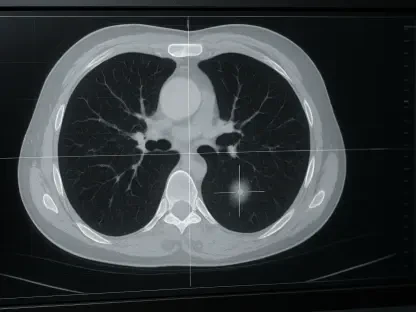
Beyond simple structured data fields, the architecture integrates multimodal sources to provide a truly holistic view of the patient journey. This includes the processing of unstructured clinical notes, complex medical imaging files, and comprehensive insurance claims to fill the gaps left by traditional electronic records. To achieve this, advanced artificial intelligence and large language models are employed for concept extraction, turning narrative text into computable knowledge. This allows for the identification of nuances in patient care, such as specific symptom onset or subtle diagnostic indicators, that are often buried in free-text documentation. The inclusion of imaging and claims data provides a longitudinal perspective, tracking patient outcomes across different care settings and over extended periods. This multidimensional approach ensures that clinical research is not restricted to what is easily measured, but instead encompasses the full complexity of human health and the multifaceted nature of contemporary medical interventions.
Operational Success: Validation and Clinical Transformation
The recent technical publication in JAMIA Open serves as a strategic cornerstone for establishing credibility within the broader biomedical informatics community. By inviting scrutiny of their underlying processes, the organization has moved beyond the role of a traditional data vendor to become a transparent contributor to scientific discourse. This level of openness is critical for building the trust required to utilize secondary clinical data in high-stakes environments, such as regulatory submissions and clinical guideline development. Government agencies and academic institutions now have a blueprint to evaluate the methodologies used to handle sensitive patient information and ensure its accuracy. This transparency also encourages other industry players to adopt similar standards of disclosure, fostering a culture of accountability in the healthcare technology sector. The peer-review process acts as a rigorous filter, confirming that the methods used for data de-identification and normalization meet the highest scientific standards.
The clinical community successfully realized the benefits of this large-scale integration by adopting specific protocols that favored data transparency over isolation. Healthcare organizations moved toward a model where data quality was assessed through continuous automated auditing, ensuring that AI-driven insights remained clinically relevant. Medical researchers prioritized the use of de-identified datasets to evaluate the long-term effects of chronic disease treatments, leading to the discovery of more effective management strategies. These efforts established a precedent for cross-institutional cooperation, proving that the technical hurdles of the past could be overcome with a unified governance approach. By shifting the focus to longitudinal patient journeys rather than isolated encounters, providers achieved a more comprehensive understanding of health disparities. The industry consequently adopted a standard where every new technological implementation was required to demonstrate its contribution to the collective knowledge of the healthcare ecosystem.