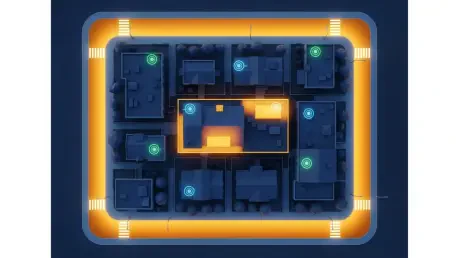

For thousands of city residents living with chronic respiratory conditions, the most dangerous moments of a summer heat wave do not occur under the glaring midday sun but rather in the heavy, airless hours well after midnight. While public health warnings typically emphasize seeking shade during the peak of the afternoon, emerging research suggests that the true catalyst for medical emergencies is the absence of nocturnal cooling. In dense metropolitan environments, the lack of a nighttime temperature drop creates a relentless physiological strain that standard weather alerts frequently overlook. For those struggling with asthma, the quietest hours of the night often become a desperate battle for breath as stagnant indoor air reaches its highest thermal intensity.
The Silent Escalation of Midnight Respiratory Distress
Traditional safety protocols have long focused on the sweltering intensity of the afternoon sun, yet recent data indicates that the true danger for asthma sufferers begins after twilight. A groundbreaking analysis of emergency room visits reveals that nighttime minimum temperatures are a far more accurate predictor of respiratory crises than record-breaking daytime highs. For residents in packed urban centers, the struggle to breathe often peaks long after the outdoor temperature has technically “dropped” on paper. This phenomenon occurs because urban structures do not shed heat as efficiently as the natural landscapes found in suburban or rural areas, leading to a sustained thermal load on the human body.
The persistent warmth prevents the respiratory system from recovering from the stressors experienced during the day. When the mercury fails to fall below a certain threshold at night, the body remains in a state of high alert, exacerbating inflammation in the airways. This constant environmental pressure means that by the time the next day’s heat arrives, the individual is already physically compromised. The research underscores that the cumulative effect of these warm nights creates a cascading health crisis that often results in emergency hospitalizations, transforming a manageable chronic condition into a life-threatening event.
Why Traditional Weather Alerts Are Missing the Mark
Standard public health protocols, such as Baltimore’s “Code Red Extreme Heat” alerts, have historically relied on regional data gathered from airport weather stations. However, this centralized approach fails to account for the “mosaic of heat” found at the street level within a complex city grid. Research from Johns Hopkins University highlights a critical disconnect: regional averages ignore localized heat islands where stagnant, hot air remains trapped between buildings. Because these airport stations are often located in open, grassy areas, they provide readings that are significantly cooler than the actual conditions faced by residents in the heart of the city.
This data gap means that many high-risk nights do not trigger official warnings, leaving vulnerable populations without the resources or guidance they need to stay safe. A localized sensor network revealed that temperatures in certain neighborhoods stayed several degrees higher than the official airport reports, creating a hidden danger zone. Furthermore, the reliance on daytime peaks ignores the duration of exposure. A city can experience a manageable daytime high but a dangerously warm night, yet the official system may not recognize this as a “Code Red” scenario. This oversight suggests that current alert systems require a fundamental recalibration to reflect the lived reality of urban heat.
The Intersection of Biology, Social Inequity, and Stagnant Air
The vulnerability of urban populations is driven by a combination of architectural traps and human physiology. During the day, many people find temporary relief in climate-controlled offices or schools, but they return at night to multi-story row homes that act as thermal batteries. These buildings absorb solar radiation all day and radiate it directly into upstairs bedrooms throughout the night, often making the indoor environment hotter than the air outside. Biologically, this heat exposure coincides with a “circadian dip” around 3:00 a.m., when the body’s natural adrenaline levels—which help keep airways open and reduce inflammation—reach their lowest point.
Furthermore, the impact of these heat events is not distributed equally across the urban landscape. Neighborhoods within the “Black butterfly”—historically segregated areas with fewer trees and less cooling infrastructure—suffer the most frequent and severe asthma exacerbations. These districts often lack the green spaces that provide natural cooling and are more likely to have older housing stock that lacks central air conditioning. Consequently, the intersection of systemic neglect and environmental physics creates a scenario where the most vulnerable citizens are forced to live in the hottest pockets of the city, significantly increasing their risk of a respiratory emergency.
Insights from the Johns Hopkins Research Team
The use of machine learning has allowed for a much more nuanced understanding of how heat triggers health crises over time. Senior investigator Benjamin Zaitchik and first author Bianca Corpuz utilized these advanced models to track the relationship between neighborhood-level temperature fluctuations and hospital admissions. Their findings showed that the “lag effect” is a vital factor for healthcare providers to understand, as patients rarely rush to the hospital the moment the temperature rises. Instead, days of cumulative heat exposure lead to a slow, steady worsening of symptoms that eventually becomes unbearable.
Dr. Meredith McCormack, a co-author of the study, noted that emergency rooms often see a surge in admissions a week or more after a heat wave has officially passed. This delayed reaction indicates that the damage caused by nighttime heat is often hidden, building up until the patient’s rescue inhalers are no longer sufficient. The research team also observed that these patterns were consistent across different age groups, suggesting that the environment, rather than just individual health factors, was the primary driver of the spike in asthma cases. This insight shifted the focus from individual behavior to the necessity of systemic environmental interventions.
Modernizing Urban Response for a Warming Climate
To protect vulnerable citizens as global temperatures continue to rise, urban centers must shift toward more sophisticated public health frameworks. The research established that updating alert systems to trigger warnings based on nighttime minimum temperatures was a necessary evolution in city management. Practical steps for city officials involved investing in neighborhood-level sensor networks to identify specific blocks at risk. These localized data points allowed for a more surgical application of aid, ensuring that cooling centers and medical outreach programs reached the individuals who were truly in the path of the thermal danger.
The findings also suggested that directing cooling assistance—such as air conditioning subsidies and electricity vouchers—specifically toward the high-vulnerability zones was more effective than broad, city-wide programs. Urban planners recognized the importance of long-term strategies, including the expansion of the tree canopy in historically underserved neighborhoods to break the thermal battery effect of concrete row homes. By treating heat as a localized, nighttime threat rather than a general daytime inconvenience, cities began to build a more resilient infrastructure that prioritized the respiratory health of all residents. The study provided the evidence needed to transition from reactive emergency management to a proactive, data-driven defense of public health.