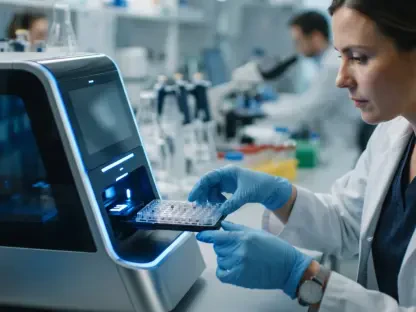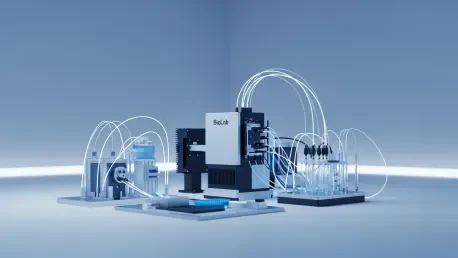

Ivan Kairatov stands at the forefront of the most significant shift in biotechnology since the advent of high-throughput sequencing. As a seasoned expert in biopharma research and development, Kairatov has spent years navigating the complex intersection of laboratory automation and artificial intelligence. His work focuses on transforming AI from a digital advisor that suggests molecular structures into a “Physical AI” capable of operating real-world hardware. With the recent unveiling of ProtoPilot and BioLab Bench by MGI’s subsidiary, Genoria AI, in collaboration with the Shanghai Artificial Intelligence Laboratory, the industry is witnessing a transition toward self-evolving, autonomous laboratories. Kairatov provides a deep look into how these systems are finally closing the loop between digital design and wet-lab execution.
The conversation explores the revolutionary capabilities of ProtoPilot, a system that doesn’t just design experiments but actually executes and learns from their outcomes. We delve into the self-evolving multi-agent architecture that allows for autonomous error correction, particularly when biological protocols like antibiotic resistance screenings fail. The discussion also highlights the importance of BioLab Bench, a first-of-its-kind evaluation framework that measures an AI’s ability to handle the physical nuances of laboratory equipment across various difficulty levels. Furthermore, the interview sheds light on the shift from a “compute-heavy” AI race to a more specialized approach that emphasizes agent scaling and real-world feedback loops. Finally, we look at the legacy of collaborative research that led to this moment and what the future holds for 7×24 unattended laboratories.
The concept of ProtoPilot centers on a “self-evolving” loop that covers everything from design to device execution. How does the system handle real-world failures, such as a failed antibiotic resistance screening, and what does this look like in a practical laboratory setting?
In a traditional lab setting, when a PCA assembly fails or an antibiotic resistance screening doesn’t yield the expected results, a human researcher has to sit down, pore over the logs, and manually troubleshoot every variable. ProtoPilot changes that dynamic by treating failure as a critical data point within its self-evolving loop. During the development of this system, we saw a specific instance where a protocol for antibiotic resistance screening failed to execute correctly. Instead of stopping and signaling for human help, the ProtoPilot agent diagnosed the failure at the Design2Protocol and Protocol2Code stages, identifying exactly where the logic or the physical execution instructions went wrong. It autonomously regenerated a corrected protocol, essentially “learning” from the wet-lab feedback to ensure the next iteration was successful. This isn’t just about a computer running a script; it’s about a multi-agent system that understands the entire lifecycle of an experiment, from the moment a scientist defines an intent to the final execution on the workstation. Seeing the system correct its own machine code in response to a physical reality is a watershed moment for lab automation.
One of the most striking statistics recently released is ProtoPilot’s score of 52.38% on the ProtocolQA benchmark, which puts it very close to the 54% human expert level. Why is this leap so significant compared to general-purpose models like GPT-5.6-sol, which scored 43.5%?
The difference between a 43.5% and a 52.38% score might seem incremental on paper, but in the context of laboratory reasoning, it represents a massive bridge across the “uncanny valley” of biological experimentation. General-purpose models like GPT-5.6-sol are incredibly powerful at processing text, but they often lack the “physical intuition” required to understand how a protocol translates to the movement of a robotic arm or the temperature of a thermal cycler. ProtoPilot’s ability to approach human expert-level performance at 54% suggests that it has moved beyond mere pattern recognition in text to a genuine understanding of experimental logic. It isn’t just predicting the next word; it is predicting the next physical action and its biological consequence. When you consider that humans have years of hands-on training to reach that 54% proficiency, having an AI agent hit 52.38% indicates that we are very close to a world where AI can serve as a primary investigator for routine research tasks. This level of reasoning is exactly what is needed to move away from rigid, hard-coded automation toward flexible, intelligent discovery.
BioLab Bench has been introduced as the industry’s first comprehensive evaluation framework for Physical AI. How do the three levels of difficulty, from L1 to L3, help researchers assess if an AI agent is actually ready for real-world deployment?
BioLab Bench is a necessity because, until now, we didn’t have a standardized way to measure if an AI could actually “do” science or if it was just good at “talking” about science. The framework is stratified into three levels, L1 through L3, to reflect the increasing complexity of real-world research workflows. Level 1 might cover fundamental operations—basic liquid handling or simple transfers—while Level 3 involves complex, multi-step workflows that require high-level reasoning and error recovery. By evaluating agents across this spectrum, we can see exactly where the “chain of command” breaks down, whether it’s in the intent interpretation, the protocol design, or the translation into device-specific machine code. We don’t just check for a plausible-looking protocol; we use a physical execution gate to verify if the instructions actually work on a real workstation. This full-chain assessment ensures that when an agent claims to have a solution, that solution is physically executable, verifiable, and reproducible, which are the cornerstones of the scientific method.
A major hurdle in lab automation has always been the lack of transferability between different hardware brands. How does this new Physical AI initiative address cross-device generalization and the need for device-agnostic SOP generation?
This is a problem that has plagued the industry for decades; a protocol written for one automated platform is often useless on another without extensive manual rewriting. The Physical AI initiative, specifically through the work of Genoria AI and the Shanghai AI Laboratory, tackles this by creating a layer of device-agnostic SOP generation. The agent first designs the experiment in a high-level, universal language before translating it into the specific machine code required by a particular piece of hardware. This “translation” capability is tested extensively within the BioLab Bench framework to ensure cross-device transferability. It means that the 3,800 users MGI has globally could potentially share and execute protocols regardless of their specific hardware configuration, as long as the AI agent understands the underlying constraints of the machines. This shift allows labs to scale their discovery processes without being locked into a single proprietary ecosystem, making the hardware almost “invisible” to the researcher and letting the focus remain on the science.
The path toward 7×24 unattended smart laboratories seems to be a core goal for Genoria AI. What are the specific day-to-day changes a researcher might experience when their lab transitions from human-led to agent-led discovery?
The most immediate change will be the transition of the scientist from a “doer” to an “orchestrator.” In a 7×24 unattended lab, the BioAgents don’t go home at 5:00 PM; they continue to accumulate real research tasks, process wet-lab feedback, and refine protocols through the night. A researcher might walk into the lab in the morning to find that the system has already run three iterations of an experiment, identified a failure in the second round, and corrected it in the third. We are moving away from the “compute race” where the goal is just bigger models, and moving toward “agent scaling” and “closed-loop data engineering.” This means the AI is constantly learning from expert validations and even its own failure cases, building a massive corpus of physical experimental data that no human could ever manually compile. The physical experimental loop becomes a continuous training ground, allowing the lab to function as a self-improving organism that handles the drudgery of validation and execution while the humans focus on high-level hypothesis generation.
Looking back at the development of PrimeGen in 2025 and the work started by Dr. Yang Meng in 2019, how has the collaboration between MGI and academic institutions like Chulalongkorn University shaped the current state of Physical AI?
The journey to ProtoPilot didn’t happen in a vacuum; it’s the result of nearly seven years of focused research into dry-wet collaborative systems. The “PrimeGen” paper published in Nature Biomedical Engineering back in 2025 was a pivotal moment because it successfully integrated primer design and experimental validation into a single closed-loop workflow. That project, led by Dr. Yang Meng in collaboration with Professor Nattiya Hirankarn, proved that you could unite multi-agent systems with automated workstations to handle real-world biological tasks. That foundation allowed us to move beyond simple, single-task loops into the full experimental lifecycle management we see today. By leveraging MGI’s hardware-native advantages and real-world deployment experience from thousands of users, we’ve been able to take those early academic successes and scale them into a robust, industrial-grade platform. It’s a testament to the idea that Physical AI requires both cutting-edge algorithmic theory from places like the Shanghai AI Laboratory and deep, practical hardware expertise.
What is your forecast for the role of Physical AI in the global biopharma industry over the next decade?
In the next ten years, I expect Physical AI to move from a “breakthrough innovation” to the standard operating procedure for every major pharmaceutical R&D center in the world. We will see the total collapse of the wall between digital modeling and physical execution, where an AI’s ability to “reason” will be inseparable from its ability to “act” in a wet lab. I forecast that by 2035, more than 80% of routine screening and protocol optimization will be handled by autonomous BioAgents, operating in 7×24 unattended facilities that can pivot between different research goals in a matter of minutes. We will see a massive acceleration in the “Design-Build-Test-Learn” cycle, potentially cutting the time it takes to move from a biological hypothesis to a validated lead compound by half. As these agents continue to scale and learn from a global network of real-world tasks and expert feedback, they will develop a level of integrated execution capability that will make our current manual processes look like the era of the horse and buggy. The “compute race” will be replaced by a “discovery race,” and those who embrace the physical experimental loop will be the ones who define the next century of medicine.