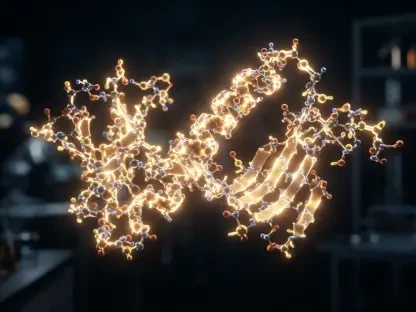

Emerging radionuclides like Terbium-161 provide a multifaceted approach by emitting beta particles alongside Auger and conversion electrons for microscopic precision. This development represents a massive leap forward in the quest to move beyond the era of blunt-force oncology, where treatments often damaged healthy tissue as much as the malignancy they were designed to destroy. By shifting the focus toward molecularly targeted strategies, medical science is now capable of respecting the unique biological profile of an individual patient’s cancer. Radiopharmaceutical therapy stands at the center of this transformation, functioning as a sophisticated integration of nuclear physics, molecular biology, and clinical pharmacology. Unlike traditional external-beam radiation, which targets specific geometric locations within the body, these advanced radioactive compounds circulate through the bloodstream to find and bind to specific proteins expressed on the surface of cancer cells. This systemic reach allows for the treatment of microscopic metastatic deposits that are often invisible to standard imaging, effectively turning the patient’s own circulatory system into a delivery vehicle for precision-guided destruction.
The conceptual framework of cancer treatment is transitioning from a reliance on external interventions toward an understanding of internal biological targeting. Historically, radiation was an external tool aimed at a visible mass, but the current paradigm treats the malignancy as a systemic issue that requires a systemic response. The energy deposition in modern radiopharmaceutical therapy is no longer determined solely by where a doctor points a beam; instead, it is governed by the physiological clearance of the drug, the rate of blood circulation, and the specific retention of the radionuclide within the tumor tissue. This requires clinicians to view the body not as a collection of static organs, but as a dynamic, engineered system where isotope physics and target biology are inextricably linked. This transition is not merely a technical upgrade in hardware but a fundamental change in how oncologists approach the intersection of medicine and physics to achieve long-term remission in patients with advanced disease.
The Departure: From Standardized to Biological Dosing Protocols
One of the most significant shifts in the landscape of oncology involves the move away from “fixed-activity” protocols that have long dominated pharmaceutical administration. In conventional medicine, drugs are frequently prescribed based on a patient’s total body weight or surface area, assuming a relatively uniform distribution across the population. However, in the realm of radiopharmaceutical therapy, this approach is increasingly viewed as antiquated because the quantity of radioactivity administered does not directly correlate with the actual absorbed radiation dose received by the tumor or healthy organs. Because every patient possesses a unique internal environment—characterized by different kidney filtration rates, blood volumes, and tumor densities—the same dose of a radioactive drug can produce wildly different therapeutic and toxic effects. Consequently, the industry is moving toward a more nuanced model where the “absorbed dose” is calculated for each individual, ensuring that the cancer receives a lethal amount of energy while the surrounding healthy tissues remain within safe limits.
The realization that efficacy and toxicity are governed by individual organ biodistribution and cellular residence times has forced a rethink of clinical trial design and everyday treatment planning. Engineers and physicists now work alongside oncologists to model how a specific radionuclide will behave within a specific human body over time. This sophisticated modeling accounts for dose rates and the microscopic distribution of energy, transforming the treatment process into a highly personalized engineering task. By focusing on the biological reality of the patient rather than a standardized chart, clinicians can push the boundaries of what is possible, often delivering higher, more effective doses to resistant tumors that were previously thought to be untreatable. This evolution ensures that the therapeutic window—the balance between killing the cancer and protecting the patient—is maximized for every individual who enters the clinic.
Established Successes: Redefining Standards of Care
The current clinical landscape is anchored by several approved agents that have demonstrated remarkable efficacy across various types of malignancies, setting a high bar for future developments. Radioactive iodine has been a cornerstone for treating thyroid carcinoma for decades, but the modern application of peptide receptor radionuclide therapy has introduced a new level of sophistication. The use of Lutetium-177 dotatate, for example, has revolutionized the management of neuroendocrine tumors, providing a lifeline for patients with somatostatin receptor-positive cancers. Data from ongoing clinical evaluations indicate that this therapy significantly prolongs progression-free survival compared to traditional high-dose hormone treatments. This success has encouraged a shift toward using these therapies earlier in the disease progression, rather than reserving them only as a last-resort option for those who have failed all other interventions.
The breakthrough in treating metastatic castration-resistant prostate cancer with Lutetium-177 PSMA-617 represents another major milestone in the field. By targeting the prostate-specific membrane antigen, this therapy delivers ionizing radiation directly to the site of the disease, regardless of where it has spread in the body. Major clinical studies have established its ability to prolong overall survival and enhance the quality of life for patients who have already undergone extensive chemotherapy and androgen-receptor inhibition. Beyond just adding months to a patient’s life, these radiopharmaceuticals often offer a much more tolerable side-effect profile than traditional cytotoxic drugs, as the radiation is confined mostly to the tumor cells. This success has sparked a massive wave of investment and research into similar “search-and-destroy” molecules for other common cancers, marking the beginning of a new era where targeted radiation is a standard part of the oncology toolkit.
The Innovation: Learning From Historical Logistical Challenges
The journey toward modern precision oncology has been shaped by the lessons learned from earlier attempts at radioimmunotherapy, particularly in the treatment of B-cell lymphoma. Despite the initial approval of several radioactive antibody treatments, they faced significant hurdles that limited their widespread adoption in clinical practice. These early agents were often large, complex molecules that remained in the patient’s bloodstream for extended periods, leading to excessive radiation exposure to the bone marrow and other sensitive tissues. Furthermore, the logistical complexity of coordinating between different medical departments and the strict radiation safety requirements created a “friction” that made these treatments difficult to implement on a large scale. The emergence of competing, non-radioactive oral therapies further marginalized these early successes, highlighting the need for a more streamlined and efficient approach to delivering radiation.
To overcome these historical obstacles, the current generation of researchers is developing bioengineered vectors that are smaller and more agile than traditional monoclonal antibodies. These next-generation tools, such as nanobodies and antibody fragments, are designed to clear from the systemic circulation much faster, which significantly optimizes the tumor-to-background dose ratio. By ensuring that the radioactive payload reaches the tumor quickly and then exits the body rapidly through the kidneys, clinicians can minimize the risk of long-term toxicity to the blood-forming organs. This shift in molecular design reflects a broader trend toward efficiency and patient safety, ensuring that the logistical and biological “baggage” of early therapies is replaced by streamlined, high-performance delivery systems that are better suited for the fast-paced environment of modern hospitals.
The Expansion: New Targets and the Alpha Frontier
The growth of precision oncology is heavily dependent on the identification of novel biomarkers that can serve as anchors for radioactive payloads. One of the most promising areas of current research involves targeting the Fibroblast Activation Protein, which is highly expressed in the supportive tissue, or stroma, that surrounds many epithelial tumors. Instead of focusing only on the cancer cells themselves, this approach targets the “neighborhood” that allows the tumor to grow and thrive. By destroying the surrounding microenvironment, clinicians may be able to treat a much broader range of solid tumors, including those that have traditionally been resistant to standard therapies. This strategic expansion beyond well-known markers like PSMA is opening up new possibilities for patients with pancreatic, lung, and breast cancers, potentially bringing the benefits of radiopharmaceutical therapy to a much larger population.
Parallel to the discovery of new targets is the emergence of targeted alpha therapy, which uses powerful isotopes like Actinium-225 to deliver a devastating blow to malignant cells. While most current treatments rely on beta particles, which travel a relatively long distance and cause moderate damage, alpha particles are like “molecular sledgehammers” that travel only a few cell diameters. This short range allows for incredibly high energy deposition within a tiny area, causing lethal double-strand breaks in the DNA of cancer cells that are nearly impossible for the cell to repair. This is particularly effective for treating small clusters of cells or microscopic disease that might be resistant to other forms of radiation. Although challenges remain regarding the supply chain and the biological management of these potent isotopes, the move toward alpha emitters represents a significant escalation in the fight against aggressive and treatment-resistant malignancies.
The Requirement: Integrated Dosimetry and Team-Based Care
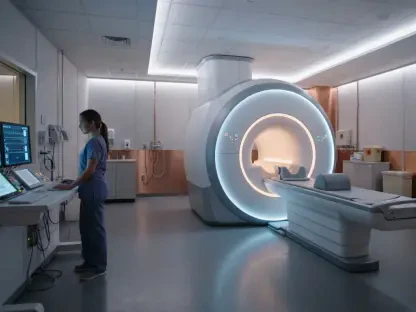
To fully realize the potential of these advanced treatments, the medical community is embracing a “theranostic” approach that seamlessly blends diagnostic imaging with therapeutic intervention. This process begins with the administration of a diagnostic version of a drug—often labeled with a positron emitter—which allows doctors to see exactly where the therapy will go before it is even delivered. By using PET or SPECT scans to map the distribution of the tracer, clinicians can identify which patients are most likely to respond and, more importantly, they can perform personalized dosimetry. This quantitative imaging allows for the calculation of the specific radiation dose that will be delivered to each tumor and each vital organ, transforming the treatment from an educated guess into a precise, data-driven medical procedure. This level of foresight is essential for avoiding the “under-dosing” of tumors or the “over-dosing” of sensitive organs like the kidneys.
The successful implementation of this high-tech approach requires a deeply integrated, multidisciplinary team that spans several different areas of expertise. A typical treatment program now involves nuclear medicine physicians, radiation oncologists, medical physicists, and radiochemists, all working in concert to manage the complex logistics of the therapy. This team-based infrastructure is also vital for managing “combination biology,” where radiopharmaceutical therapy is paired with other modern treatments such as immunotherapy or DNA repair inhibitors. These combinations aim to create a synergistic effect, making the cancer cells more vulnerable to radiation while simultaneously boosting the patient’s own immune response. Coordinating these diverse treatments requires vigilant monitoring and a sophisticated understanding of how different therapies interact within the human body, ensuring that the final outcome is both safe and highly effective.
The Future: Solving Infrastructure and Logistical Constraints
As the field moves forward from 2026, the focus has shifted toward building the necessary infrastructure to support the global rollout of these life-saving therapies. One of the primary challenges has been the manufacturing and supply chain for radionuclides, many of which have half-lives measured in hours or days. Unlike traditional pharmaceuticals that can be stored in a warehouse, these radioactive drugs must be produced in nuclear reactors or cyclotrons and transported to the clinic with extreme speed and precision. This “just-in-time” manufacturing model requires a robust and highly coordinated logistics network to ensure that a patient in a remote location has the same access to treatment as someone in a major metropolitan center. Overcoming these bottlenecks was a priority for the industry, leading to more localized production facilities and improved transport technologies that have expanded the reach of precision oncology.
The medical community has also recognized the need for standardized guidelines regarding the re-treatment of patients and the long-term management of cumulative radiation doses. Establishing these protocols has allowed clinicians to offer multiple courses of therapy over several years, effectively turning once-terminal cancers into manageable chronic conditions. Research into new biological models specifically designed for internal radiation has provided a clearer understanding of how different tissues repair themselves between doses. By the conclusion of these collective efforts, the healthcare industry established a sustainable framework for the delivery of radiopharmaceutical therapy. This progress ensured that the focus remained on the biological reality of each individual, paving the way for a future where every cancer patient receives a treatment plan as unique as their own DNA. This strategic investment in infrastructure and personalization has fundamentally altered the trajectory of cancer care for the better.