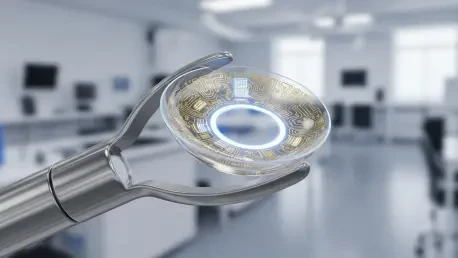

The therapeutic landscape for mental health disorders is undergoing a radical shift as bioelectronic innovations move from the realm of science fiction into tangible medical applications. Researchers at Yonsei University have recently unveiled a sophisticated, transparent contact lens that targets the underlying neural architecture of depression without the need for invasive surgical procedures or daily pharmacological regimens. This platform utilizes the unique anatomical position of the eye, which serves as a natural gateway to the brain, to deliver precise electrical stimulation to specific mood-regulating circuits. By leveraging the retina’s status as a direct extension of the central nervous system, this wearable device bypasses the systemic issues associated with oral medications. This breakthrough suggests that the future of psychiatry may lie not in a pill bottle, but in localized, high-tech wearables that interact seamlessly with our biological systems to restore emotional balance.
Precision Through Temporal Interference and Rigorous Testing
The core technical innovation driving these bioelectronic contact lenses is a sophisticated method known as temporal interference. Unlike traditional deep brain stimulation, which often requires electrodes to be physically implanted into the skull, this method employs ultra-thin, flexible electrodes crafted from gallium oxide and platinum. These materials are integrated into the lens structure to remain entirely transparent and comfortable for the wearer. The device operates by emitting two independent, high-frequency electrical signals that travel harmlessly through the ocular tissue. These signals are specifically engineered to intersect at a precise coordinate within the retina. At this point of convergence, they create a low-frequency envelope, or a “bright spot” of electrical activity, that stimulates the optic nerve. This targeted approach allows researchers to activate specific deep-brain regions like the hippocampus and prefrontal cortex without affecting other sensitive areas.
To validate the clinical potential of this non-invasive technology, the research team conducted a comprehensive three-week study involving animal models divided into several comparative groups. One group consisted of healthy subjects, while others were induced into a depressive state to test various interventions, including daily thirty-minute sessions with the stimulating lenses and traditional doses of fluoxetine, commonly known as Prozac. Throughout the duration of the experiment, scientists monitored a wide range of indicators, from behavioral responses to real-time electrophysiological recordings of brain activity. This multi-dimensional evaluation was designed to ensure that the improvements observed were not merely superficial but reflected deep-seated biological changes. By comparing the bioelectronic treatment directly against a gold-standard SSRI, the study aimed to establish whether a wearable device could truly compete with established chemical therapies in terms of both speed and efficacy.
Biological Restoration and the Path Toward Personalization
The results of the study provided compelling evidence that the bioelectronic lenses could effectively rewire critical communication channels within the brain. Specifically, the treatment restored the vital connectivity between the hippocampus, which manages memory and emotion, and the prefrontal cortex, which is responsible for executive functions. On a biochemical level, the subjects wearing the lenses exhibited a 47% increase in serotonin levels, matching the “feel-good” neurotransmitter boost typically expected from pharmaceutical antidepressants. Simultaneously, there was a 48% reduction in corticosterone, a primary stress hormone that often plagues individuals suffering from chronic depression. Furthermore, inflammatory markers in the brain were significantly reduced, suggesting a comprehensive stabilization of the internal environment. These physiological shifts were so profound that an independent machine learning model, used to analyze the aggregated data, consistently categorized treated subjects as healthy.
Medical professionals and engineers looked toward the integration of wireless power systems and personalized stimulation profiles to transition this technology from laboratory success to human clinical trials. It was recognized that the ability to calibrate the electrical “bright spot” for individual patients could allow for the treatment of a broader spectrum of neurological conditions, such as chronic anxiety or cognitive decline. Future steps involved the development of long-term safety protocols to ensure that consistent ocular stimulation did not damage delicate retinal structures over years of use. By prioritizing a drug-free, non-invasive approach, the industry moved closer to a paradigm where mental health maintenance became as simple as wearing a pair of daily lenses. This evolution in care offered a promising alternative for the millions of people who did not respond to traditional pills, highlighting the importance of multidisciplinary research in solving complex human health challenges.