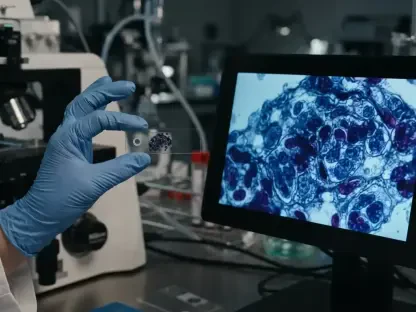

For decades, the pursuit of a cure for Alzheimer’s disease has been defined by a series of high-profile clinical failures and a mounting sense of urgency as global populations age at an unprecedented rate. This persistent medical wall has historically been reinforced by the sheer volume of scientific information, which now grows at a pace far exceeding the capacity of any human researcher to synthesize effectively. To confront this information overload, the Washington University School of Medicine in St. Louis has spearheaded the C-BRAIN initiative, an international consortium that leverages advanced artificial intelligence to navigate the labyrinth of neurodegenerative research. This project introduces a specialized suite of open-source tools designed to act as a digital research partner, capable of identifying subtle biological patterns that have remained hidden for years. By integrating tech industry expertise with academic rigor, the initiative aims to move beyond incremental progress toward a paradigm shift in how neurodegeneration is understood.
Literature Synthesis: Bridging Global Research Gaps
The first pillar of this technological overhaul addresses the critical bottleneck of literature review, where millions of papers currently languish in disparate databases across the globe. Researchers often spend months parsing through existing studies to ensure their work is novel, yet the complexity of modern neuroscience makes it nearly impossible to account for every relevant discovery. The C-BRAIN suite provides an automated synthesis tool that uses high-level retrieval mechanisms to digest thousands of specialized documents in a matter of seconds, providing a comprehensive overview of current knowledge. This capability allows scientific teams to evaluate complex hypotheses with a level of rigor that was previously unattainable, ensuring that new experiments are grounded in the totality of global evidence. By effectively bridging the gap between historical data and present-day inquiries, the system transforms static libraries into a dynamic, interactive knowledge base for the entire community.
Iterative Discovery: Accelerating the Scientific Research Cycle
Moreover, the speed at which this synthesis occurs allows for a more iterative approach to scientific discovery, where researchers can pivot their focus based on real-time data analysis. Instead of waiting for annual conferences or periodic literature updates, the AI-driven system continuously scans for emerging trends and conflicting results that might invalidate an experimental path before significant resources are spent. This proactive monitoring is essential in a field like Alzheimer’s research, where the biological mechanisms are notoriously intricate and multifaceted. By providing a clear map of the scientific landscape, the tool helps avoid the unintentional duplication of efforts that has plagued the pharmaceutical industry for decades. The result is a more streamlined and efficient research cycle that prioritizes high-probability targets, ultimately accelerating the timeline for developing effective treatments and bringing them to clinical trials where they are most needed.
Dark Data Discovery: Unlocking Insights from Failed Experiments
A significant portion of the global scientific output remains invisible, often referred to as dark data, which includes unpublished results and experiments that did not reach their primary endpoints. In the competitive world of drug development, these failures are rarely shared, leading other laboratories to unknowingly repeat the same costly errors. The C-BRAIN initiative’s Dark Data Analyzer is specifically designed to illuminate these “dead ends” by providing a secure framework for institutions to share what did not work. Understanding why a specific protein target failed to respond to a compound is just as valuable as identifying a successful one, yet this information has traditionally been trapped within corporate silos. By normalizing the sharing of negative results, the consortium creates a more honest and holistic view of the biological challenges inherent in neurodegeneration, allowing the global community to redirect their efforts toward more promising avenues of investigation.
Analytical Rigor: Enhancing Research Quality via Automated Review
Complementing this data recovery effort is a specialized reasoning agent known as Reviewer Three, which serves as an automated peer-review system for internal experimental designs. This tool provides rigorous, scientifically grounded feedback on research proposals before they are finalized or submitted for formal external review. By simulating the critical perspective of a human reviewer, it helps scientists identify potential flaws in their methodology, such as insufficient sample sizes or biased control groups, early in the process. This automated scrutiny ensures that the quality of published research remains exceptionally high, reducing the likelihood of irreproducible results that often stall long-term progress. As these AI agents become more sophisticated, they offer a form of continuous oversight that enhances the reliability of the entire research ecosystem. This rigorous internal vetting process is a crucial step in restoring confidence in clinical data and ensuring that only the most robust theories move forward.
Open-Source Philosophy: Promoting Transparency and Public Trust
Central to the success of this global endeavor is a commitment to an open-source philosophy that stands in stark contrast to the proprietary “black box” models often seen in corporate tech. By making the underlying code and logic of the AI tools available to the public, the C-BRAIN consortium ensures that the scientific community can verify, challenge, and improve the technology itself. This transparency is vital for building trust among academic researchers and pharmaceutical giants alike, as it removes the mystery surrounding how the AI reaches its conclusions. When scientists can see the internal mechanics of the reasoning engine, they are more likely to integrate its findings into their own high-stakes projects. This public-good approach prevents the technology from becoming a monopolized asset, ensuring that the benefits of AI-driven discovery are shared across the international medical landscape. Such an open framework encourages widespread adoption and rapid iteration from diverse minds worldwide.
Federated Learning: Collaborative Intelligence Without Data Risks
To navigate the complexities of data privacy and intellectual property, the initiative employs a federated learning model that allows for deep collaboration without compromising sensitive raw data. In this setup, various organizations can train the AI on their internal datasets while keeping that data behind their own firewalls, sharing only the refined insights or weight adjustments with the central system. This creates a “pre-competitive space” where rival pharmaceutical companies can contribute to the foundational understanding of Alzheimer’s biology without losing their competitive advantage in specific drug formulations. This model effectively bypasses the legal and ethical hurdles that have long prevented large-scale data sharing in the medical field. By synthesizing these distributed insights, the AI can build a more comprehensive model of disease progression than any single entity could achieve alone. This cooperative strategy represents a fundamental shift in industry culture, prioritizing the collective mission over individual corporate secrecy.
Precision Neurotherapeutics: Tailoring Treatments via AI Patterns
The integration of these advanced AI tools is paving the way for a more personalized approach to treating neurodegenerative diseases, moving away from a one-size-fits-all strategy. Since Alzheimer’s presents differently across various patient populations, the ability to analyze vast amounts of genomic, imaging, and clinical data simultaneously is essential for developing precision therapies. The consortium’s efforts, supported by significant philanthropic and industrial backing, are focused on identifying specific biomarkers that can predict how an individual will respond to a particular treatment. This granular level of understanding was previously out of reach, but the AI’s capacity for pattern recognition across multi-modal datasets has brought it into the realm of possibility. As these tools continue to evolve, they will likely become standard fixtures in the clinical setting, helping doctors tailor interventions to the unique biological profile of each patient, thereby increasing the probability of successful outcomes.
Strategic Implementation: The Legacy of Collaborative Research Models
The development of the C-BRAIN initiative established a significant precedent for how high-stakes medical research could be conducted in a hyper-connected era. By dismantling the barriers between proprietary data and public knowledge, the project demonstrated that collaborative transparency was a more effective driver of innovation than isolated competition. Moving forward, the scientific community must prioritize the expansion of these federated models to other complex conditions, such as Parkinson’s and ALS, where similar data silos have hindered progress. Stakeholders should also focus on refining the ethical guidelines surrounding AI-generated hypotheses to ensure that human clinical expertise remained the final arbiter of medical truth. The transition to an AI-augmented research environment required a fundamental restructuring of institutional incentives, but the potential to finally mitigate the Alzheimer’s crisis made these adjustments necessary. Future efforts will likely focus on integrating real-world patient data more seamlessly into these predictive models to refine treatment accuracy further.