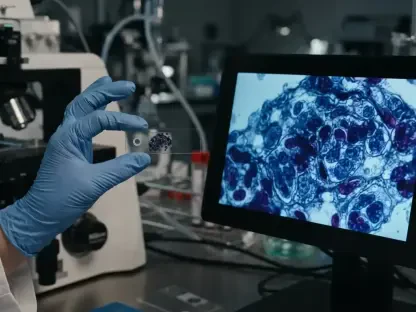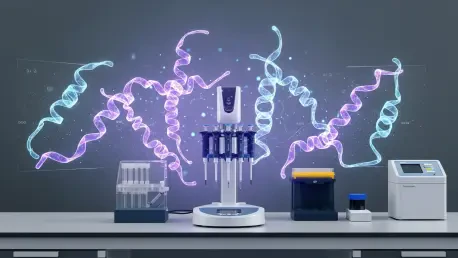

The landscape of modern laboratory medicine is currently undergoing a profound transformation as clinical researchers attempt to reconcile the surgical precision of mass spectrometry with the massive data output of next-generation sequencing. This evolution is driven by a fundamental tension between two distinct analytical philosophies that define how we understand human health at the molecular level. On one side, there is the established requirement for metrologically sound, highly specific quantitative tests that ensure every result is accurate and reproducible across different global platforms. On the other side, a surge of innovative high-throughput profiling tools is emerging, offering personalized proteome patterns that could redefine early disease detection through sheer scale. The central challenge for modern clinical laboratories in 2026 lies in determining how to embrace the scalability of big data without sacrificing the analytical rigor and diagnostic reliability essential for patient care.
The Dynamic Bridge: Precision Medicine in Practice
Bridging Genotypes and Phenotypes: The Molecular Reality
Precision medicine aims to move away from generic, one-size-fits-all treatments by tailoring medical interventions to an individual’s specific molecular profile. While genomics provides an essential map of long-term disease risk, it has become increasingly clear that genetic data alone cannot capture a person’s actual physiological state at any given moment. DNA represents the static blueprint of what might happen, but it does not reflect the immediate impact of environmental factors, lifestyle choices, or the progression of an existing illness. Consequently, the scientific community has turned its focus toward the proteome, which acts as the functional engine of the cell. By studying the complete set of proteins expressed by a genome, clinicians can observe the direct results of genetic instructions and how they are modified by external variables. This focus provides a more granular view of health that is simply not accessible through the study of nucleic acids alone.
The proteome serves as the dynamic link between a static DNA blueprint and the functional reality of disease in a living organism. Because protein levels and their complex modifications change in real-time in response to illness or medical treatment, they offer a far more accurate readout of current health status than genetic markers. In 2026, the ability to monitor these fluctuations allows for a more responsive approach to patient care, where therapies can be adjusted based on the actual protein activity observed in the blood. However, the technical hurdles associated with this type of analysis are significant, particularly given the massive range of protein concentrations found in human plasma. Some proteins are present in high abundance, while others that are critical for signaling and early disease detection exist only in trace amounts. Capturing this entire spectrum requires analytical tools that are both incredibly sensitive and capable of maintaining high specificity in a crowded molecular environment.
The Complexity of Human Protein Expression: Analytical Challenges
The human proteome is not merely a collection of individual proteins but a vast sea of different versions of those proteins, known as proteoforms. These variations arise from genetic differences, alternative splicing, and post-translational modifications like phosphorylation or glycosylation, all of which can drastically alter a protein’s function. In a clinical setting, identifying the specific proteoform that is driving a disease is often more important than measuring the total amount of the protein itself. For example, a slight change in the structure of a cardiac protein might indicate early heart failure even if the total protein count remains within a normal range. This level of complexity means that any diagnostic tool used in clinical proteomics must be able to distinguish between these subtle structural differences. Traditional methods have often struggled to reach this level of resolution, leading to a gap between what is theoretically possible and what can be reliably measured in a high-traffic laboratory.
Beyond structural variety, the dynamic range of protein concentrations in the human body poses one of the most difficult challenges in modern biochemistry. In a single blood sample, the concentration of albumin can be ten orders of magnitude higher than that of certain cytokines or hormones that signal the presence of a tumor. This vast disparity means that high-abundance proteins often mask the signals of the rarer, more informative biomarkers. To overcome this, researchers must employ sophisticated depletion or enrichment techniques, which can introduce their own biases and errors into the data. As we move further into 2026, the demand for assays that can navigate this complexity without losing the ability to process hundreds of samples a day is reaching a fever pitch. The industry is currently searching for a technological middle ground that allows for the deep, sensitive interrogation of the proteome while maintaining the speed required for large-scale population screening and routine patient monitoring.
Assessing the Traditional Analytical Pillars
Mass Spectrometry: The Gold Standard for Precision
For several years, clinical laboratories have relied on mass spectrometry as the primary tool for high-precision protein analysis. Mass spectrometry is widely considered the gold standard for molecular specificity because it measures the mass-to-charge ratio of ions, allowing it to identify and quantify specific molecules with unmatched accuracy. This technology is uniquely capable of distinguishing between different proteoforms and providing absolute quantification that is traceable to international reference standards. In 2026, this metrological soundness remains the cornerstone of clinical chemistry, ensuring that a result obtained in one hospital can be directly compared to a result from a different facility across the country. This consistency is vital for managing chronic conditions where patients must be monitored over long periods, as it ensures that observed changes are due to the patient’s health and not variations in the testing equipment.
Despite these significant advantages, mass spectrometry-based workflows are frequently criticized for being slow and labor-intensive. The process often requires extensive sample preparation, including enzymatic digestion and liquid chromatography, which can take hours or even days to complete for a large batch of samples. Furthermore, operating these instruments requires highly specialized technical expertise that is not always available in every clinical setting. These limitations have historically restricted the use of mass spectrometry to specialized reference laboratories rather than decentralized, point-of-care environments. While the technology ensures that results are highly reliable and specific, its current throughput remains a major bottleneck for large-scale population health initiatives. The challenge for the coming years is to automate these complex workflows to make the precision of mass spectrometry accessible for the high-volume testing required by modern healthcare systems.
Conventional Immunoassays: The Traditional Workhorse
Traditional immunoassays, such as the enzyme-linked immunosorbent assay or ELISA, have long been the workhorse of the clinical laboratory due to their high sensitivity and ease of use. These platforms utilize antibodies to detect and quantify specific proteins, a process that can be easily automated and integrated into high-speed diagnostic systems. Because they do not require the expensive and complex instrumentation associated with mass spectrometry, they have become the standard for routine tests like thyroid function or cardiac biomarker monitoring. In 2026, these tools continue to dominate the market because they provide quick results that are easy for clinicians to interpret. However, the simplicity of these assays often comes at the cost of specificity, as antibodies can sometimes bind to unintended molecules that share similar structural features with the target protein, a phenomenon known as cross-reactivity.
This lack of specificity can lead to inaccurate data, potentially resulting in misdiagnosis or unnecessary medical interventions. Furthermore, traditional immunoassays are generally designed to measure only a single protein or a very small panel of markers at a time. This limitation makes them increasingly ill-suited for the complex, multi-protein signature requirements that characterize modern precision medicine. As our understanding of disease biology grows, it is becoming clear that single-marker tests are often insufficient for capturing the full picture of a patient’s health. The slow transition of new, complex biomarkers from the research phase into routine clinical practice is largely due to the difficulty of developing reliable, high-specificity antibodies for every new target. This has created a demand for more advanced profiling tools that can look at thousands of proteins simultaneously without the inherent limitations of traditional antibody-based detection methods.
The Rise of Scalable Profiling
High-Throughput Innovation: The Power of Proximity
To address the growing gap between biomarker discovery and clinical application, new platforms like Proximity Extension Assays have emerged as a powerful alternative. This technology leverages the immense scalability of DNA sequencing to measure thousands of proteins simultaneously with high sensitivity. The process involves using pairs of antibodies that are each linked to a unique DNA oligonucleotide tag. When both antibodies bind to the same target protein, the DNA tags are brought into close proximity, allowing them to hybridize and form a double-stranded DNA template. This template is then amplified and read using next-generation sequencing, which acts as a digital counter for the protein concentration. By converting a protein signal into a DNA signal, these platforms can tap into the rapid advancements and cost reductions seen in the genomics field, allowing for massive multiplexing that was previously thought to be impossible.
The primary advantage of these high-throughput platforms is their ability to capture entire proteomic patterns rather than just isolated measurements. This shift represents a move toward a more holistic view of a patient’s biological state, where the relationships between hundreds of different proteins are analyzed together. In 2026, this approach is becoming essential for identifying the subtle, multi-organ signatures of complex diseases like Alzheimer’s or early-stage cancer. However, because these platforms rely on the initial binding of antibodies, they are not entirely immune to the issues of cross-reactivity and interference. While the dual-binding requirement of the proximity assay significantly improves specificity compared to traditional ELISA, there is still a concern about how these systems handle the vast structural diversity of proteoforms. The industry is currently working to validate these large-scale findings against more traditional, established methods to ensure their clinical utility.
Aptamer-Based Tools: Synthetic Solutions for Detection
Another major innovation in the high-throughput space is the development of aptamer-based platforms, which use synthetic, short sequences of DNA or RNA to bind to target proteins. These molecules, often called SOMAmers, are engineered to fold into specific three-dimensional shapes that fit perfectly into the binding pockets of a protein, much like a key fits into a lock. Unlike antibodies, which are biological products and can vary between batches, aptamers are chemically synthesized, ensuring high levels of consistency and stability. These platforms can measure over seven thousand proteins in a single small sample of blood, providing an unprecedented depth of information about a patient’s proteome. In 2026, this technology is being used extensively in large-scale clinical trials to identify new drug targets and monitor patient responses to therapy, providing a wealth of data that is fueling the next generation of precision medicine.
While these aptamer-based tools are excellent for identifying trends and patterns in research, they often provide relative rather than absolute quantification. This means they can tell if a protein level is higher or lower than a certain baseline, but they may struggle to provide an exact concentration that can be compared across different testing platforms. This “black box” approach raises significant concerns regarding metrological reliability in a clinical laboratory setting. If the results are influenced by the presence of autoantibodies or other interfering molecules in the patient’s blood, it can be difficult to satisfy the strict standards required for diagnostic validation. As these high-throughput tools move closer to routine clinical use, there is an urgent need to establish better calibration and standardization protocols. The goal is to ensure that the massive amounts of data generated by these platforms can be translated into reliable, actionable information for the physicians who are making critical decisions.
Navigating the Path Forward
The Metrological DilemmRigor vs. Scale
The core of the clinical dilemma in 2026 is the trade-off between metrological rigor and the innovative potential of high-throughput pattern recognition. Metrology is the science of measurement, and in clinical chemistry, it ensures that every test result is accurate, reproducible, and comparable across different locations and time periods. This is vital for monitoring a patient’s health over several years, as it allows doctors to distinguish between a real biological change and a simple variation in the measurement process. Mass spectrometry excels in this area because it clearly defines the chemical structure of what is being measured. In contrast, while high-throughput affinity assays are incredible for discovery and identifying broad trends, they currently lack the structural resolution needed to meet all the rigorous standards set by international regulatory bodies for clinical diagnostics.
This gap between research-grade discovery and clinical-grade diagnostic reliability is the primary hurdle that the field must overcome. Many of the “proteomic signatures” identified by machine learning algorithms on high-throughput platforms are incredibly promising, but they often lack a clear biological explanation for why certain proteins are changing. Without a deep understanding of the underlying proteoforms and their specific functions, it is difficult for clinicians to trust these patterns for making life-altering decisions. Furthermore, the lack of absolute quantification makes it hard to set universal “normal” ranges for these new tests. To move forward, the industry must develop new ways to standardize these innovative platforms, perhaps by creating stable reference materials that can be used to calibrate high-throughput systems. Balancing the speed of innovation with the necessity of analytical precision is the only way to ensure that proteomics can fulfill its promise.
A Hybrid Ecosystem: The Future of Diagnostics
The future of clinical proteomics does not require a choice between precision and scale, but rather the development of a hybrid diagnostic ecosystem. In this framework, scalable high-throughput platforms could be used for population-level screening and to establish personalized health baselines for individual patients. By monitoring thousands of proteins over time, these systems can detect the earliest signs of a shift from health to disease, acting as an early warning system. Once a specific signature or protein of interest is identified by these broad tools, validated mass spectrometry tests would then be used for a definitive diagnosis and to guide specific treatment decisions. This tiered approach allows laboratories to benefit from the discovery power of big data while maintaining the absolute quantification and specificity required for safe and effective patient care.
As we look toward the next several years, the integration of these technologies will likely lead to a new paradigm of proactive, longitudinal monitoring. Instead of waiting for symptoms to appear, patients could have their proteome profiled during routine check-ups, allowing for interventions long before a disease becomes critical. This transition will require a concerted effort to standardize pre-analytical variables, such as how samples are collected and stored, as these factors can have a massive impact on protein stability. Furthermore, the development of sophisticated bioinformatics tools will be necessary to interpret the complex data generated by hybrid workflows. By combining the strengths of mass spectrometry and high-throughput profiling, the medical community established a path toward a truly personalized healthcare system. The focus shifted from treating the average patient to managing the unique molecular reality of the individual, grounded in sound metrological data.