
In the rapidly evolving landscape of biopharmaceuticals, the ability to detect disease at its earliest, most subtle stages remains the “holy grail” of clinical diagnostics. Ivan Kairatov, a distinguished expert in biopharma innovation with an extensive background in research and development, has spent years navigating the intersection of nanotechnology and medical engineering. His insights provide a window into a future where diagnostic delays are eliminated, and personalized medicine becomes a reality for patient populations worldwide. The recent development of a nanophotonic biochip at Nanyang Technological University marks a pivotal shift in this journey, promising to redefine how we identify genetic markers associated with everything from heart disease to cancer.
This discussion explores the transformative potential of high-speed genetic testing and the technical ingenuity required to isolate microRNAs—tiny RNA molecules that regulate our genes but are notoriously difficult to detect due to their minute size and sequence similarity. We delve into the mechanics of mirror-lined nanocavities that amplify light to reveal single molecules and the role of deep-learning models like Mask R-CNN in eliminating human error from the diagnostic process. Furthermore, the conversation covers the practical engineering hurdles of moving from a laboratory setting to a mobile-integrated prototype, the expansion of the platform to address cardiovascular and viral threats, and the broader implications for the pharmaceutical industry.
Standard genetic testing through PCR often requires several hours to yield results. How does reducing this turnaround time to just 20 minutes alter standard clinical workflows, and what specific technical hurdles must be overcome to ensure that such rapid detection remains as reliable as traditional laboratory methods?
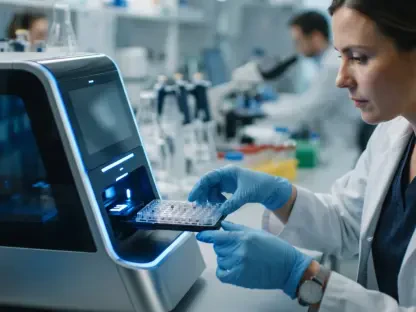
Reducing the diagnostic window from several hours to a mere 20 minutes is not just a marginal improvement; it is a fundamental shift in how we manage patient care in acute and high-pressure environments. In a traditional clinical workflow using PCR, or polymerase chain reaction, the process is bogged down by the necessity of thermal cycling to amplify genetic material, which inherently consumes significant time and requires specialized, stationary equipment. By moving to a direct detection method on a nanophotonic chip, we bypass the amplification step entirely, allowing a physician to move from a blood draw to a diagnostic result within a single consultation. This immediacy is a game-changer for conditions like cardiovascular distress or aggressive cancers where every hour matters, as it enables “test-and-treat” protocols that were previously impossible.
However, the technical hurdle in rapid detection is maintaining the same level of sensitivity that PCR achieves through its “copying” mechanism. When you aren’t making millions of copies of the target DNA or RNA, your sensors must be powerful enough to catch the original, tiny signal of the biomarker. To ensure reliability, our platform utilizes a specially designed nanophotonic chip that maximizes signal capture without the need for complex sample preparation. We have successfully demonstrated that this system can identify microRNAs from lung cancer cell extracts with a level of precision that matches the gold standard, but in a fraction of the time. The reliability is further bolstered by the fact that the chip can process thousands of signals in a single snapshot, providing a statistically robust data set in that 20-minute window.
MicroRNAs are exceptionally small and often appear in minute quantities, making them difficult to isolate. Since mirror-lined nanocavities can trap light to boost fluorescent signals, how does this structure enable the detection of single molecules, and what are the complexities of using this method with raw blood samples?
The detection of microRNAs is notoriously difficult because these molecules are extremely short and often exist in such low concentrations that they are essentially invisible to standard optical sensors. To solve this, we engineered a nanocavity that is hundreds of times smaller than the width of a human hair, acting as a microscopic “cave” lined with reflective surfaces. When a fluorescently labeled probe binds to a target microRNA inside this cavity, the mirrors reflect and trap the light, creating a resonance effect that significantly boosts the signal intensity. This amplification is so potent that it allows us to visualize and count individual, single molecules as they glow, effectively turning a whisper of biological data into a shout.
The complexity arises when we transition from clean, lab-processed cell extracts to raw biological samples like blood, which are crowded with proteins, lipids, and other genetic debris. These “noisy” environments can lead to non-specific binding or light scattering that masks the true signal of the microRNA markers, such as miR-191, miR-25, or miR-130a. To manage this, the surface of the nanophotonic chip must be meticulously treated to ensure that only the specific genetic targets adhere to the probes within the nanocavities. Our research shows that even when synthetic microRNAs are added to complex biological extracts, the platform remains highly selective, successfully isolating the target markers despite the surrounding biological “clutter.”
Many diagnostic platforms require manual counting or complex preparation that can lead to human error. How does integrating AI-automated image analysis and deep-learning models change the way multiple biomarkers are identified simultaneously, and what metrics are used to maintain over 99 percent accuracy across different test channels?
In traditional microscopy-based diagnostics, a technician might spend hours hunched over a screen, manually identifying and counting fluorescent dots, a process that is not only slow but highly susceptible to fatigue and subjective interpretation. By integrating the Mask R-CNN deep-learning model, we have completely automated this phase, allowing the system to identify, classify, and quantify thousands of microRNA signals in a single image snapshot. The AI is trained to distinguish between different types of microRNAs based on their specific fluorescent signatures and locations on the chip, which allows us to screen for multiple biomarkers—such as those for non-small cell lung cancer—simultaneously without any risk of cross-contamination in the data.
To maintain our benchmark of over 99 percent accuracy, we rely on rigorous metrics that evaluate the AI’s ability to minimize both false positives and false negatives across different test channels. The system uses a quantitative approach, measuring the exact number of molecules captured rather than just providing a binary “yes/no” result, which is crucial for monitoring disease progression where the concentration of a biomarker changes over time. We also perform cross-validation using synthetic microRNAs in biological extracts to ensure that the AI’s detection algorithms are robust enough to handle the variations found in real-world patient samples. This high level of automated precision ensures that the results are consistent, whether the test is performed in a high-tech hospital in Singapore or a smaller clinic elsewhere.
Transitioning a lab-based nanophotonic chip into a compact prototype with a mobile application presents unique engineering challenges. What are the practical steps for scaling this technology for use in rural or under-resourced clinics, and how could it potentially shift the focus toward preventative, large-scale disease screening?
Moving from a massive laboratory optical setup to a handheld prototype required a complete rethink of the hardware-software interface. We replaced bulky lasers and high-end microscopes with a compact color camera and a streamlined light source that can be integrated into a portable housing. The core of the user experience is a mobile phone application that handles the heavy lifting of the AI processing; the phone’s camera or an attached module captures the image of the chip, and the algorithms provide a rapid readout directly on the screen. This democratization of high-end diagnostics means that a healthcare worker in a rural setting, who may not have access to a full-scale pathology lab, can perform advanced genetic screening with minimal training.
The shift toward preventative, large-scale screening is perhaps the most exciting implication of this portability. Because the system is designed to be automated and low-cost at scale, it could be used in routine health check-ups to screen for hundreds or even thousands of biomarkers at once from a single drop of blood or saliva. Instead of waiting for symptoms to appear, we could identify the subtle “genetic signatures” of diseases like cancer or neurodegenerative disorders years before they become critical. This proactive approach supports the rise of personalized medicine, where treatments are tailored to the specific molecular profile of the patient, ultimately saving lives and reducing the long-term economic burden on healthcare systems.
Beyond lung cancer, different diseases require different probes to identify specific genetic markers. How would you adapt this platform to screen for cardiovascular or viral diseases, and what are the implications for pharmaceutical companies currently developing microRNA-related drug therapies?
The beauty of this nanophotonic platform lies in its modularity; the chip itself is a universal “stage,” and the specific “actors” are the molecular probes we choose to load onto it. To adapt the system for cardiovascular diseases, we would simply swap the lung cancer probes for those targeting microRNAs associated with heart muscle stress or arterial inflammation. Similarly, for viral diseases, we can design probes that recognize the unique genetic sequences of various viruses, allowing for rapid identification of infections directly from patient samples. This versatility was a key driver for our team at NTU, as we aimed to create a tool that could be rapidly reconfigured to meet the needs of an evolving public health landscape.
For pharmaceutical companies, this technology is a powerful tool for both drug discovery and clinical trials. As more companies develop microRNA-based therapies—which aim to regulate gene expression to treat disease—they need a reliable way to monitor how these drugs affect microRNA levels in the body. Our biochip could provide a high-throughput, quantitative method for pharmaceutical researchers to test drug efficacy in real-time, observing how a new compound shifts the biomarker landscape. This could significantly accelerate the development of next-generation therapies for metabolic illnesses and rare genetic disorders by providing more precise data during the experimental phases.
What is your forecast for biochip technology?
I forecast that biochip technology will undergo a radical transformation toward “decentralized intelligence,” where the distinction between a laboratory and a point-of-care device virtually disappears. Within the next decade, we will see these chips become so integrated and cost-effective that they will move into the home, allowing individuals to monitor their own health markers through non-invasive samples like saliva or urine, much like a modern glucose monitor. We are moving toward an era of “continuous diagnostics,” where AI-driven biochips provide a real-time stream of health data, enabling us to detect the earliest “whispers” of disease—be it a viral surge or a burgeoning malignancy—long before it becomes a clinical crisis, effectively turning medicine from a reactive practice into a truly preventative one.