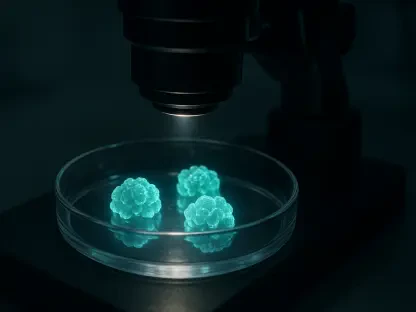

Existing natural microbial solutions have historically struggled to bridge the performance gap between environmental stewardship and the high yields required for commercial viability. This tension has forced the global agricultural industry into a state of chemical dependency, where approximately $80 billion is spent annually on synthetic pesticides to protect the food supply from ever-evolving threats. While these chemical interventions have provided the backbone for food security over the last century, their legacy is marked by significant environmental and societal costs. Conventional sprays are notoriously non-selective, frequently eliminating essential pollinators such as honeybees and decimating the complex soil biomes necessary for long-term land productivity. Beyond the fields, these persistent substances regularly infiltrate groundwater systems and have been scientifically linked to chronic human health conditions, creating a crisis that demands a fundamental technological shift. As global populations continue to rise, the urgency to find a safer, more precise alternative that does not sacrifice the financial survival of farms has reached a critical peak.
Transitioning From Academic Research to Biological Design
The shift from fundamental academic research to practical agricultural application began with a deep exploration into the nanostructures of algae and the genetic potential of microbial life. By examining how biological systems organize at a microscopic level, researchers at the Massachusetts Institute of Technology identified unique opportunities to reprogram living organisms for specific defensive roles. This academic pedigree provided the necessary framework to view crop protection not as a series of external chemical applications, but as a sophisticated engineering challenge. Utilizing the university’s robust entrepreneurial ecosystem, the founding team successfully bridged the conceptual gap between laboratory insights and scalable business models. This transition allowed the resulting startup, Robigo, to approach the persistent problem of pest management through the lens of genetic design rather than simple environmental discovery. By prioritizing intentionality over random screening, the team moved away from the traditional model of searching for rare natural microbes, choosing instead to build specialized tools.
Precise Genomic Management via the ARGO Platform
At the heart of this biological innovation is a proprietary biotechnology platform known as ARGO, which leverages advancements originally developed for precision medicine to treat the agricultural landscape. By applying sophisticated tools like CRISPR and RNA interference to the field, the platform treats the farm as a complex ecosystem that can be managed via precise genetic instructions. This methodology effectively transforms microbes into programmable agents capable of defending crops against specific pathogens while completely ignoring beneficial organisms. Unlike broad-spectrum chemicals that act as a blunt instrument, these engineered systems are designed with surgical precision, ensuring that the ecological balance of the soil remains intact. This represents a significant turning point in sustainable farming, as it moves the industry toward a future where programming life becomes a standard practice for ensuring food security. The ability to deliver specific genetic payloads directly to the point of infection provides a level of control that was previously impossible.
Molecular Defense Through RNAi and Sequence Stacking
The core defensive mechanism utilized by these engineered microbes is RNA interference, a biological process that effectively silences specific genes within a target pathogen. This technique is highly specific, allowing for the neutralization of harmful pests or diseases without causing any adverse effects on the host plant or the surrounding insect populations. To ensure that the defense remains robust against a variety of environmental pressures, the platform utilizes a strategy known as RNAi stacking. This involves embedding multiple different defensive genetic sequences into a single microbial host, creating a multifaceted shield that can address several threats simultaneously. This comprehensive approach mirrors the broad-spectrum coverage offered by traditional chemical pesticides but without the associated toxicity or environmental runoff. By targeting the fundamental genetic building blocks of crop diseases, the technology makes it significantly harder for pathogens to develop the kind of resistance that has rendered many conventional formulas obsolete.
Enhancing Environmental Survival With Native Chassis Microbes
One of the primary reasons historical biological products failed to gain significant traction was their inability to survive in the competitive and often hostile environment of agricultural soil. Many previous attempts involved introducing foreign microbial strains that quickly perished when faced with local competition or harsh weather, leading to inconsistent performance for the grower. To overcome this hurdle, engineers identified and utilized chassis microbes—strains that are already native to and thrive within specific agricultural regions. By taking these hardy, localized organisms and equipping them with engineered defensive capabilities, the company ensures that the treatment remains active and self-replicating throughout the duration of the growing season. This persistence provides a massive logistical advantage, as farmers may only need a single application to provide season-long protection. In contrast, traditional chemical alternatives often require multiple sprayings that are labor-intensive and increase the likelihood of chemical exposure.
Validating High Performance Through Commercial Field Trials
The real-world efficacy of these engineered biological solutions has been validated through rigorous field trials conducted across various states, focusing on essential high-value crops like lettuce and soybeans. In these direct comparisons, the engineered microbes demonstrated a 250 percent increase in yield over standard organic products, effectively matching the high-performance benchmarks set by the most potent synthetic chemicals currently on the market. These results are transformative, as they dismantle the long-standing industry belief that a farmer must sacrifice productivity to achieve environmental sustainability. Because these biological tools are designed to be cost-efficient and require significantly less labor to manage than traditional chemical regimens, they offer a compelling economic case for large-scale commercial operations. The data suggests that high-yield agriculture no longer needs to rely on the scorched earth approach of non-selective toxins, proving that precise biological engineering can deliver the reliability required to feed the population.
Establishing a Resilient Framework for Future Farming
Moving forward, the successful scaling of engineered microbes signaled a transformative period for global food security. Major agricultural producers finalized the transition toward biological platforms, which allowed them to phase out the most hazardous synthetic chemicals from their seasonal spray schedules. These organizations prioritized the long-term restoration of soil health by investing in living microbial defenses that functioned as a permanent part of the farm ecosystem. By implementing these bio-designed tools, growers achieved a level of precision that protected local biodiversity while maintaining the high output levels necessary for commercial success. This shift ultimately established a new standard where agricultural innovation was measured by its ecological compatibility rather than just its toxicity. The industry concluded that the path to a sustainable future required a departure from static chemical products in favor of dynamic, programmable biological systems that thrived alongside the crops they were designed to protect.