
Deep within the silicon corridors of modern neurocomputational labs, a silent revolution is currently unfolding as researchers move beyond the limitations of traditional brain scans toward high-fidelity virtual replicas. For decades, the primary window into the human mind has been magnetic resonance imaging, which provides spectacular but fundamentally motionless pictures of the brain. While these images allow clinicians to see the physical architecture of the organ, they fail to capture the invisible electrical storms and subtle chemical gradients that define how a person actually thinks, feels, and interacts with the world. This diagnostic gap has been particularly frustrating in the field of pediatric autism, where the biological roots of neurodiversity remain largely obscured by the sheer complexity of the developing mind.
The nut graph of this scientific evolution lies in the development of the FEDE digital brain twin, a framework designed to synthesize every scrap of available data into a living, patient-specific model. By transforming a toddler’s MRI and EEG data into a computational replica, researchers have finally gained the ability to test hypotheses in a virtual space before they ever reach a clinical trial. This approach does more than just enhance visualization; it provides a biophysical explanation for behavioral traits that were previously described only in subjective terms. As the medical community looks to the future, the integration of digital twins into routine pediatric care marks the beginning of a move toward truly objective, precision-based neurodevelopmental science.
Beyond the Static Image: A New Frontier in Neurodevelopmental Science
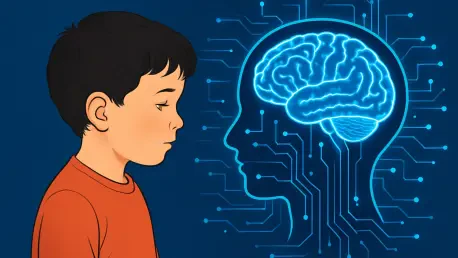
Traditional brain scans offer a frozen moment in time, but the human brain is a relentless engine of electrical activity that never truly rests. The emergence of the FEDE digital brain twin—a high-fidelity, patient-specific virtual replica—is turning these static snapshots into living, breathing models that can be manipulated and observed in four dimensions. By simulating the neural landscape of a two-year-old with Autism Spectrum Disorder (ASD), researchers are no longer just looking at the physical shell of the brain; they are watching it function in a digital space that mirrors the child’s unique biological reality.
This technological shift allows for a transition from observation to simulation, where the underlying physics of the brain becomes the primary focus. Instead of relying on a generic atlas that represents an “average” brain, the digital twin is built from the ground up using the specific geometry and connectivity of a single individual. This level of personalization is essential because the neurobiological pathways of autism are notoriously varied, making a one-size-fits-all approach to research largely ineffective. The virtual model acts as a bridge, connecting the anatomical structures identified in a scanner to the dynamic electrical signatures recorded on the scalp.
The Complexity of the Developing Brain: Why Precision Is Crucial
Studying the neurobiology of toddlers presents significant hurdles, ranging from the physical difficulty of keeping a young child still in an MRI machine to the ethical limits of invasive testing. Pediatric autism research has historically relied on observation and behavioral markers because the underlying “wiring” of a developing brain is incredibly hard to capture in real-time. Without a way to look beneath the surface without causing distress, clinicians have been forced to wait until behavioral symptoms are pronounced enough to warrant a diagnosis, often missing the most critical windows for early intervention.
The digital twin approach addresses this significant gap by creating a non-invasive environment where the unique architectural and electrical nuances of a child’s brain can be explored without risk. This precision is vital because the toddler years are a period of explosive neural growth, where white matter pathways are being paved and synaptic connections are being pruned at a staggering rate. A model that can accurately represent these rapid changes provides a level of insight that a standard diagnostic questionnaire simply cannot provide. By focusing on the biophysical reality of the individual, researchers can begin to understand why certain sensory inputs or social interactions are processed differently by different children.
The Architecture of a Digital Twin: Merging Anatomy with Electrical Dynamics
The construction of a digital twin requires a sophisticated fusion of multi-modal imaging and computational physics to be successful. The process begins with structural mapping, using T1 and T2-weighted MRI to define the physical layout of the brain, followed by Diffusion-Weighted Imaging to trace the intricate white matter pathways that connect distant regions. This anatomical foundation is then converted into a high-density cortical mesh with over 20,000 vertices, creating a three-dimensional scaffold that represents the actual surface of the patient’s brain with incredible fidelity.
To breathe life into this structure, biophysical modeling is applied via the Finite-Element Method, which accounts for the varying tissue conductance and the insulating effects of myelination. This allows the model to simulate how neural signals propagate across specific anatomical tracts rather than assuming a uniform speed for all signals. The final step involves a closed-loop validation process, where the virtual model’s parameters are iteratively adjusted until its simulated EEG output perfectly mirrors the patient’s real-world brain activity. This ensures that the digital twin is not just a visual representation, but a mathematically sound simulation of the child’s specific neural dynamics.
High-Fidelity Revelations: Decoding the Neurobiological Markers of Autism
Applying the FEDE framework to an early-childhood case of ASD has provided researchers with a specific set of biological hypotheses that were previously invisible to the naked eye. One of the most striking revelations was the discovery of an excitatory-to-inhibitory imbalance, with the model revealing a ratio three times higher than what is typically observed in neurotypical development. This suggests a brain that is constantly over-stimulated, where the neural “brakes” are not functioning effectively, potentially explaining the intense sensory sensitivities and cognitive overload reported by many individuals on the spectrum.
Furthermore, the model identified a state of internal chaos characterized by background noise levels 100 times higher than those seen in standard neural models. This elevated noise points toward a fundamental difficulty in sensory processing, where the brain struggles to distinguish between relevant signals and irrelevant background activity. The model also accounted for nerve insulation to show shorter transmission delays, illustrating how developmental differences in signal speed fundamentally reshape how different parts of the brain communicate with one another. These findings move the conversation away from vague symptoms and toward concrete, measurable biophysical markers.
A Clinical Sandbox: Strategies for Integrating Virtual Brains into Pediatric Care
Digital twins serve as much more than just research tools; they offer a framework for personalized medicine that can be applied directly to patient care. Clinicians can use the digital twin as a “sandbox” to simulate how a child’s specific brain chemistry might respond to various pharmacological treatments before any medication is actually prescribed. This predictive capability reduces the “trial and error” phase of treatment, allowing for a more targeted approach that respects the biological uniqueness of every child.
Beyond immediate treatment, digital twins offer a way to track development over time with unprecedented accuracy. By updating the model as the child grows, doctors can monitor how white matter connectivity and myelination evolve, identifying specific windows of neuroplasticity where behavioral therapies might have the most profound impact. This shifts the diagnostic model toward objective biomarker discovery, such as measuring electrical signal velocity or excitation ratios, rather than relying solely on subjective behavioral assessments. In the long term, this technology promises to refine the timing and nature of interventions, ensuring that every child receives the support they need when their brain is most receptive to change.
The researchers and clinicians involved in this breakthrough recognized that the path forward required a fundamental shift in how pediatric neurodiversity was understood. They concluded that the success of the digital twin was not just a victory for computer science, but a necessary evolution in medical ethics and patient care. It was determined that the integration of these high-fidelity models provided a safer, more transparent way to explore the developing mind without the risks of invasive procedures. As the study concluded, the focus shifted toward expanding these datasets to include more diverse populations, ensuring that the benefits of precision medicine reached every child. The scientific community eventually agreed that the era of relying on static images had passed, replaced by a dynamic approach that respected the complexity of the human brain. Past efforts to categorize autism through observation alone were supplemented by a rigorous, data-driven framework that empowered families and clinicians alike. Ultimately, the adoption of digital twins was seen as the first step toward a future where no child’s neurological development remained a mystery.