
In the rapidly evolving landscape of oncology, the ability to decode the complex conversations happening within the tumor microenvironment is the new frontier of precision medicine. Ivan Kairatov, a seasoned biopharma expert with a deep background in research and development, joins us to discuss a groundbreaking spatial atlas that uses artificial intelligence to map immune structures across various cancers. This interview explores the shift from basic diagnostic observations to a high-definition understanding of how the body organizes its defenses against malignancy. By moving beyond simple “yes or no” questions about the presence of immune cells, this research provides a blueprint for predicting how patients will respond to life-saving immunotherapies. This spatial intelligence allows us to visualize the battlefield of cancer with unprecedented clarity, marking a significant leap toward personalized treatment protocols.
The discussion centers on the revolutionary role of tertiary lymphoid structures (TLSs) as dynamic immune hubs and how their maturation and location dictate clinical outcomes. We delve into the development of scalable AI frameworks that process massive datasets—spanning thousands of images and multiple cancer types—to create a “composition score” that far exceeds traditional metrics. Furthermore, the conversation highlights the biological importance of spatial orientation and the potential for future therapies to actively promote the formation of mature, functional immune structures within the tumor site. By analyzing the transcriptional programs and the interplay between stromal and vascular components, this work sets the stage for a new era where pathology slides become a wealth of predictive data.
Tertiary lymphoid structures act as local immune hubs where B cells and T cells coordinate. What specific biological insights does this new spatial atlas provide that were previously missing from our understanding of these structures?
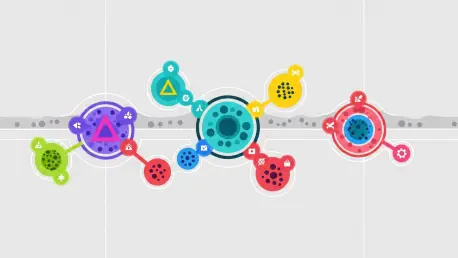
For a long time, we viewed the presence of tertiary lymphoid structures in a binary way—either they were there, or they weren’t. This new spatial atlas, which meticulously maps 340 samples across 12 different cancer types, reveals that the truth is far more nuanced and colorful. We have discovered that these hubs are not just static clumps of cells; they are dynamic environments with specific maturation states and transcriptional programs. As these structures mature, they undergo a highly coordinated transformation involving immune, stromal, and even vascular components that change the very fabric of the tumor microenvironment. Understanding this heterogeneity allows us to see how the cellular composition of a TLS actually dictates its ability to fight the tumor. It is the difference between seeing a group of people standing on a corner and understanding the complex social organization of a functioning city.
The research team utilized scalable AI frameworks to analyze thousands of pathology slides. How does the integration of artificial intelligence change the way we evaluate tumor tissues compared to traditional pathology methods?
Traditional pathology often relies on the manual observation of small tissue sections, which is a slow process prone to human variability. By contrast, the AI framework developed here is a powerhouse of scalability, allowing researchers to evaluate a staggering 25,088 TLSs from more than 3,000 whole-slide images. This technology doesn’t just look at the images; it profiles and classifies them using spatial omics data to detect patterns that are invisible to the naked eye. This transition from manual counting to automated, high-throughput analysis means we can now process data from 10 independent cohorts with a level of precision that was previously unthinkable. The AI acts as a lens that brings the entire landscape into focus, making the analysis fast enough and reliable enough to eventually be translated directly into the clinic where time is of the essence for patients.
The study introduced a composite “composition score” for patients. Can you walk us through how this scoring system shifts the focus from simply identifying TLSs to understanding their functional impact on patient outcomes?
The creation of the TLS composition score is a game-changer because it moves the goalposts from simple identification to functional stratification. Rather than just noting the number of TLSs, this score captures the maturation states and the specific biological “flavor” of the immune hubs within a given patient’s tumor. In practice, this method significantly outperformed conventional measures when it came to predicting a patient’s prognosis and how they would respond to treatment. We are essentially moving toward a more holistic view of the tumor immune microenvironment, where the quality of the immune response matters just as much as the quantity. By using this score, clinicians can gain a much clearer picture of the biological battle being waged, allowing for more informed decisions about which immunotherapy path might be the most effective for an individual.
The atlas suggests that the proximity of these immune hubs to tumor cells influences signaling environments. How does the spatial orientation within the tumor microenvironment dictate the effectiveness of a patient’s immune response?
Spatial orientation is everything when it comes to the effectiveness of the immune system’s attack on a tumor. The study highlights that the proximity of these structures to tumor cells is directly associated with spatial gradients of tumor signaling, which can either dampen or ignite an immune response. We observed that many TLSs in tumor tissues actually remain in an immature state or are tucked away in regions far from the actual tumor cells, which limits their impact. When these hubs are located within or immediately adjacent to the tumor regions, they can better coordinate the activity of antigen-presenting cells and T cells to mount a direct assault. This spatial context is a vital piece of the puzzle, suggesting that the “geography” of the tumor is a primary factor in determining whether the immune system succeeds or fails.
With the success of this framework in initial cohorts, what are the primary hurdles and opportunities for integrating this level of spatial profiling into standard clinical workflows?
The most immediate opportunity lies in the fact that this AI framework uses routine pathology images, which are already a standard part of daily clinical care across the globe. This means we don’t necessarily need to invent new diagnostic tools; we just need to apply this sophisticated software to the images we already have. However, the primary hurdle is that this composite scoring approach must be rigorously validated in prospective clinical trials to ensure its reliability across diverse patient populations. We need to see how these scores hold up in real-world settings where treatment contexts vary wildly. If we can clear that bar, the potential to promote TLSs toward more mature, functional states through targeted therapies could revolutionize how we enhance anti-tumor immune responses. It’s an exciting bridge between data science and bedside medicine that could lead to much more effective therapeutic strategies.
What is your forecast for AI-driven spatial biology in cancer treatment?
I foresee a future where every tumor biopsy is automatically processed through an AI spatial engine that provides a 3D roadmap of the patient’s immune landscape within minutes. We will stop treating tumors as monolithic masses and start treating them as complex ecosystems where we can surgically intervene not just with scalpels, but with therapies that relocate and mature immune cells. Within the next decade, the “composition score” will likely become as common as a blood pressure reading in oncology, guiding the selection of multi-agent immunotherapies. We are moving toward a reality where we don’t just hope the immune system responds; we actively architect the environment to ensure it does. This spatial revolution will turn the tide for many patients who currently do not respond to standard treatments, making “incurable” a much rarer word in our vocabulary.