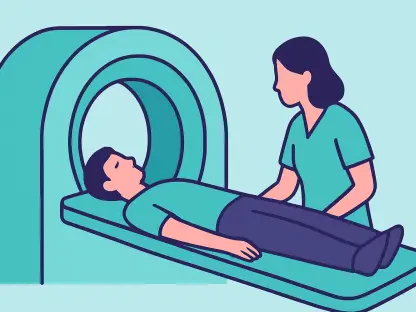

Traditional neurological diagnostics have long relied on the subjective interpretation of flickering brain waves, but a new wave of machine learning is finally decoding the silent electrical language that precedes a physical seizure event. For decades, the gold standard for epilepsy diagnosis has been the electroencephalogram (EEG), a tool that records the brain’s electrical activity via scalp electrodes. While the EEG is technically proficient at capturing the electrical storm of a seizure, the diagnostic utility of the device is severely hampered by the intermittent nature of the condition itself. Most patients undergo routine recordings that last only twenty to thirty minutes, a timeframe that rarely aligns with the spontaneous occurrence of a seizure. Consequently, neurologists are often left searching for infinitesimal abnormalities within an otherwise normal-looking baseline recording, a task that is mentally taxing and susceptible to high rates of inter-observer variability.
The emergence of artificial intelligence in this sector represents a fundamental shift from reactive observation to proactive pattern recognition. By utilizing advanced algorithms to process vast datasets, researchers are moving toward a model where epilepsy can be identified not by the presence of a seizure, but by the inherent “signature” of the brain’s resting state. This transition addresses the primary limitation of traditional manual reviews: the need for a visible event. By establishing objective biomarkers that persist even in the absence of clinical symptoms, AI-driven diagnostics offer a way to bypass the uncertainty of short-term monitoring, providing a more reliable and standardized assessment of neurological health.
Introduction to AI-Driven Neurological Diagnostics
Artificial intelligence in neurological diagnostics functions on the principle that the brain’s electrical output is a sophisticated language containing structural information far beyond what the human eye can discern. The core of this technology involves training deep learning models to identify high-dimensional patterns within EEG signals that correlate with underlying pathology. Unlike traditional methods that look for “spikes” or “sharp waves” as binary indicators of disease, AI analyzes the frequency, amplitude, and temporal relationships of the entire data stream. This comprehensive approach allows the system to detect subtle deviations from healthy baseline activity that might otherwise be dismissed as background noise.
The relevance of this technology is particularly acute in the current medical landscape, where the demand for specialized neurological care outpaces the availability of trained specialists. Manual EEG interpretation is a bottleneck that delays treatment and increases the risk of misdiagnosis. By automating the preliminary screening process, AI tools can prioritize high-risk cases and provide clinicians with a “second set of eyes” that does not suffer from fatigue. This objectivity is essential for establishing universal biomarkers for epilepsy, moving the field away from the subjective “art” of waveform interpretation and toward a data-driven science.
Technical Framework: AI Pattern Recognition in EEG
Bag-of-Waves Classifiers and Computational Linguistics
The most innovative feature of recent AI models is the implementation of “bag-of-waves” classifiers, a methodology inspired by natural language processing. In this framework, the algorithm treats individual segments of brain activity like words in a sentence. Rather than following a rigid set of rules defined by human experts, the AI observes thousands of hours of data to build its own internal “dictionary” of electrical signatures. This allows the system to learn the unique vocabulary and syntax of a patient’s brain activity, identifying how specific waveforms cluster together to indicate a predisposition toward epilepsy.
This linguistic approach is superior to older, rule-based competitors because it is inherently adaptable to the diversity of human neural patterns. While traditional software might fail if a seizure spike does not match a pre-programmed template, the bag-of-waves model identifies the broader “accent” of an epileptic brain. It captures the context of the activity, recognizing that certain combinations of non-seizure rhythms are statistically indicative of the disorder. This unique capability enables the technology to flag potential cases even when the clinical evidence is seemingly invisible.
Subclinical Biomarker Identification: Baseline Analysis
Beyond identifying overt disorders, the technology excels at subclinical biomarker identification, which involves extracting signals that occur below the threshold of human perception. These biomarkers represent the “hidden” electrical traits of epilepsy that exist during the intervals between seizures. By focusing on baseline analysis, the AI determines the excitability of neural networks, pinpointing specific areas of the brain that exhibit micro-instabilities. This provides a clear, quantitative metric of an individual’s susceptibility, effectively mapping the “topography” of the condition without requiring a catastrophic event to occur.
Recent Advancements: Genetic and Algorithmic Validation
Significant progress has been made in the algorithmic validation of these tools through the use of specific genetic models, such as the TSC1 mouse model. Researchers utilized mice with genetic variations known to cause Tuberous Sclerosis Complex, a condition frequently associated with refractory epilepsy. By applying AI to these controlled subjects, scientists proved that the algorithm could distinguish between genetic strains based solely on baseline EEG rhythms. This validation confirmed that the AI is not just guessing but is actually detecting biological variations at the cellular and genetic levels that manifest as unique electrical patterns.
These findings are monumental because they suggest that neurological signatures are hard-wired and detectable long before the first seizure occurs. In these studies, the AI achieved high accuracy in identifying high-risk genetic profiles even in recordings where no seizures were present for days. This proof of concept bridges the gap between laboratory research and clinical reality, demonstrating that the electrical “rhythm” of a brain is an inherent trait that can be categorized and typed just like a blood group or a genetic marker.
Clinical Applications: Pediatric Care and Treatment Monitoring
The real-world application of this technology has found a critical home in pediatric neurology, specifically at institutions like Nemours Children’s Health. For children, the diagnostic process is often frightening and prolonged, involving multiple hospital stays and uncomfortable testing. The integration of AI allows for faster, more accurate screening during routine outpatient visits. By analyzing short-term EEG data with the precision of a multi-day study, the AI reduces the diagnostic uncertainty that plagues families, allowing for the initiation of life-changing therapies much earlier in the child’s development.
Furthermore, the technology serves as an objective tool for monitoring the effectiveness of anti-seizure medications. Currently, clinicians must rely on patient diaries and the absence of seizures to judge if a drug is working, which is notoriously unreliable due to the natural fluctuations of the disease. AI baseline analysis provides a continuous, measurable metric of “electrical health.” If a medication is successfully stabilizing the brain’s rhythms, the AI will detect a shift toward a healthier baseline dictionary, even if the patient had not yet experienced a reduction in visible seizure frequency. This allows for more precise dosing and faster adjustments to treatment plans.
Constraints and Barriers: Clinical Integration Challenges
Despite the technical successes, several hurdles remain before AI can be universally adopted in clinical settings. The brevity of routine human EEGs—typically thirty minutes compared to the five-day recordings used in animal models—imposes a significant data constraint. Human epilepsy is also vastly more diverse than the standardized genetic models used in research, with manifestations influenced by age, environment, and co-morbidities. Ensuring that an algorithm trained on one population can generalize to another requires massive, cross-institutional datasets that are often difficult to compile due to privacy regulations and data silos.
Additionally, there is the “black box” problem inherent in deep learning. While the AI may be highly accurate, clinicians are often hesitant to trust a diagnosis without understanding the specific features the algorithm used to reach its conclusion. Ongoing development efforts are focused on creating “explainable AI” that can highlight the exact portions of an EEG that triggered a warning. Bridging this gap between computational performance and clinical transparency is essential for the technology to move from an experimental tool to a standard part of the neurological toolkit.
Future Directions: Precision Medicine and Wearable Integration
The trajectory of AI-based epilepsy detection is moving toward a future of precision medicine where “brain-wave typing” becomes as common as genetic sequencing. By categorizing patients based on their specific electrical signatures, doctors will be able to predict which medications are likely to be most effective for an individual’s unique brain chemistry. This eliminates the “trial and error” phase of epilepsy treatment, significantly reducing the time it takes to achieve seizure freedom. The potential also exists to expand this pattern recognition to other neurological conditions like ADHD and autism, where baseline brain rhythms may hold the key to earlier intervention.
Integration with wearable EEG technology represents the next major frontier. As sensors become smaller and more comfortable, AI can be embedded directly into consumer-grade headbands or ear-level devices for continuous, real-time monitoring. These systems would act as a personalized early-warning system, alerting a user to an increased probability of a seizure hours before it occurs. This level of proactive monitoring would restore a sense of autonomy and safety to millions of people living with epilepsy, transforming the management of the condition from a state of constant vigilance to one of data-informed confidence.
Conclusion and Final Assessment
The transition from reactive seizure capture to proactive baseline analysis represented a fundamental shift in the landscape of neurological diagnostics. The development of AI-driven tools demonstrated that the electrical activity of the brain contains a wealth of diagnostic information that was previously inaccessible to human observation. By validating these algorithms against genetic models and implementing them in pediatric clinics, researchers proved that objective biomarkers could provide a more accurate and faster route to diagnosis than traditional methods. The technology effectively lowered the barrier to entry for specialized care and offered a reliable way to monitor treatment efficacy.
Ultimately, the impact of AI in this sector went beyond simple data processing; it provided a solution to the persistent uncertainty that defined the lives of those with epilepsy. While technical constraints regarding data length and model transparency persisted, the progress made in pattern recognition set a new standard for precision neurology. The integration of these tools into clinical workflows successfully bridged the gap between complex computational science and compassionate patient care. These advancements laid the groundwork for a future where neurological health is measured by the underlying stability of the brain’s rhythms rather than the absence of crisis events.