
The persistent challenge of accurately predicting how a complex drug formulation interacts with the biological systems of the human body has historically relegated pharmaceutical researchers to a costly cycle of manual laboratory experimentation and repetitive clinical testing. This era of inefficiency is rapidly closing as artificial intelligence becomes the primary engine for drug development, signaling a shift toward a future where predictive modeling replaces the traditional trial-and-error approach. For the contract research, development, and manufacturing organization (CRDMO) sector, this transformation is not merely a technological upgrade but a fundamental survival strategy in an increasingly competitive global health landscape. Precision in formulation is no longer a luxury; it is the baseline for delivering life-saving therapies to patients with unprecedented speed.
Moreover, the transition to AI-driven methodologies represents a critical evolution for global healthcare accessibility by potentially lowering the high barrier of research and development costs. As these digital tools become more sophisticated, they allow scientists to map the complex “design space” of a drug with far greater accuracy than human intuition alone could achieve. This analysis explores the current trajectory of this trend, examining the significant growth in predictive modeling, the specific clinical breakthroughs achieved by industry leaders like Quotient Sciences, and the role of expert oversight in an automated environment. The long-term impact of “digital twins” and the anticipated data reports of 2026 provide a roadmap for the next decade of pharmaceutical innovation.
The Evolution of AI Integration in Pharmaceutical R&D
Market Growth and the Shift Toward Predictive Modeling
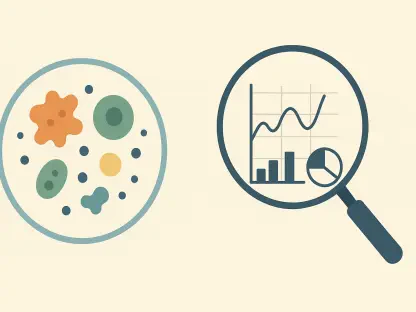
The pharmaceutical landscape is currently undergoing a massive transition from traditional, iterative development to a more sophisticated model-informed drug development (MIDD) framework. This shift is driven by the realization that laboratory screenings alone cannot account for the vast variables found in human physiology. Recent statistical trends indicate that the adoption of AI-driven platforms is expected to surge from 2026 to 2029, as companies seek to slash formulation cycles that once took years into mere months. Contract research organizations are increasingly investing in these technologies to provide clients with a competitive edge, focusing on data-centric strategies that move away from the “wet lab” as the sole source of truth.
Furthermore, the cost-efficiencies gained through this transition are becoming the primary motivator for large-scale investment. By minimizing the number of laboratory screenings and reducing the necessity for multiple rounds of human clinical trials, pharmaceutical firms are redirected resources toward more innovative therapeutic targets. Data highlights a significant reduction in R&D overhead for companies that have fully integrated predictive modeling into their early-stage development. This move toward digital simulation allows for the identification of a drug’s most viable form long before the first dose is ever manufactured, effectively derisking the entire development pipeline and ensuring a higher probability of clinical success.
Real-World Application: The Quotient Sciences Milestone
A significant leap in this field was recently demonstrated by Quotient Sciences, which reached a major milestone in a clinical study utilizing a proprietary AI algorithm specifically for modified-release (MR) compositions. Modified-release drugs are notoriously difficult to formulate because they must release their active ingredients at a precise rate to maintain therapeutic levels in the blood. The algorithm developed for this study was tasked with mapping the formulation design space, a process that identifies the ideal ratios of ingredients for optimal performance. Remarkably, the AI was able to complete this complex mapping using 33% fewer formulations than would have been required by any conventional human-led methodology.
The success of this study was rooted in an integrated feedback loop that allowed for real-time adjustments based on human pharmacokinetic data. Rather than relying on a static model, the researchers retrained the AI after each dosing period, feeding it the actual biological results from study participants. This adaptive intelligence meant the algorithm became progressively more accurate as the trial continued. Within just three dosing periods, the AI successfully identified formulations that hit the study’s predetermined targets. This real-world application proves that AI is not just a theoretical tool but a functional asset capable of solving the specific challenges of drug behavior in the human body.
Expert Insights and the “Human-in-the-Loop” Framework
Despite the impressive autonomy of these new algorithms, scientific leadership within the industry continues to emphasize the immense difficulty of predicting drug behavior in complex biological environments. Dr. Andrew Lewis, a leading figure at Quotient Sciences, has noted that the human body remains a “black box” in many respects, where factors like metabolism, stomach acidity, and blood-flow patterns can vary wildly between individuals. Expert perspectives suggest that while AI can crunch numbers and identify patterns far beyond human capacity, it lacks the intuitive understanding of biological nuances. This realization has solidified the consensus that expert oversight is not optional but a mandatory component of the development process.
Safety remains the ultimate priority, leading to the widespread adoption of a “human-in-the-loop” framework. In this model, the AI serves as a powerful advisor that generates options, but a human safety committee must approve every specific composition before it is manufactured or administered. This ensures that even if an algorithm identifies a chemically efficient path, it does not inadvertently bypass established safety protocols. This collaborative approach creates a safety net where automated speed is balanced by clinical responsibility. It is a strategic synergy that allows pharmaceutical companies to move faster while maintaining the rigorous standards required by regulatory bodies and the public trust.
Furthermore, there is a clear strategic value in using established generic compounds to validate these AI platforms before applying them to brand-new drug molecules. By testing algorithms on drugs with known safety profiles and predictable behaviors, researchers can fine-tune the technology in a controlled environment. This validation process builds the necessary evidence to satisfy regulators that the AI is reliable and accurate. Once the technology is proven with generics, it can be deployed with greater confidence to develop groundbreaking new therapies for diseases that currently have no effective treatment. This staged approach is essential for the long-term credibility of AI in the pharmaceutical manufacturing sector.
The Future Landscape: Digital Twins and Translational Pharmaceutics
Looking ahead, the emergence of “Digital Twin” technology is set to revolutionize the link between physical drug formulation and biological performance. A digital twin is essentially a virtual replica of a patient or a drug delivery system that allows scientists to simulate how a specific formulation will perform in a specific biological environment. This technology bridges the gap between translational pharmaceutics and clinical outcomes, allowing for a level of personalization that was previously impossible. The benefits for drug accessibility are profound; by reducing the time-to-market and lowering R&D overhead, these digital tools make it more feasible to develop life-saving therapies for smaller patient populations or rare diseases.
The industry is currently awaiting the full data reports from these AI-driven clinical trials, which are expected to be finalized toward the end of 2026. These findings will likely serve as the catalyst for a new era of AI-driven standardization across the entire CRDMO industry. However, the path forward is not without its hurdles, particularly regarding regulatory alignment. Agencies like the FDA are still developing the frameworks necessary to evaluate drugs where the formulation was optimized by an autonomous algorithm. Maintaining rigorous clinical standards while embracing the speed of automation will require a continuous dialogue between technology developers, pharmaceutical companies, and government regulators.
Conclusion: A Paradigm Shift in Drug Manufacturing
The integration of AI-driven optimization effectively solved the persistent bottleneck of modified-release development by bridging the gap between theoretical chemistry and biological reality. The synergy between predictive power and human clinical responsibility established a new standard for the industry, ensuring that safety was never compromised for the sake of speed. This paradigm shift demonstrated that the future of drug manufacturing resided in the ability to harmonize data with experience. Companies that embraced this transformation positioned themselves at the forefront of a more efficient and patient-centric pharmaceutical landscape.
Moving forward, the industry must focus on the standardization of data sharing and the refinement of regulatory pathways to fully realize the potential of these digital tools. The successful validation of AI algorithms through established compounds provided a blueprint for the development of more complex, next-generation therapies. As digital twins become more integrated into the standard R&D workflow, the focus will shift from simply making drugs to creating highly optimized delivery systems tailored to the human body. The pharmaceutical sector moved beyond the era of trial-and-error, solidifying a future where technology and human expertise worked in tandem to solve the most pressing challenges in global health.