
The relentless evolution of the malaria parasite continues to pose a significant threat to global health systems despite decades of intensive research and the implementation of various prevention strategies. While existing medications have saved millions of lives, the rapid emergence of drug-resistant strains of Plasmodium falciparum necessitates a fundamental shift in how scientists approach therapeutic development. Recent advancements from a collaborative team at the University of Bath and the University of Leeds have provided a promising new avenue for treatment by focusing on the metabolic vulnerabilities of the parasite. This research moves beyond traditional methods of attack by identifying a specific enzyme that serves as a critical bottleneck in the life cycle of the pathogen. By targeting the way the parasite processes nutrition, researchers have effectively found a method to disrupt its survival at the molecular level, offering hope for a new generation of medicine that remains effective where others fail.
Targeted Inhibition of Metabolic Pathways
At the heart of this discovery lies an enzyme known as aminopeptidase P, or PfAPP, which facilitates the breakdown of human hemoglobin within the host’s red blood cells. The malaria parasite relies heavily on this process because it cannot synthesize certain essential amino acids on its own; instead, it must extract them from the host’s blood to grow and replicate. When PfAPP is active, it systematically dismantles hemoglobin fragments, providing the necessary building blocks for the parasite to thrive and multiply. The researchers demonstrated that by specifically interfering with this enzymatic activity, the parasite is essentially starved of the nutrients required for its survival. This metabolic disruption represents a significant departure from older treatments that often targeted less specific cellular functions. By zeroing in on a process that is unique to the parasite’s nutritional needs, scientists can create a more surgical strike against the infection while potentially reducing the risk of harming the human host.
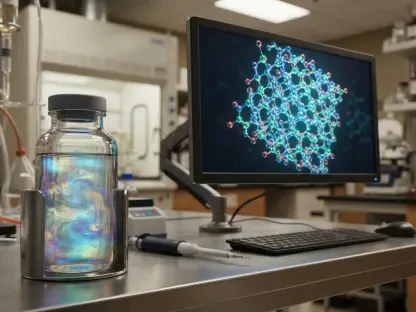
Building on this functional understanding, the research team developed a new class of inhibitors designed to bind with high precision to the PfAPP enzyme. These molecules were modeled after an existing compound called apstatin, but they were significantly refined to increase their potency and specificity for the malaria-specific version of the enzyme. Through the use of advanced X-ray crystallography, the scientists were able to visualize the three-dimensional interactions occurring at the molecular level. This imaging revealed a specific active site pocket within the enzyme where the inhibitors lodge themselves, effectively acting as a physical plug that prevents the enzyme from interacting with hemoglobin fragments. The ability to see these interactions in such high resolution allows for a much more intentional design process, moving away from trial-and-error chemistry and toward a structured, engineering-based approach. This level of detail is crucial for ensuring that the resulting drugs are strong enough to neutralize the parasite.
Navigating the Path Toward Clinical Implementation
One of the most pressing challenges in contemporary tropical medicine is the rising trend of drug resistance, particularly in Southeast Asia and parts of Africa where older frontline treatments are losing their efficacy. The structural blueprint provided by the Bath and Leeds study offers a tactical advantage by allowing for the development of molecules that are difficult for the parasite to evade through simple genetic mutations. Because the PfAPP enzyme is so central to the parasite’s basic metabolic function, any mutation that alters the enzyme enough to avoid the inhibitor might also compromise the parasite’s ability to feed. Furthermore, the high selectivity of these new inhibitors addresses a long-standing issue with antimalarial side effects. Many current drugs affect human enzymes as well as those of the parasite, leading to significant patient discomfort and complications. By tailoring the chemical structure to fit only the parasite version of the enzyme, researchers are paving the way for safer treatments.
The collaborative effort between these institutions established a clear framework for the next phase of drug development, moving from laboratory discovery toward real-world application. While the biochemical effectiveness of the inhibitors was proven in controlled environments, the scientific community now faced the necessity of improving the permeability of these compounds. For a drug to be successful in a clinical setting, it must be able to penetrate the complex membranes of both the human red blood cell and the parasite itself. Future development cycles from 2026 to 2028 will likely focus on optimizing the “drug-like” properties of these inhibitors, ensuring they remain stable and effective throughout the human digestive and circulatory systems. This discovery served as a vital milestone in the global effort to reduce the hundreds of thousands of annual deaths caused by malaria. By continuing to refine these molecular tools, researchers provided the foundation for a sustainable defense against one of the world’s most persistent pathogens.