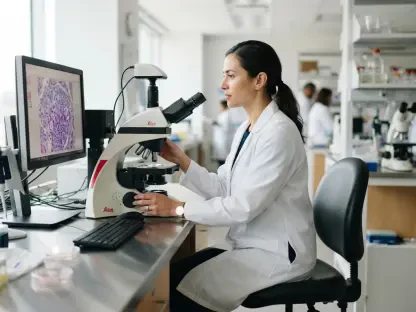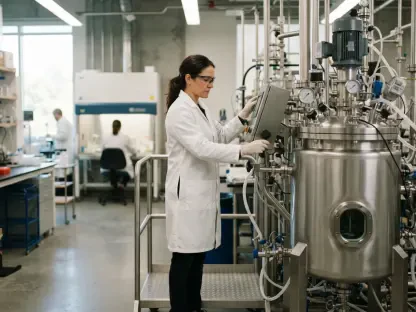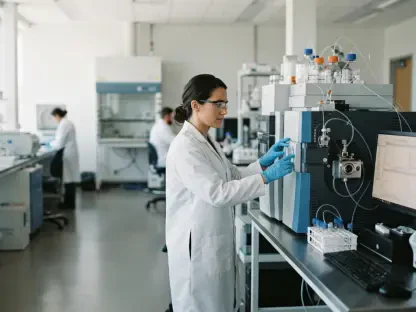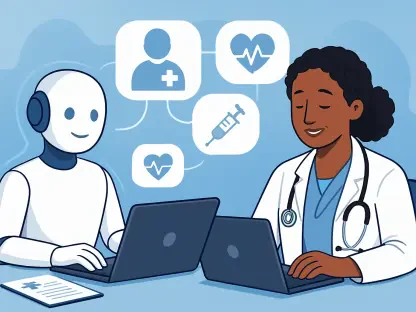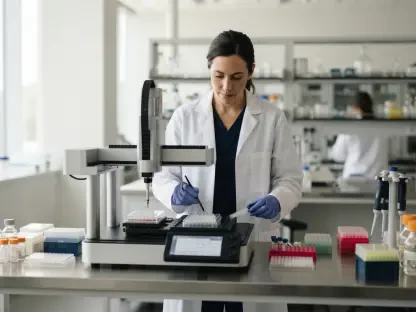

CEO Demis Hassabis noted that the new funding will enable the construction of foundational biology models and the expansion of bioengineering infrastructure. This massive injection of capital, spearheaded by prominent venture firms like Greenoaks and Sequoia Capital, represents a definitive pivot in how the global pharmaceutical sector perceives the role of artificial intelligence. For decades, the process of bringing a single medicine to market has been an arduous journey fraught with high failure rates and astronomical costs that often exceed billions of dollars per successful candidate. By treating biological systems as complex information-processing networks, Alphabet’s subsidiary aims to replace stochastic discovery with a predictable engineering discipline. The market consensus now reflects a firm belief that machine learning is no longer a peripheral tool but the primary engine for future medical breakthroughs. This funding allows for a significant scale-up of computational resources, ensuring that the transition from digital simulation to biological validation occurs at an accelerated pace.
Revolutionizing Pharmaceutical Development Through Computation
Part 1. The IsoDDE Platform Mechanics
The core of this technological leap lies in the Isomorphic Labs Drug Design Engine, a specialized software suite built to navigate the staggering complexity of human proteomics. Traditional methods struggle with the dynamic nature of proteins, which are not static shapes but constantly shifting entities that change configuration based on their environment. Identifying a “binding pocket”—the specific area where a drug molecule can attach to a protein to alter its function—is historically a matter of tedious observation and luck. IsoDDE leverages deep learning to predict these conformational changes with unprecedented accuracy, allowing researchers to see opportunities that were previously invisible. Furthermore, the platform can predict and even induce “cryptic” pockets that only appear under specific conditions, effectively opening new therapeutic targets in diseases that were once considered undruggable. This capability fundamentally alters the starting point of drug design by providing a high-fidelity map of the molecular landscape.
Part 2. Bypassing Physical Modeling Constraints
Beyond identifying targets, the platform significantly streamlines the validation phase by reducing reliance on hardware-intensive procedures like Free Energy Perturbation algorithms. Traditionally, calculating the binding affinity of a compound required massive computational clusters and physical 3D models derived from X-ray crystallography, a process that is both slow and prohibitively expensive. IsoDDE circumvents many of these physical bottlenecks by generating high-quality molecular outputs through purely synthetic environments. This digital-first strategy allows for the screening of billions of potential compounds in a fraction of the time it would take to synthesize and test them in a wet lab. By eliminating the need for constant physical scans and iterative laboratory trials, the engine slashes the overhead associated with early-stage research. This efficiency is critical for addressing rapidly evolving pathogens where traditional economic models of development often fail, providing a scalable path toward more responsive public health interventions.
Bridging the Gap Between Simulation and Clinical Success
Part 3. Engineering Foundational Biological Models
The transition from theoretical modeling to clinical application marks the next phase of the company’s evolution, moving research into real-world therapeutic programs. By building what are described as foundational biology models, the team seeks to understand the systemic interactions of diseases rather than focusing on isolated pathways. This holistic approach is supported by an expanded bioengineering infrastructure that bridges the gap between software predictions and human biology. The goal is to transform the pharmaceutical industry into a scalable engineering discipline where the success of a drug is largely determined before it ever enters a clinical trial. Currently, several major pharmaceutical partners have already begun integrating these workflows, utilizing the predictive power of the engine to refine their pipelines. This integration suggests a future where the distinction between a tech company and a biotech firm becomes increasingly blurred, as the laboratory is no longer a bottleneck but a verification center for AI designs.
Part 4. Strategic Implications for Digital Medicine
The successful completion of this funding round established a new benchmark for investment in the intersection of biology and machine learning. Stakeholders recognized that the digitization of biological data was the essential step toward resolving the long-standing productivity crisis in drug development. Moving forward, the industry adopted a mindset that prioritized the creation of interoperable datasets and the deployment of generative models to design novel proteins from scratch. It became clear that the most effective strategy for established firms was to pivot away from legacy laboratory methods and toward modular, AI-driven architectures. By the time these therapeutic programs reached the clinical stage, the cost of discovery had fallen dramatically, allowing for a more diverse array of treatments for complex ailments. Leaders in the field emphasized that the next priority was the standardization of AI-ready biological data to ensure that these predictive models remained accurate across different populations and various genetic backgrounds.