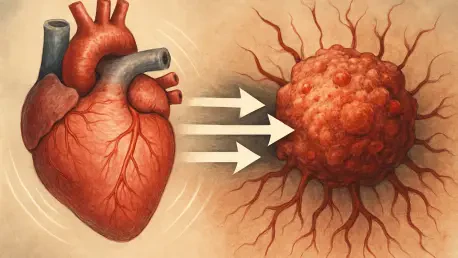

While cancer aggressively invades almost every organ within the human anatomy, the human heart possesses a unique and formidable resistance that has baffled the scientific community for decades. Despite its constant exposure to the entire blood supply and its high metabolic activity, primary cardiac tumors are exceedingly rare compared to those found in the lungs, liver, or breasts. Recent breakthroughs from the International Centre for Genetic Engineering and Biotechnology (ICGEB) in Italy have finally shed light on this phenomenon, revealing that the heart’s physical movement itself serves as a barrier. A research team led by Giulio Ciucci has discovered that the rhythmic, high-pressure environment of a beating heart actively suppresses the proliferation of malignant cells. This finding suggests that the mechanical force of the heartbeat is not just a functional necessity for circulation but also a biological shield. By examining how physical stress interacts with genetic material, scientists are now beginning to understand the profound impact of mechanobiology on disease prevention and the potential for new therapeutic strategies.
Investigating the Cardiac Exception
Experimental Paradigms in Mouse Models
To understand why the heart remains largely immune to malignancy, researchers utilized sophisticated genetic engineering to observe how specific cancer-causing genes behave across different tissues in mice. They activated these oncogenes at equivalent levels within the heart, the liver, and the skeletal muscles to see which environment would succumb to tumor growth first. Surprisingly, despite the presence of the same genetic triggers, tumors only developed within the skeletal muscles, while the heart remained remarkably clear of any cancerous formations. This initial observation indicated that the intrinsic biological makeup of cardiac tissue might not be the only factor at play, but rather something specific to its operational environment. The study highlighted that traditional genetic explanations for cancer susceptibility might be incomplete without considering the physical forces exerted upon the cells. This realization prompted a deeper investigation into the mechanical properties that differentiate the heart from other muscular tissues, moving the focus toward the unique hemodynamic stresses that the organ endures every second.
The research team then sought to isolate the variable of mechanical pressure by conducting a highly specialized transplant experiment that removed the internal hemodynamic load from the heart. They grafted a donor mouse heart onto the neck of a recipient mouse, allowing the transplanted organ to continue beating via its own electrical impulses while being disconnected from the main circulatory pressure system. This created a unique biological scenario: a heart that was alive and pulsing but devoid of the high-pressure blood flow typically found in its natural anatomical position. When the scientists injected lung cancer cells into this pressure-free heart, the results were startling and immediate. Unlike the control hearts within the chest, which successfully resisted the invasion, the transplanted neck hearts allowed the cancer cells to proliferate rapidly and form aggressive tumors. This definitive result confirmed that the biological tissue of the heart alone is insufficient for cancer resistance; instead, it is the constant, rhythmic, high-pressure environment of the beating heart that actively halts the progression of the disease.
The Role of Hemodynamic Pressure
The contrast between the pressurized heart and the non-pressurized transplant provided a clear roadmap for understanding the relationship between physical force and cellular health. In a normally functioning heart, the cells are subjected to intense and consistent mechanical stress that effectively creates a hostile environment for any invading malignant cells. The study demonstrated that when the same lung cancer cells were introduced into a pressurized heart, they were unable to establish a foothold or replicate, effectively being neutralized by the mechanical vibrations of the organ. This discovery challenges the conventional view of oncology, which has historically focused on chemical signals and genetic mutations as the primary drivers of tumor growth. Instead, the research suggests that physical environment and mechanical stimulation play a critical role in determining whether a cell will become cancerous. The implications of this are vast, as it introduces the concept of “mechanical oncology,” where the physical state of an organ is just as important as its chemical composition in the fight against metastatic spread.
Building on these findings, the researchers expanded their scope to include human tissue analysis to ensure the results were not limited to murine models. They compared human heart tissue that had been affected by metastasis from other organs with primary tumor tissue from different parts of the body to see if the same mechanical suppression occurred. The data confirmed that the human heart utilizes the same pressure-based defense mechanism to prevent the growth of secondary tumors, even when cancer cells from other organs attempt to migrate there. This consistency across species underscores the fundamental nature of mechanobiology in the cardiovascular system. The researchers noted that while secondary tumors in the heart are possible, they are significantly less common than in other high-blood-flow organs like the liver or lungs. This persistent mechanical shield, provided by the heart’s tireless labor, represents a previously under-explored layer of the body’s natural defense system, offering a new perspective on how we might approach cancer prevention in organs that lack such high-intensity physical activity.
Deciphering the Cellular Machinery
The Mechanical Sensor Nesprin-2
The study identified a sophisticated link between physical force and genetic expression through a protein known as Nesprin-2, which functions as a vital mechanical sensor. This protein is located at the interface of the cell’s exterior and its nucleus, acting as a bridge that transmits physical vibrations and pressure from the heartbeat directly into the cell’s command center. Under the intense pressure of a normal heartbeat, Nesprin-2 is stimulated to trigger chemical modifications to the proteins that surround and protect the DNA. This mechanical-to-chemical signaling pathway is essential for the heart’s ability to regulate its own cellular environment and prevent the onset of uncontrolled cell division. Without the physical input of the heartbeat, this sensor remains dormant, leaving the cell’s genetic material in a state that is more vulnerable to oncogenic transformation. The discovery of Nesprin-2’s role provides a concrete molecular mechanism for how a physical beat can influence the very blueprint of life, bridging the gap between the macro-scale movement of the organ and the micro-scale behavior of individual genes.
When the mechanical signals transmitted by Nesprin-2 reach the nucleus, they induce a physical change in the DNA structure, often referred to as “loosening” or unwinding in specific regions. In cancer cells that are subjected to the intense pressure of the heart, this unwinding process makes certain areas of the genome more accessible for transcription. These newly exposed regions contain critical genes responsible for suppressing tumor growth, which are typically silenced or “packed away” in most cancer cells. Essentially, the mechanical beat of the heart forces the cancer cell to “turn on” its own internal defense systems, effectively hijacking the cell’s machinery to stop its own growth. Without this pressure, the DNA remains tightly packed and inaccessible, allowing the suppressor genes to stay inactive and the cancer to spread unchecked. This insight reveals that the heart’s movement is not just a byproduct of its function but a sophisticated regulatory tool that maintains genetic stability. By physically forcing the DNA to remain open, the heart ensures that the protective mechanisms of the cell are always ready to combat potential malignancy.
Activating Genetic Defense Systems
The activation of these tumor-suppressor genes through mechanical force represents a significant shift in how scientists view the regulation of oncology. By comparing the genetic profiles of cells under different pressure levels, the research team found that the “open” state of DNA induced by the heartbeat is unique to the cardiac environment. This mechanobiology-driven genetic expression provides a persistent and reliable method for preventing tumor development that does not rely on external chemical interventions. The study suggests that physical stimulation is a potent, under-explored regulator of gene activity that could be harnessed for future treatments. As we look forward from 2026, the focus is shifting toward how these mechanical cues can be replicated in other tissues that are more prone to cancer. If the effects of cardiac pressure can be simulated through specialized medical devices or focused physical therapies, it may be possible to activate tumor-suppressor genes in the lungs or liver, providing a non-chemical method to slow or stop the progression of various cancers throughout the human body.
This discovery marks a pivotal moment in the transition from traditional oncology to a more integrated approach that includes the physical environment of the cell. The research suggests a significant opportunity for developing new therapeutic interventions that use physical or mechanical stimulation to mimic the heart’s unique environment. Looking ahead toward 2027 and beyond, scientists are exploring the potential for “mechanomimetics,” a field focused on creating tools that provide the necessary physical signals to keep DNA in a protective, tumor-suppressive state. The heart’s constant labor, once seen only as a means of survival through circulation, is now recognized as a persistent, mechanical shield that guards against the development of one of humanity’s most challenging diseases. In summary, the findings indicate that the physical stress of the heartbeat is a critical component of organ health, and understanding this relationship will be essential for developing the next generation of cancer treatments. The study has opened a new door for researchers to investigate how other mechanical forces within the body might contribute to disease resistance or susceptibility.
Future Directions in Mechanobiology
Medical professionals emphasized the importance of translating these laboratory findings into clinical applications that could benefit patients with high-risk genetic profiles. The study successfully demonstrated that the heart’s resistance to cancer was not merely a biological fluke but a direct result of the organ’s intense mechanical activity. By utilizing the insights gained from the Nesprin-2 pathway, researchers began developing protocols to test whether targeted mechanical vibrations could induce similar tumor-suppressive effects in other organs. These future considerations involved the design of wearable or implantable devices capable of delivering precise physical stimuli to tissues vulnerable to metastasis. The goal was to recreate the “heartbeat effect” in the lungs or liver, effectively forcing cancer cells in those areas to activate their own internal defense mechanisms. This approach offered a promising alternative to systemic chemotherapy, potentially reducing the side effects associated with traditional chemical treatments while providing a more localized and natural form of defense against malignant cell proliferation.
The research also highlighted the need for a deeper integration of physics and biology in the study of oncology moving forward. Scientists recognized that the mechanical environment of an organ was just as critical as its genetic or chemical state, leading to a new wave of interdisciplinary studies. These efforts focused on mapping the mechanical profiles of various human tissues to identify which areas were most susceptible to cancer based on their physical characteristics. By understanding the “mechanome” of the human body, the scientific community aimed to predict tumor behavior with greater accuracy and develop preventative measures tailored to the physical needs of specific organs. This shift in perspective encouraged the development of more holistic treatment plans that considered the physical stressors acting on a patient’s body. Ultimately, the heart served as a masterclass in natural engineering, proving that movement and pressure were essential components of biological integrity. The findings paved the way for a new era of medical research where the physical forces of life were harnessed to protect and heal the human body.