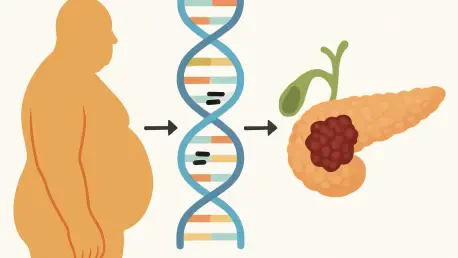

The biological reality of why a patient’s metabolic health dictates the survival path of pancreatic cancer has remained a persistent shadow in modern oncology. While clinicians have noted for years that obesity and type 2 diabetes correlate with worse outcomes, the actual genetic machinery connecting these dots has been elusive. Pancreatic ductal adenocarcinoma, or PDAC, remains one of the most lethal forms of malignancy, because it tends to return even after surgery. This recurrence is not random; it is often driven by the internal environment of the patient’s body.
The Hidden Molecular Bridge Between Weight and Wellness
Patients suffering from metabolic disorders face a significantly higher risk of tumor recurrence, with data showing that nearly 80 percent of those with PDAC relapse after surgery. This phenomenon suggests that the cancer is not merely a localized issue but one influenced by systemic health. The mystery lies in how excess adipose tissue or high blood sugar levels send signals that encourage a tumor to grow back stronger. By examining molecular connections, science is finally mapping the bridge between metabolic conditions and aggressive cell behavior.
Recent studies clarified that the relationship involves specific biological pathways that become distorted. When a body is in a state of metabolic stress, it produces signals that the cancer can utilize as a growth stimulant. This shifts the focus from looking at the tumor in isolation toward seeing it as an entity that thrives on the biochemical imbalances found in patients with obesity. This understanding changes how clinicians approach the relationship between a patient’s weight and their long-term wellness.
Why the Metabolic-Cancer Intersection Demands Our Attention
As metabolic conditions rise globally, the intersection of endocrinology and oncology has become a vital area for investigation. Understanding how diabetes and obesity influence cancer biology is a clinical necessity for improving survival rates. Research spearheaded by the University of Birmingham moved this inquiry toward genetic certainty, revealing that metabolic stress pathways are hijacked by cancer cells to facilitate their spread and survival.
This hijacking process means that the same internal mechanisms meant to manage energy and inflammation are turned against the host. For a patient with PDAC, the metabolic environment acts as a secondary engine for the disease. By acknowledging this link, medical professionals can start to address why certain patients fail to respond to standard therapies. The goal is to recognize that the physiological context of the patient drives the cancer’s aggression.
Deciphering the Genetic Signature: The Six Core Drivers
The breakthrough centers on six specific genes—ITGAM, PECAM1, CCL5, STAT1, STAT2, and CD44—which serve as the functional link between metabolic dysfunction and cancer progression. These genes regulate inflammatory responses and immune cell behavior. When these genes are overactive due to chronic inflammation associated with obesity, they create a hospitable environment for cancer cells. This shared genetic framework confirms that metabolic stress inadvertently fuels the tumor’s resilience.
Using cross-species analysis, researchers compared human and mouse models to ensure findings were consistent. Single-cell analysis further pinpointed that immune cells within pancreatic tumors are specifically sensitive to these metabolic signals. This means the immune system is instead being reprogrammed by signals associated with obesity. The discovery of this signature provides a molecular explanation for why pancreatic cancer is so dangerous in a metabolic context.
Evidence from the Lab: Expert Insights into Chronic Inflammation
Experts, including Dr. Animesh Acharjee and Professor Simon Jones, point toward chronic inflammation as the primary theater for this biological drama. This “crosstalk” between the metabolism and the tumor results from a persistent inflammatory state that “switches on” the detrimental genetic signature. Validation using human tissue samples confirmed that these six genes are significantly more active in patients with metabolic disorders.
Furthermore, the research indicates that this environment makes the tumor more resistant to conventional treatments. When genes like STAT1 and STAT2 are upregulated, cancer cells may become better at evading the natural immune response. The laboratory results prove that the patient’s overall metabolic profile is a central player in the disease’s pathology. This interaction explains why traditional surgeries often fail to prevent the eventual return of the malignancy.
From Discovery to Diagnostics: Clinical Strategies for Better Outcomes
The identification of these six genes provided a new lens for risk assessment and treatment planning. Rather than waiting for a relapse, doctors began looking at the metabolic profiles of patients to identify those at highest risk. This proactive approach allowed for more aggressive monitoring and the implementation of interventions designed to stabilize the metabolic environment. It signaled a shift toward precision medicine where underlying conditions were treated with urgency.
Moreover, this discovery paved the way for targeted therapies aimed to inhibit the inflammatory pathways driven by ITGAM and CD44. By disrupting the molecular bridge, it became possible to make the tumor less resilient. Future oncology strategies incorporated weight management and glucose control as foundational elements of the care plan. Ultimately, addressing the systemic inflammation caused by obesity proved to be a critical step in slowing the progression of PDAC and extending the lives of patients.