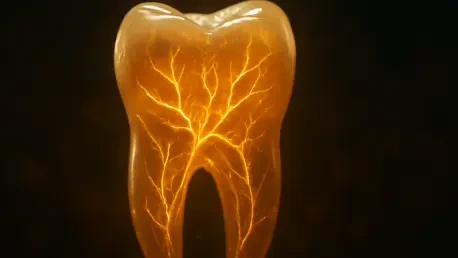

Root canal therapy effectively prevents the spread of infection but strips a tooth of its sensory integrity and its ability to respond to future biological stress. For decades, the primary clinical paradigm has been centered on the replacement of organic loss with inorganic materials, a process that preserves the silhouette of a tooth but sacrifices its physiological vitality. When a cavity progresses deep into the dentin and encroaches upon the dental pulp, the standard surgical intervention involves the total removal of the nerve and blood vessels. This mechanical solution, while providing immediate relief from pain and preventing the spread of abscesses, renders the tooth a brittle, inert structure. It no longer receives nutrients and loses its ability to warn the individual of new decay or excessive mechanical pressure. Stemden, a biotechnology firm, is currently spearheading a shift from this replacement-heavy model toward a sophisticated regeneration-based framework. By focusing on the latent healing potential of the dental pulp, the company aims to move restorative dentistry into an era where pharmacological interventions can trigger the body to rebuild its own hard tissues, essentially reviving a tooth that would otherwise be destined for devitalization and eventual structural failure.
Foundations of Molecular Dentistry: The Quest for Bioactive Solutions
The technical and philosophical genesis of Stemden is the culmination of more than two decades of rigorous academic inquiry led by CEO Dr. Jang Il-ho. His career trajectory, which includes foundational work at the Pohang University of Science and Technology and specialized stem cell research at Harvard University, provided the necessary background to bridge the gap between developmental biology and clinical dentistry. Upon joining the School of Dentistry at Pusan National University, Dr. Jang narrowed his focus to the untapped potential of stem cells residing within the oral cavity. He recognized that the human body often possesses the blueprints for repair but lacks the specific biological signal to initiate that repair in the face of modern dental trauma. His research eventually transitioned from theoretical cell behavior to the identification of practical chemical triggers that could be safely administered in a dental chair. This long-term commitment to understanding cellular differentiation formed the backbone of a startup that seeks to replace drills and synthetic fillers with precision molecular signaling.
The pivotal breakthrough arrived in late 2020 through a strategic collaboration with the University of Tennessee Center for Medical Sciences. This partnership led to the identification of Compound P, a specific small-molecule catalyst that serves as the active primary ingredient in the company’s regenerative therapy. Unlike traditional stem cell treatments that often require the extraction, cultivation, and subsequent re-injection of cells—a process fraught with regulatory hurdles and high costs—Compound P is designed to activate the cells already present in the patient’s pulp. This low-molecular-weight compound, weighing approximately 500 Daltons, is small enough to navigate the complex microenvironment of a damaged tooth. It functions by triggering pulp stem cells to differentiate into odontoblasts, which are the specialized biological units responsible for the secretion of dentin. By utilizing a small molecule rather than complex biologics, the company has managed to create a stable, cost-effective solution that mirrors the efficacy of far more complicated medical interventions.
The SD-101 Therapeutic System: Engineering Biological Recovery
The flagship development within this pharmacological arsenal is known as SD-101, a combination product that merges a pharmaceutical agent with a medical device delivery system. The efficacy of SD-101 lies in its ability to interact with the IKK/NF-κB signaling pathway, a critical regulator of both intracellular inflammation and cellular differentiation. In the context of a damaged tooth, this pathway acts as a biological switch. When modulated correctly by Compound P, it suppresses the inflammatory signals that typically lead to pulp death and instead promotes the growth of new, healthy dentin. This approach is fundamentally different from current “pulp capping” procedures, which often use materials that may irritate the pulp or provide only a superficial barrier. SD-101 is designed to be proactive, engaging the natural defensive systems of the tooth to build a biological bridge over the site of injury, thereby preserving the vascular and nervous connections that keep the tooth alive and sensitive to its environment.
To facilitate the practical application of this drug in a clinical setting, SD-101 utilizes a biodegradable collagen sponge as a structural scaffold. This delivery mechanism was engineered to be compatible with the workflows of modern dental practitioners, requiring no specialized equipment beyond what is already found in a standard operatory. During a procedure, the dentist removes the decayed portion of the tooth and, if the pulp is exposed or the cavity is exceptionally deep, places the drug-soaked sponge directly into the defect. The scaffold provides a stable environment for the newly activated stem cells to adhere and begin their work. As the odontoblasts secrete new dentin, the collagen sponge naturally biodegrades, being absorbed by the body as it is replaced by living tissue. This ensures that no foreign materials are left behind to interfere with the long-term integrity of the tooth, resulting in a restoration that is literally made of the patient’s own biological matter rather than a synthetic proxy.
Empirical Validation: Success Rates in Advanced Animal Models
The transition from laboratory theory to clinical application was validated through extensive testing in animal models that closely mimic human dental anatomy. One of the most critical trials involved a 24-week study conducted on minipigs, whose teeth share similar structural and physiological characteristics with human dentition. Researchers created standardized dentin defects and applied varying concentrations of Compound P to assess the regenerative response. The results were remarkably consistent, particularly in the high-dose groups where researchers observed 100% regeneration of the initial dentin defect within a 16-week period. This new tissue remained stable and functional throughout the 24-week observation window, proving that the regenerated dentin was not a temporary or low-quality substitute, but a durable biological structure capable of withstanding the rigors of mechanical use. These findings provided the definitive proof-of-concept required to move the technology toward broader applications in periodontal health.
Beyond the regeneration of dentin, research has demonstrated that the underlying technology has the potential to repair the entire periodontal complex. Studies involving Beagle dogs and rat models have shown that Compound P can stimulate the growth of alveolar bone, cementum, and periodontal ligaments—the critical supporting structures that keep teeth anchored in the jaw. These trials indicated that the drug does not only promote growth but also acts as an inhibitor of bone loss, which is a major concern in patients suffering from advanced periodontal disease. By demonstrating that the pharmacological pathway targeted by SD-101 is applicable to multiple types of oral tissue, the research team has opened the door for a comprehensive regenerative suite. This could eventually allow clinicians to treat not just deep cavities, but also the bone degradation that often leads to tooth loss and the need for dental implants, potentially saving teeth that were previously considered unsalvageable.
Global Strategic Growth: Navigating International Recognition and IP
The commercial potential of this regenerative technology has been recognized on the global stage, most notably at the SLINGSHOT 2024 startup competition in Singapore. Competing against thousands of biotechnology and health startups, Stemden secured top honors in the Health and Biomedical category. This achievement was not merely a ceremonial victory; it provided a platform for international investors to vet the science and the business model behind SD-101. The recognition in Singapore served as a catalyst for the company’s expansion into the Southeast Asian market, which is currently experiencing a surge in demand for advanced dental care. This international validation has been instrumental in securing the capital necessary to fund the expensive and time-consuming process of human clinical trials, proving that the market is ready for a move away from traditional restorative techniques toward more biological, life-preserving interventions.
A robust intellectual property strategy has been essential in protecting these discoveries as the company expands its global footprint. As of 2026, Stemden has successfully registered patents in both the United States and South Korea, with several additional applications pending through the Patent Cooperation Treaty. These legal protections cover not only the specific chemical formulation of Compound P but also the unique delivery methods involving collagen scaffolds. Furthermore, the company has established a strategic partnership with STNC, a firm that specializes in the production of collagen-based medical devices. This collaboration ensures that the physical components of the SD-101 system are manufactured to the highest medical standards, providing a level of consistency and safety that is required for regulatory approval in multiple jurisdictions. By combining innovative chemistry with established medical device engineering, the firm has built a defensive moat around its technology that is as strong as the dentin it seeks to regenerate.
Market Entry Strategy: The Veterinary Milestone toward Human Care
Recognizing the long road to human clinical approval, the company is implementing a phased commercialization strategy that begins with the companion animal market. By 2027, the launch of oral treatments for dogs is expected to address a significant unmet need in veterinary medicine. Periodontal disease and pulp exposure are among the most common health issues for aging pets, yet the current treatment options are often limited to painful extractions. The veterinary product line, derived from the same research used in the Beagle studies, will allow veterinarians to offer regenerative options that preserve the natural teeth of companion animals. This initiative is designed to generate early revenue while simultaneously providing a wealth of real-world clinical data regarding the safety and efficacy of the Compound P formulation in a diverse population. For pet owners, this represents a new standard of care that prioritizes the comfort and long-term health of their animals.
The data gathered from the veterinary sector will serve as a powerful supplement to the human drug application process. Because the biological mechanisms of dentin and bone regeneration are highly conserved across mammalian species, the successful treatment of thousands of companion animals provides a level of safety assurance that traditional laboratory studies cannot match. This “veterinary first” approach allows the company to refine its manufacturing processes and delivery systems in a less restrictive regulatory environment before tackling the final hurdles of human medicine. It also builds brand awareness and clinical trust among the dental and veterinary communities. By the time the human version of SD-101 reaches the market, it will be supported by years of successful clinical outcomes in animals, significantly de-risking the product for early human adopters and providing a clear narrative of safety and reliability.
Toward Human Clinical Trials: Navigating Regulatory Pathways to 2031
The primary focus of the corporate roadmap is the successful launch of SD-101 for human use, a goal currently targeted for 2031. This timeline is dictated by the rigorous safety standards of global health authorities, which require extensive toxicity testing and clinical phases to ensure the drug is safe for long-term use in the human mouth. As of late 2026, the company is focused on securing a $3 million Pre-Series A investment to fund the necessary toxicity studies under Good Laboratory Practice standards. These studies are a prerequisite for human clinical entry and will provide the final layer of evidence needed to begin patient trials. The transition into human medicine is a complex undertaking, but the clarity of the regulatory strategy and the success of the preceding animal trials have created a strong sense of momentum within the organization and among its stakeholders.
Once commercialized, SD-101 would offer a definitive alternative to the root canal, fundamentally changing the patient experience in restorative dentistry. Instead of facing a procedure that effectively kills the tooth, patients with deep decay or pulp exposure would receive a treatment that invites their own body to heal the damage. This “vital pulp therapy” ensures that the tooth remains integrated into the vascular and nervous systems, preserving its natural defensive capabilities and structural flexibility. For the patient, this means a reduced risk of future fractures and the preservation of a “living” smile. This shift toward biological preservation aligns with the broader goals of modern medicine, which increasingly seeks to maintain the integrity of natural organs rather than replacing them with artificial components. The successful implementation of this technology would mark the beginning of an era where dental health is managed through molecular restoration rather than mechanical substitution.
The Future of Precision Dentistry: Sustaining Oral Health Through Molecular Innovation
The emergence of in-situ tissue engineering represented a fundamental shift in how the medical community approached the restoration of lost biological function. Rather than relying on the labor-intensive and ethically complex process of transplanting lab-grown cells, the focus moved toward activating a patient’s own endogenous stem cells. This transition proved to be more practical and scalable, as it utilized the body as its own bioreactor. Researchers determined that by targeting specific signaling pathways at the molecular level, they could achieve high-quality tissue regeneration without the risks of immune rejection or the complications associated with foreign biological materials. This evolution in thought allowed for the development of treatments that were not only more effective but also more accessible to the general public. The shift toward these “biologically active” interventions marked a departure from the purely mechanical fixes that had dominated the dental field for over a century.
In the final assessment, the efforts of companies like Stemden proved that the preservation of natural anatomy was a viable clinical goal even in cases of severe dental trauma. The development of SD-101 demonstrated that a deep cavity did not have to lead to the functional death of a tooth. By the time the technology moved toward human trials, the dental community had already begun to embrace the concept of precision molecular dentistry. Clinicians started to prioritize the maintenance of the tooth’s sensory and structural integrity, recognizing that a living tooth was always superior to a synthetic replacement. This movement toward vital pulp therapy met the growing demand from an aging population that sought to keep their natural teeth for as long as possible. Ultimately, the integration of drug discovery and medical device engineering provided a roadmap for a future where biological function was no longer sacrificed for the sake of a structural repair, ensuring that the next generation of dental care would be centered on the life and health of the natural tooth.