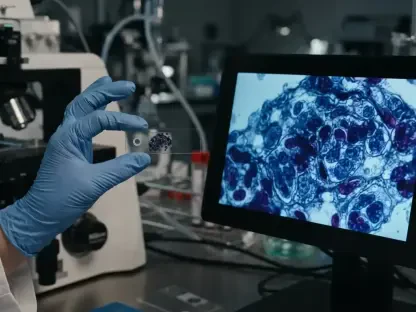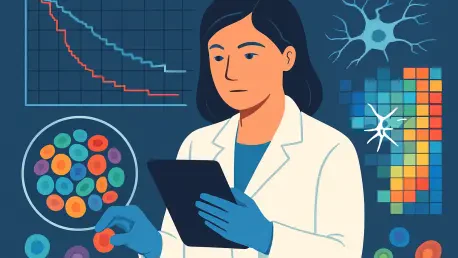

Modern oncology has long grappled with the frustrating reality that two patients with the exact same diagnosis can experience drastically different outcomes despite receiving identical treatments. This clinical mystery often stems from the hidden biological diversity within a single tumor, a phenomenon that traditional diagnostic tools have struggled to quantify with sufficient precision. Researchers at the Oregon Health & Science University Knight Cancer Institute recently introduced a computational breakthrough known as scSurvival to bridge this gap. By utilizing advanced artificial intelligence to analyze molecular data at the single-cell level, this new methodology moves beyond the limitations of older techniques that relied on bulk tissue samples. This transition represents a fundamental shift in how scientists understand disease progression, allowing for a more granular view of the cellular ecosystem. Instead of treating a tumor as a uniform mass, this AI-driven approach identifies the specific cellular actors responsible for a patient’s survival trajectory.
Beyond the Limitations of Conventional Bulk Sequencing
Traditional survival analysis has historically depended on bulk sequencing, which effectively blends millions of cells together to produce a single average genetic signal for an entire tumor. While this method provided foundational insights for decades, it frequently obscured rare but highly influential cell populations that might drive drug resistance or metastatic spread. The scSurvival framework departs from this “averaging” philosophy by examining each cell individually, capturing the unique gene expression profiles that define its role within the tumor microenvironment. This level of resolution is critical because a tumor is not a monolith; it is a complex, shifting landscape composed of various immune, stromal, and malignant cells. By isolating these individual components, the AI can discern patterns that were previously hidden in the noise of aggregate data. This granularity allows for the detection of subtle biological signatures that often determine whether a patient will respond to therapy or experience a recurrence of their disease.
The computational architecture of scSurvival integrates sophisticated machine learning algorithms designed to link these high-resolution single-cell signatures directly to clinical outcomes. By processing vast datasets through specialized neural networks, the system identifies which specific cell states are statistically associated with longer survival and which ones correlate with rapid disease progression. This ability to rank the importance of different cell types within a specific patient sample provides a far more nuanced prognostic picture than conventional methods. Furthermore, the model accounts for the interactions between various cell types, acknowledging that the behavior of a malignant cell is often dictated by the immune cells surrounding it. This holistic yet detailed perspective enables researchers to move past simple correlation and begin understanding the functional drivers of cancer. As this technology matures, it promises to refine the way clinicians categorize risk, moving the industry toward a model where treatment plans are dictated by the underlying cellular dynamics rather than just the tumor’s size or anatomical location.
Predictive Accuracy and Identification of Cellular Drivers
In rigorous validation tests involving data from patients with melanoma and liver cancer, scSurvival demonstrated superior predictive accuracy when compared to standard clinical prognostic markers. The model proved particularly adept at identifying specific immune cell configurations that significantly influenced a patient’s response to modern immunotherapy treatments. For instance, the AI uncovered distinct sub-populations of T-cells that, when present in high concentrations, were strongly predictive of positive long-term outcomes. Conversely, it also flagged certain tumor cell states that acted as indicators of high mortality risk, even in cases where traditional pathology might have categorized the tumor as less aggressive. These findings suggest that the specific state of a cell, rather than just its presence, is the primary determinant of clinical success. The success of these initial applications highlights the tool’s versatility across different types of solid tumors, suggesting that its underlying logic could be applied to a wide array of malignancies beyond those currently being studied in the initial development phases.
Beyond its predictive capabilities, the scSurvival model offers profound insights into the mechanisms of treatment failure and success that have remained elusive until now. By pinpointing the exact harmful and helpful cells, the tool provides a roadmap for drug developers who are seeking to create more targeted interventions. If a specific cell state is identified as a primary driver of poor survival, researchers can focus on developing therapies specifically designed to neutralize that population or reverse its harmful characteristics. This focus on individual cellular behavior addresses a long-standing challenge in precision medicine: the need to treat the specific biological drivers of an individual’s disease rather than a generic version of the cancer. The ability to distinguish between cells that support the body’s defense and those that assist tumor growth allows for a more strategic approach to clinical management. This shift from broad-spectrum treatments to cell-specific strategies could significantly reduce unnecessary toxicity while maximizing the efficacy of available therapeutic options for patients.
Collaborative Development and Future Clinical Integration
The creation of scSurvival was not the result of isolated effort but emerged from a deeply collaborative environment at the OHSU Knight Cancer Institute. This interdisciplinary project brought together experts from disparate fields, including mathematicians, computational scientists, cancer biologists, and frontline clinicians, to ensure the tool was both technically sound and medically relevant. This diversity of expertise was essential for building a model capable of capturing the intricate biological patterns that simpler machine learning models might overlook. The integration of clinical knowledge ensured that the AI focused on variables that actually matter in a hospital setting, while the mathematical rigor provided by the computational team ensured the model’s reliability across different datasets. This collaborative spirit underscores the changing nature of medical research, where the boundary between data science and biology is increasingly blurred. By combining these unique perspectives, the team successfully developed a platform that translates complex molecular data into actionable prognostic information that could one day change the standard of care.
Although scSurvival remained in the research phase during its initial rollout, the steps taken toward open science ensured that its impact extended far beyond a single institution. The research team made the code and comprehensive tutorials freely available on major digital repositories such as GitHub and Zenodo, encouraging the global scientific community to validate and expand upon their work. This transparency was intended to accelerate the transition from a laboratory tool to a clinical reality by allowing other researchers to test the model against diverse patient populations and different cancer types. Future considerations focused on integrating this AI directly into hospital diagnostic pipelines, where it could serve as a secondary screening tool for high-risk patients. By providing a clearer picture of the cellular drivers behind each case, the system allowed for the identification of personalized therapeutic targets that were previously invisible. The move toward open-source accessibility established a foundation for a new era of data-driven oncology, where shared knowledge and single-cell resolution became the standard for predicting patient survival and improving clinical outcomes.