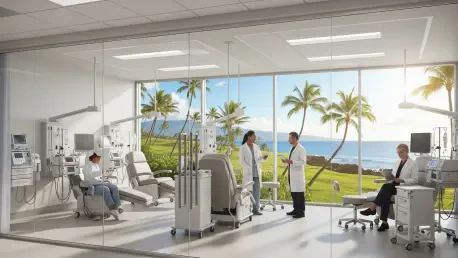

The geographic isolation of the Hawaiian Islands has long presented a formidable barrier for cancer patients seeking the latest medical breakthroughs, often forcing them to choose between local comfort and mainland innovation. With the recent launch of the Hoʻōla Early Phase Clinical Research Center (EPCRC) in Honolulu, the University of Hawaiʻi Cancer Center has officially reached a historic turning point in the provision of oncology services for the Pacific region. As the first facility in the state dedicated specifically to early-phase cancer trials, it addresses a vital gap in care for nearly 76,000 residents currently living with the disease, many of whom previously had no choice but to travel thousands of miles for experimental treatments. The center’s grand opening, which was celebrated with a traditional Hawaiian blessing, marks a significant shift toward localized, high-tech oncology. By providing immediate access to innovative Phase 1 trials, the facility aims to transform the Pacific healthcare landscape and offer new possibilities for patients.
The Path to Development: Patient Accessibility
The financial and emotional toll on families in the islands has been a persistent challenge, with local residents frequently enduring the staggering costs associated with seeking advanced medical care away from home. Between 2026 and 2028, it was observed that Hawaiʻi residents spent more than $230 million on cancer treatments outside the state, often necessitating exhausting and expensive trips to the U.S. Mainland. By offering these specialized trials in the heart of Honolulu, the center allows patients to stay connected to their primary support networks and the “ʻāina”, which is the traditional Hawaiian concept of the land that feeds and sustains the people. This proximity to family and cultural roots is considered an essential component of the holistic healing process, effectively removing the logistical and psychological barriers that once stood between local patients and the most cutting-edge oncology care available in the modern medical industry.
Funding the Future: Infrastructure and Innovation
The realization of the Hoʻōla EPCRC was made possible through a strategic $19.5 million investment gathered from a variety of sources, including federal grants, state funds, and significant private philanthropy. Specifically, contributions from organizations such as the Helmsley Charitable Trust played a pivotal role in ensuring that the project moved from a conceptual stage to a fully operational reality since the initial planning phases. These resources have been meticulously used to build a world-class infrastructure capable of hosting complex Phase 1 clinical trials, which are notoriously difficult to manage due to their rigorous monitoring requirements. These initial human studies are crucial for testing the safety and efficacy of new drugs before they move into broader testing phases. Having the necessary medical equipment and specialized facilities on the islands ensures that Hawaiʻi remains at the forefront of medical research and can compete with major mainland institutions.
Under the expert leadership of Dr. Naoto Ueno, the center is set to become a powerhouse for scientific advancement, with an ambitious goal of supporting at least 30 simultaneous clinical trials within the next several years. Hawaiʻi’s unique geographic position and its remarkably multi-ethnic population offer a distinct scientific advantage to researchers, providing diverse clinical data that is highly valuable to global pharmaceutical companies looking to improve drug performance. This inherent diversity ensures that new treatments are tested for efficacy across various demographics, making the center an incredibly attractive partner for international research collaborations and academic studies. Meanwhile, the operational team is building a robust workflow of specialized laboratories and infusion stations to manage these trials effectively, ensuring that every participant receives the highest standard of care while contributing to the global body of oncology knowledge and clinical safety protocols.
Holistic Healing: Community and Cultural Integration
The mission of the Hoʻōla Center extends far beyond technical data collection and laboratory results, focusing heavily on the vital transition from clinical research to genuine hope for patients and their families. This vision is shared by a coalition of government leaders and healthcare executives who view the facility as a gateway to previously inaccessible innovations that can significantly alter the trajectory of a cancer diagnosis. The human element of this project is further emphasized through the legacy of dedicated advocates like Susan Hirano, whose tireless work ensures that patient well-being and dignity remain the top priority throughout the research process. Through various community support initiatives and holistic programming, the center successfully balances its rigorous scientific goals with a deep, abiding commitment to the people behind the diagnoses. This approach ensures that the facility is not just a clinic, but a sanctuary where medical progress meets compassionate, person-centered care.
Named Hoʻōla—meaning “to heal or give life”—the center represented a beacon of progress for the Pacific region as it opened its doors. By merging advanced medical technology with respect for local culture, the facility was positioned to redefine oncology care for future generations. The grand opening ceremony celebrated a time where life-saving opportunities were made available in the patients’ own backyard, securing a legacy of innovation that also boosted the local economy through pharmaceutical partnerships. As the facility treated its first patients, it established a foundation for medical independence and pioneered a new model for regional research centers. This successful launch suggested that future healthcare strategies should prioritize decentralizing clinical trials to reach underserved populations, ultimately ensuring that the most advanced medical solutions were accessible to everyone, regardless of their geography.