
Ivan Kairatov is a distinguished biopharma expert whose career has been defined by a relentless pursuit of innovation within the realm of research and development. With a deep mastery of the molecular mechanisms that drive disease, he has spent years investigating how the cellular environment can be manipulated to fight even the most aggressive malignancies. In this conversation, we explore the groundbreaking insights from a new review published in Volume 13 of Oncoscience on May 22, 2026, which sheds light on the pivotal role of adaptor proteins. These molecular scaffolds serve as the central nervous system of immune cells within a tumor, determining whether the body’s defenses will succumb to the cancer or rise to defeat it.
The discussion delves into the complex world of tumor-associated macrophages (TAMs) and the functional plasticity that allows them to shift between anti-tumor and pro-tumor states. We examine the specific adaptor proteins that coordinate these signals, the pathways they activate—such as NF-κB and PI3K-AKT—and the emerging therapeutic strategies like targeted protein degradation and gene silencing. By understanding how these molecular bridges operate, researchers are uncovering new ways to reprogram the tumor microenvironment to support more effective clinical outcomes.
Could you walk us through the intricate role that tumor-associated macrophages play in the progression of cancer and why they are such a critical focus for current research?
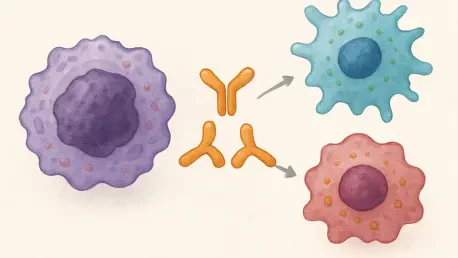
In the field of oncology, we often view the tumor microenvironment as a complex battlefield where tumor-associated macrophages, or TAMs, act as the ultimate double agents. These cells possess a remarkable and often frustrating dual nature that determines whether a patient’s immune system will successfully eradicate a malignancy or inadvertently fuel its growth. When they function correctly, they are aggressive defenders of the body, but the tumor can hijack them to suppress immune responses and facilitate the spread of metastasis. This tension creates a high-stakes environment where the molecular identity of the macrophage shifts based on the signals it receives, making it one of the most influential players in whether a cancer remains localized or becomes life-threatening.
Adaptor proteins are described as molecular scaffolds rather than enzymes; how does this structural role change our understanding of how macrophages communicate?
Unlike enzymes that catalyze specific biochemical reactions, adaptor proteins like STING, MyD88, and TRIF serve as the master coordinators or molecular scaffolds of the cell. They act like intricate circuit boards, physically connecting activated cell-surface receptors to the complex intracellular signaling pathways that dictate a cell’s ultimate fate. By integrating diverse signals from the surrounding environment, these proteins organize the assembly of signaling complexes that tell the macrophage exactly how to respond to its neighbors. This scaffolding function is critical because it allows the cell to process multiple, often conflicting, environmental cues simultaneously, essentially translating the chaotic signals of the tumor microenvironment into a coherent biological response that can either fight or favor the cancer.
We see that proteins like MyD88 show significant functional plasticity; what specific environmental triggers or pathways shift these proteins toward a pro-tumor phenotype?
The functional plasticity of proteins such as MyD88, STING, DAP12, and TRIF is truly remarkable because their behavior isn’t set in stone; it depends entirely on the changing context of the tumor. In certain early-stage environments, these adaptors drive potent anti-tumor activity, but as the cancer progresses, they can be rewired to support immunosuppressive phenotypes that shield the tumor from the immune system. This shift is often triggered by the activation of major signaling networks including NF-κB, PI3K-AKT, and the JAK-STAT pathway, which collectively reshape the immune landscape. When these pathways are hijacked, the once-defensive proteins begin to coordinate inflammatory programs that favor tumor growth and help the cancer evade the host’s natural defenses with terrifying efficiency.
Looking at proteins like Gab2, RACK1, and p62, how do these specific molecules actively contribute to making a tumor more invasive and harder to treat?
These specific adaptor proteins, including Gab2, TIRAP, LAMTOR1, the TRAF family, CARD9, and TRIB1, are essentially the architects of a pro-tumor environment. They activate specialized signaling networks that do far more than just help the tumor survive; they actively stimulate angiogenesis to provide the tumor with blood and nutrients while suppressing any remaining anti-tumor immunity. We see these molecules facilitating cancer invasion and metastasis by coordinating the cellular machinery required for cells to break away from the primary tumor and spread. It is a chillingly efficient process where proteins like p62 and RACK1 ensure that the communication between cancer cells and immune cells remains strictly in favor of the malignancy, creating a protective shield that resists standard therapies.
Given their central role in signaling, what are the most promising therapeutic avenues currently being explored to reprogram these macrophages?
The transition from biological understanding to clinical application is where things get incredibly exciting, as we are no longer just looking to eliminate macrophages but to reprogram them. We are currently exploring a variety of sophisticated tools such as small-molecule inhibitors and peptide-based therapies designed to specifically disrupt these adaptor-mediated scaffolds. Additionally, gene-silencing technologies and targeted protein degradation offer ways to selectively “turn off” the pro-tumor signals without destroying the immune cell itself. These preclinical approaches aim to flip the switch within the macrophage, turning a tumor-supportive cell back into a potent weapon against the cancer, which could drastically improve outcomes across many different and difficult-to-treat cancer types.
What are the primary hurdles that researchers face when trying to move these adaptor-targeted therapies from the laboratory to the patient’s bedside?
One of the most daunting challenges is that adaptor proteins are not exclusive to tumors; they participate in many essential physiological processes across different tissue types and healthy organs. Because their function varies so significantly depending on the stage of the tumor and the specific immune context, a “one size fits all” inhibitor could cause unwanted side effects in normal immune functions. To overcome this, we need to employ high-tech strategies like single-cell transcriptomics to characterize exactly how these proteins are behaving in a specific patient’s microenvironment. Our goal is to achieve highly selective molecular targeting that respects the complexity of the human body while being ruthless toward the signaling pathways the tumor depends on for its survival.
What is your forecast for the future of adaptor protein research in cancer immunotherapy?
I believe that within the next decade, our focus will shift entirely from broad-spectrum immunotherapies to “microenvironment reshaping” through the precision targeting of these molecular scaffolds. As we refine our ability to use adaptor proteins as both diagnostic markers and therapeutic targets, we will be able to create personalized treatment maps that predict how a patient’s TAMs will respond to specific interventions. This deeper understanding of the molecular “wiring” provided by proteins like STING and MyD88 will allow us to complement existing treatments, making them far more effective than they are today. Ultimately, we are moving toward a future where we don’t just fight the cancer, but we transform the very ground it stands on, turning a hostile tumor environment into one that actively works toward its own elimination.