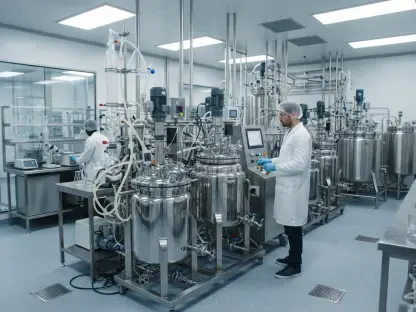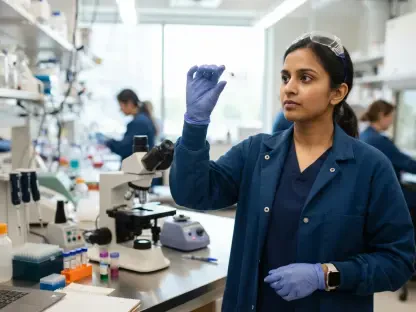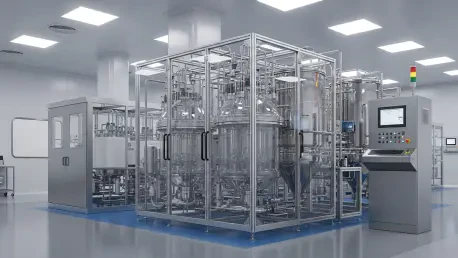

The global pharmaceutical landscape is undergoing a radical transformation as traditional chemical synthesis gives way to the intricate, living architecture of biological medicine. At the heart of this shift lies the upstream bioprocessing equipment sector, which is increasingly recognized as the essential infrastructure for modern drug discovery and mass production. This market serves as the foundational stage of manufacturing, where specialized hardware like bioreactors and fermenters are used to cultivate the living cells that create vaccines, monoclonal antibodies, and gene therapies. As the industry moves from its current 2026 valuation toward a 2030 goal, analysts anticipate the market will expand to reach a staggering $18 billion. This growth is not merely a reflection of increased spending but signifies a fundamental change in how the world approaches healthcare, with a focus on biological efficiency and the ability to scale complex processes to meet global needs.
Market Dynamics: Catalysts for a Global Expansion
Financial indicators suggest that the bioprocessing sector is poised for a decade of sustained growth, driven largely by a robust compound annual growth rate exceeding ten percent. This upward trajectory is supported by the maturation of various biologic drug pipelines and the expanding market for biosimilars, which provide more affordable versions of patented biological treatments. As patents on original blockbusters expire, the demand for high-efficiency cultivation systems has surged, forcing manufacturers to modernize their facilities to maintain competitive margins.
Beyond the financial metrics, the rise of personalized medicine is fundamentally altering procurement strategies for many pharmaceutical giants. Rather than focusing on massive, singular production lines, companies are now investing in flexible systems that can handle smaller, high-value batches for targeted therapies. This shift requires a new class of equipment that can be reconfigured rapidly, ensuring that the production of niche orphan drugs remains economically viable while meeting the stringent regulatory standards for safety and purity.
Technological Evolution: Single-Use and Continuous Systems
The adoption of single-use technologies has become a defining trend in modern biomanufacturing, replacing traditional stainless-steel vats with disposable plastic components. This transition significantly reduces the risk of cross-contamination and eliminates the need for expensive, time-consuming steam cleaning and sterilization cycles between production runs. By lowering the initial capital expenditure required for facility construction, single-use systems allow smaller biotech firms to establish their own manufacturing footprints without the massive overhead typically associated with pharmaceutical production.
In conjunction with disposables, the industry is moving toward continuous processing models that allow for the non-stop harvesting of biological products. Unlike traditional batch processing, which requires the system to be stopped and emptied, continuous systems maintain a steady state of production for weeks or months at a time. This approach increases the overall yield per square foot of factory space and provides more consistent product quality by reducing the variability often found in individual batches.
Automation and Control: The Digital Transformation
Integration of advanced automation and real-time monitoring systems is reshaping the operational landscape of upstream processing. Modern bioreactors are now equipped with sophisticated sensors that track pH levels, dissolved oxygen, and nutrient concentrations with pinpoint accuracy. These automated controls reduce the reliance on manual intervention, which has historically been a significant source of variability and potential contamination. By utilizing feedback loops, these systems can automatically adjust the internal environment to ensure optimal cell growth and metabolic activity.
Furthermore, the implementation of digital twins—virtual replicas of the physical manufacturing process—allows engineers to simulate different production scenarios before they are executed in the lab. This capability is critical for optimizing the scale-up process, where moving from a small research vessel to a commercial-scale fermenter can often lead to unpredictable biological shifts. Data-driven insights from these simulations help in predicting potential failures and identifying the most efficient pathways for maximize cell density and product yield.
Regional Landscape: Diversifying Global Production
North America continues to maintain its position as a dominant force in the upstream equipment market, supported by a dense network of research universities and established biotechnology hubs. The presence of major pharmaceutical corporations and a favorable venture capital environment provides the necessary resources to push the boundaries of bioprocessing technology. This regional strength is further bolstered by government initiatives that prioritize domestic manufacturing resilience, ensuring that critical supply chains for vaccines and essential biologics remain robust against global disruptions.
Conversely, the Asia-Pacific region is experiencing the fastest growth rate in the world as industrialization and healthcare spending accelerate across China and India. Local governments are aggressively incentivizing the development of domestic biotech industries through tax breaks and the construction of specialized industrial parks. This regional surge is not only creating new markets for equipment providers but is also fostering a decentralized global manufacturing network that can deliver life-saving treatments to previously underserved populations more efficiently.
Strategic Implementation: Optimizing for Future Stability
Modular facility design emerged as a key solution for companies looking to expand their manufacturing capacity without committing to long-term, rigid construction projects. By using prefabricated cleanroom modules and standardized equipment skids, organizations were able to bring new production lines online in a fraction of the time traditionally required. This modular approach provided the flexibility to scale production up or down based on market demand, which proved invaluable as the industry navigated fluctuating needs for different therapeutic categories during the middle of the decade.
Decision-makers recognized that investing in integrated, closed-system technologies was the most effective way to ensure long-term operational success. These systems minimized human contact with the biological product, thereby enhancing safety and simplifying the regulatory approval process. Moving forward, the industry prioritized the training of specialized technicians who could manage the intersection of biology and data science. Stakeholders who embraced these hybrid competencies successfully bridged the gap between traditional laboratory methods and the automated future of medicine.