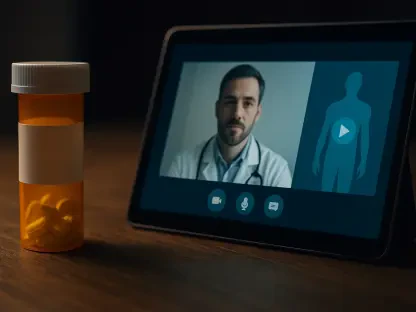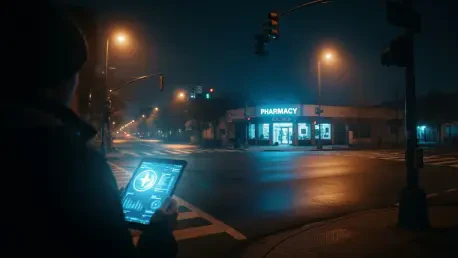

The promise of receiving medical care from the comfort of one’s home has transformed from a futuristic convenience into a daily necessity for many residents across the South Korean peninsula. While the technological infrastructure for virtual doctor visits has advanced rapidly, the actual delivery of care is currently meeting a significant and frustrating roadblock. Recent data indicates that the system is operating in a “half-functional” state because it fails to complete the most vital part of the medical journey: getting the medication into the hands of the patient. For many individuals who utilize these digital platforms, the initial relief of a successful consultation quickly turns into a logistical nightmare. This breakdown suggests that while the digital side of healthcare is moving at light speed, the physical distribution of medicine remains anchored in an era that does not account for the realities of modern, on-demand medical services. The situation has created a paradox where the most vulnerable patients are often left without any options.
Quantifying the Medication Access Gap
The severity of the current situation is underscored by a new set of industry metrics that provide a sobering look at the “medication receipt rate.” According to data collected between March 2026 and the present, only 73.28% of telemedicine users were able to successfully retrieve the drugs prescribed during their virtual appointments. This reveals that approximately one out of every four patients is left in a state of medical limbo, having paid for a consultation and received a diagnosis, yet remaining unable to start their treatment. This gap is not merely a statistical anomaly; it represents a fundamental failure in the continuity of care that telemedicine was originally intended to provide. Without a streamlined way to transition from a digital prescription to a physical dose, the entire value proposition of remote healthcare is called into question. For many users, the system feels more like a broken promise than a modern medical advancement.
Furthermore, this access crisis becomes even more acute during the very times when telemedicine is most essential for the public. During standard weekday business hours, the failure or delay rate for medication pickup sits at a problematic 25.6%. However, when patients seek care during late-night hours or on holidays—times when traditional clinics are closed—this failure rate surges to a staggering 36.5%. The logistical burden on these patients is further reflected in the grueling wait times they must endure. While daytime users might secure their medication in a relatively reasonable timeframe, those seeking help during off-hours face an average wait of 8.87 hours. This delay is primarily driven by the strict requirement for in-person pickup, as the government continues to enforce a comprehensive ban on the home delivery of prescription drugs. This policy effectively forces sick patients to wander the streets in search of an open pharmacy.
Regulatory Hurdles and the Medical Service Act
The challenges facing the telehealth industry are poised to intensify as the amended Medical Service Act moves toward full implementation later this year. Rather than evolving toward a more flexible and patient-centric model, the legislative landscape appears to be shifting toward even more stringent controls. One of the most significant changes includes strict geographic restrictions that will largely limit initial consultations to hospitals located within a patient’s immediate residential area. This move threatens to dismantle the borderless nature of digital health, forcing patients back into localized silos regardless of the quality of care available elsewhere. By tethering digital access to physical proximity, the government is essentially nullifying one of the primary benefits of the technology. This shift signals a broader move toward containment rather than the expansion of digital health services.
In addition to geographic boundaries, the government is introducing volume caps that will limit the percentage of telemedicine cases a hospital can handle relative to its total patient load. These upcoming regulations are already creating a “chilling effect” throughout the healthcare sector. Many hospitals that previously offered 24-hour virtual services are now scaling back their availability during the early morning hours to avoid exceeding these future government-mandated quotas. This pre-emptive reduction in service is leaving patients with even fewer options for urgent care outside of standard business hours. As the industry prepares for these December adjustments, the focus has shifted from innovation to compliance, often at the expense of patient convenience. The result is a system that feels increasingly bureaucratic and less responsive to the actual needs of the people it was designed to help in the first place.
The Deadlock Between Platforms and Pharmacists
At the center of this distribution crisis is a deep-seated conflict between the tech platforms driving innovation and the traditional interests of the pharmaceutical community. The Korean Pharmaceutical Association has remained a staunch opponent of any drug delivery initiatives, citing the “face-to-face principle” as a non-negotiable requirement for public safety. Pharmacists argue that the Pharmaceutical Affairs Act necessitates in-person interactions to ensure that patients receive the proper verbal instructions and to prevent potential drug misuse. From their perspective, the physical presence of a pharmacist is a vital safety net that cannot be replicated through a screen or a delivery driver. They maintain that the risks of drug-drug interactions and adverse side effects are too high to justify the convenience of home delivery, which they view as a potential threat to health.
However, many industry analysts suggest that this opposition is fueled as much by economic protectionism as it is by genuine safety concerns. There is a profound fear among independent pharmacy owners that the introduction of drug delivery would lead to a centralized market dominated by large-scale delivery hubs. This shift could potentially erode the “neighborhood pharmacy ecosystem” that currently serves as a critical healthcare anchor for many local communities. While the government attempts to balance these professional concerns with the growing consumer demand for digital services, the resulting stalemate has left the telemedicine industry in a state of arrested development. Platform providers argue that without the ability to complete the loop via delivery, their business models are inherently limited and the public remains underserved. This deadlock continues to prevent any meaningful progress.
Why the Public Safety Net Is Failing
The government has attempted to address the lack of late-night access by investing heavily in the “Public Late-Night Pharmacy” program. With a budget of 5.72 billion won allocated for the current year and total spending exceeding 18 billion won over the last few years, the program was designed to ensure that at least some pharmacies remain open from 10 p.m. to 1 a.m. However, the data suggests that this initiative is a largely ineffective solution that fails to meet the needs of a modern population. Of the more than 25,000 pharmacies currently operating across the nation, only 240 have been designated as public late-night locations. This represents less than one percent of the total pharmaceutical infrastructure, making these pharmacies a statistical rarity rather than a reliable network for the general public to depend upon when they are in need.
This scarcity of late-night options is further exacerbated by extreme regional disparities that have created massive “blind spots” in the healthcare system. The distribution of these designated pharmacies is heavily skewed toward urban centers, with nearly half of all locations concentrated in the Seoul metropolitan area. In contrast, rural and population-declining regions, where medical access is already quite fragile, are left with almost no coverage at all. Statistics show that out of 89 such vulnerable regions, only 24 have a single designated late-night pharmacy. This leaves approximately 73% of these areas with no way for residents to fill a prescription after hours. For those living outside of the major cities, the promise of telemedicine is often an illusion, as there is no physical location available to fulfill the digital prescriptions issued by remote doctors.
Operational Inconsistency and the Need for Reform
Even in areas where the public safety net exists on paper, operational inconsistencies frequently render the service useless in practice. Many of the pharmacies designated under the late-night program fail to actually stay open until the mandated 1 a.m. cutoff. In major provinces such as Jeju, Daegu, and South Gyeongsang, it is not uncommon for these pharmacies to close their doors as early as 11 p.m. or midnight. This lack of reliability means that a patient who completes a virtual consultation at midnight may still find themselves with no way to obtain their medication, despite the government’s financial investment in the program. This disconnect between policy intent and ground-level reality highlights a fundamental flaw in the current strategy, which relies on a voluntary and poorly enforced network of physical locations to support a digital infrastructure.
The resolution of this crisis required a complete overhaul of the existing legislative framework to ensure that digital healthcare could finally fulfill its curative mission. Lawmakers recognized that the previous model, which isolated the consultation from the delivery of medicine, was unsustainable for the long-term health of the nation. Consequently, the government began drafting a more integrated approach that prioritized the patient’s ability to receive medication regardless of the hour or their geographic location. This involved a significant reconsideration of the drug delivery ban and a move toward more equitable pharmacy distribution. By the end of this period, the focus had shifted toward creating a seamless medical journey that ended with the actual receipt of treatment. These institutional improvements were seen as the only way to prevent the billions of won invested in these programs from yielding diminishing returns.