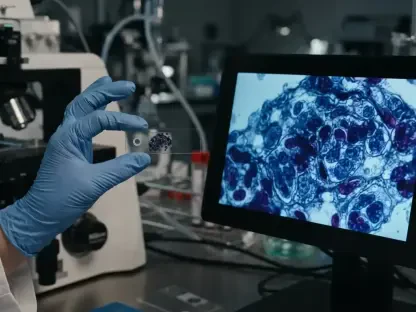

Secrecy surrounding high-level biodefense facilities complicates global health security by hindering the international cooperation necessary to contain emerging laboratory-acquired infections. The recent death of Darya Shipilova, a 28-year-old laboratory worker at the Anti-plague Research Institute of Siberia in Irkutsk, serves as a poignant illustration of this systemic vulnerability. Shipilova was reportedly exposed to pneumonic plague after a tragic mishap involving a test tube in a facility designed to maintain stringent Biosafety Level 3 standards. While the Russian government has provided limited details regarding the breach, the international community remains on high alert due to the facility’s role in high-level biodefense research. This incident reflects a broader, more terrifying reality: even the most secure environments are subject to the unpredictability of human error. As global travel continues to facilitate the rapid movement of people, the potential for a single localized accident to transform into a transcontinental health crisis has never been more acute or technically plausible.
Historical Context and Genetic Engineering
The Legacy of Biological Warfare: From Caffa to Biopreparat
Pneumonic plague, the respiratory manifestation of the bacterium Yersinia pestis, has long remained one of the most feared pathogens in human history due to its rapid onset and high mortality rate. Its historical use as a biological weapon dates back to the 14th century, most notably during the siege of Caffa, where invading forces allegedly catapulted plague-infested remains over city walls to infect the local population.
During the Cold War era, the Soviet Union’s Biopreparat program significantly modernized this ancient threat by transitioning from the use of naturally occurring strains to the development of genetically modified organisms. These scientists sought to enhance the environmental stability and virulence of the plague, transforming a natural scourge into a precise instrument of strategic destruction. By the late 20th century, the focus had shifted toward creating pathogens that could withstand modern medical countermeasures, ensuring that any localized release would have devastating consequences for civilian populations.
The Rise of Deadly Chimeras: Engineering a No-Win Scenario
In the late 1980s, the frontier of biological warfare expanded with the creation of “chimeras,” which are hybrid organisms that integrate the genetic material of distinct species to achieve specific, lethal objectives. Soviet researchers successfully engineered strains of Yersinia pestis that incorporated genes responsible for producing myelin toxins, specifically designed to compromise the nervous system of the host.
This modification created a catastrophic “no-win” clinical scenario: if a physician administered standard antibiotics to combat the bacterial infection, the destruction of the bacteria would trigger the release of these toxins, leading to rapid paralysis. Other experimental hybrids combined the plague with pathogens like Venezuelan Equine Encephalitis, ensuring that victims who survived the initial respiratory crisis would eventually succumb to catastrophic neurological failure. These developments represent a peak in biological engineering where the cure itself becomes a trigger for a secondary, equally fatal condition.
Speculative Risks and Global Consequences
Vulnerabilities in Modern Biosafety: The Threat of the Incubation Gap
The incident in Siberia mirrors the alarming hypothetical scenarios explored by biosecurity experts who warn that laboratory containment is only as strong as its weakest human link. A critical concern in modern biosafety is the “incubation gap,” a period during which an infected individual remains asymptomatic but highly contagious. Pathogens can be engineered to extend this period, allowing an infected researcher or traveler to traverse the globe before realizing they are ill.
In a hyper-connected world, a person exposed in a facility like VECTOR or the Irkutsk institute could board multiple international flights or cruise ships, unknowingly seeding a deadly agent across several continents. By the time the first symptoms—such as severe coughing or hemoptysis—manifest, the pathogen has already established a foothold in numerous urban centers. This delay between exposure and detection renders traditional contact tracing and localized quarantine measures largely ineffective against a well-distributed and highly virulent biological agent.
The Impact of State Secrecy: Geopolitical Barriers to Containment
National security protocols often prioritize the protection of sensitive biodefense data over the immediate sharing of information regarding laboratory accidents. When a government chooses to remain silent about a potential breach to avoid international scrutiny or to protect military secrets, the global community loses the precious time required to implement effective defensive strategies. This lack of transparency prevents neighboring nations from closing borders, allowing the infection to spread unchecked.
Historical precedents suggest that the initial hours following a laboratory leak are the most critical for containment, yet the clandestine nature of high-level research often ensures that reports are delayed or sanitized. By the time the international health community is officially notified, the window for a successful ring-vaccination or isolation campaign has usually closed. This silence essentially transforms a manageable local accident into a global catastrophe that can overwhelm even the most prepared nations.
Societal Resilience and the Path to Stability
Rapid Infrastructure Failure: The Dynamics of Societal Collapse
As a weaponized pathogen spreads through a densely populated area, the resulting medical crisis can trigger a rapid and total breakdown of civil society. The airborne nature of pneumonic plague ensures that it moves quickly through public transportation and crowded urban environments, leading to a surge in patients that quickly exceeds the capacity of modern healthcare systems. When medical facilities become saturated, the fundamental pillars of public order begin to erode.
The sheer scale of the tragedy often leads to widespread panic, civil unrest, and the eventual failure of emergency services as personnel abandon their posts to protect their own families. This domino effect extends to critical infrastructure, including food supply chains and energy grids, as the workforce required to maintain these systems is incapacitated. In such a scenario, the transition from a stable society to a state of total chaos occurs with frightening speed, leaving little room for conventional recovery efforts.
The Limits of Government Contingencies: A Call for Global Oversight
In the face of an uncontrollable biological event, governments relied on “Devolution of Operations” plans designed to preserve the continuity of leadership within fortified underground bunkers. These strategies often focused on protecting the federal government and military command structures while the general population faced the brunt of the pandemic. However, experts recognized that against a sufficiently advanced weapon, even these deep-earth shelters offered only temporary protection from total collapse.
Consequently, the international community moved toward a framework that emphasized radical transparency and the establishment of independent monitoring bodies to oversee high-level labs. By 2026, nations shifted focus toward proactive biosecurity protocols that prioritized the immediate sharing of genetic data and containment protocols. These actions proved essential in mitigating the risks posed by future laboratory-acquired infections and ensuring global stability. This transition fostered a new era where collaborative surveillance replaced the dangerous isolation of the past.